

No Withdrawal of Cases Against Lawmakers Without High Court Leave: Supreme Court
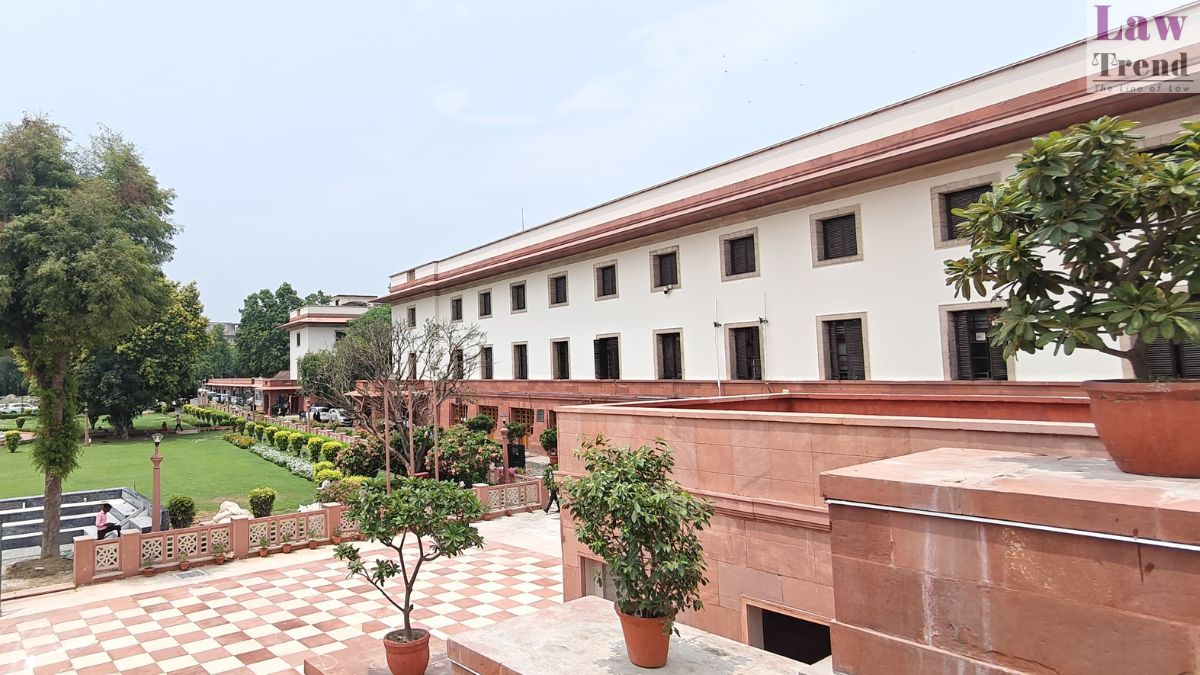
The Supreme Court of India has dismissed a batch of criminal appeals filed by Bal Kumar Patel @ Raj Kumar, declining to quash criminal proceedings pending against him. The Division Bench, comprising Justice Sanjay Karol and Justice Nongmeikapam Kotiswar Singh, upheld the decision of the High Court of Judicature at Allahabad, ruling that the mandatory permission from the High Court to withdraw prosecution against a sitting or former Member of Parliament (MP) or Member of Legislative Assembly (MLA) had not been sought by the State.

The central legal issue before the Apex Court was whether the criminal proceedings against the appellant could be quashed when the State had failed to obtain leave from the High Court to withdraw the prosecution, as mandated by the Supreme Court’s directions in Ashwini Kumar Upadhyay v. Union of India.

The Supreme Court held that since the requisite permission from the High Court was “missing in the present case,” the High Court’s refusal to exercise its jurisdiction under Section 482 of the Code of Criminal Procedure (CrPC) to quash the proceedings “cannot be faulted with.” Consequently, the appeals were dismissed.

Background of the Case

The appeals arose from a common First Information Report (FIR) filed against Bal Kumar Patel on June 12, 2007. The allegations pertained to violations of the Arms Act, 1959, specifically under Sections 25, 27, and 30, regarding the holding of an arms license.

READ ALSO  [302 IPC] How to Ascertain Intention in a Murder Case? Explains Supreme Court- Know Here

The factual matrix reveals that while the appellant’s arms license was initially cancelled in 2009, it was subsequently restored by the District Magistrate, Raebareli, vide an order dated July 11, 2012.

Following the investigation, a chargesheet was filed on July 25, 2007, and the Chief Judicial Magistrate, Raebareli, took cognizance on August 10, 2007.

Years later, the Government of Uttar Pradesh issued a Government Order on August 6, 2014, directing the withdrawal of Case Crime Nos. 654, 655, and 656 of 2007 “in public interest and also in the interest of justice.” Pursuant to this, the Public Prosecutor filed an application under Section 321 of the CrPC before the Trial Court on August 27, 2014, seeking withdrawal of the cases.

However, on October 8, 2021, the Trial Court observed that the State had not sought the permission of the High Court as required by the law laid down in Ashwini Kumar Upadhyay. The Trial Court granted the State thirty days to seek such permission, stating that failure to do so would result in the prosecution being conducted as per law. The State did not seek the requisite permission. Subsequently, the appellant approached the High Court under Section 482 CrPC seeking quashing of the proceedings, which was declined.

READ ALSO  यौन उत्पीड़न के झूठे आरोप अपराध जितना ही कष्ट पहुंचा सकते हैं: इलाहाबाद हाईकोर्ट ने आरोपियों को बरी किया

Arguments and Legal Analysis

The appellant challenged the High Court’s judgments on the ground that the permission required under law to withdraw prosecution had not been sought.

In its analysis, the Supreme Court referred to settled legal principles regarding the withdrawal of prosecution. Citing State of Kerala v. K. Ajith (2021), the Court reiterated that while Section 321 CrPC entrusts the decision to withdraw to the Public Prosecutor, the “consent of the court is required for a withdrawal of the prosecution.” The Court emphasized that the Public Prosecutor must formulate an “independent opinion” and that the court must satisfy itself that the application is made in “good faith, in the interest of public policy and justice, and not to thwart or stifle the process of law.”

The Bench specifically relied on the directive in Ashwini Kumar Upadhyay v. Union of India (2021), where a three-judge Bench held:

“In view of the law laid down by this Court, we deem it appropriate to direct that no prosecution against a sitting or former MP/MLA shall be withdrawn without the leave of the High Court in the respective suo motu writ petitions registered in pursuance of our order dated 16-9-2020.”

The Court also referred to the 1957 judgment in State of Bihar v. Ram Naresh Pandey, noting that the function of the court in granting consent is a “judicial function.”

Decision of the Court

READ ALSO  Bombay HC Allows Child Marriage Victim to Terminate Late-Term Pregnancy Due to Foetal Abnormalities

The Supreme Court observed that the duty of the application of judicial mind applies “in letter and spirit to the High Court as well,” when considering applications for permission to withdraw cases concerning MPs or MLAs.

The Court stated:

“In view of Ashwini Kumar Upadhyay (supra) this application disclosing the reasons for withdrawal of prosecution given by the Public Prosecutor as also the records of the case should be before the High Court which would exercise its judicial mind and give a reasoned order, granting or denying such permission.”

Noting that “this permission is missing in the present case,” the Bench concluded that the High Court had rightly dismissed the petition for quashing.

The Supreme Court clarified that it had not expressed any view on the merits of the case, leaving all contentions open for the appellant to take at the appropriate stage, “be it discharge or trial.”

Law Trend
Law Trendhttps://lawtrend.in/
Legal News Website Providing Latest Judgments of Supreme Court and High Court

Related Articles

Latest Articles
