“Work From Home” Not a Sole Criterion for Better Care: SC Declines to Shift Custody of Minor Son to Mother
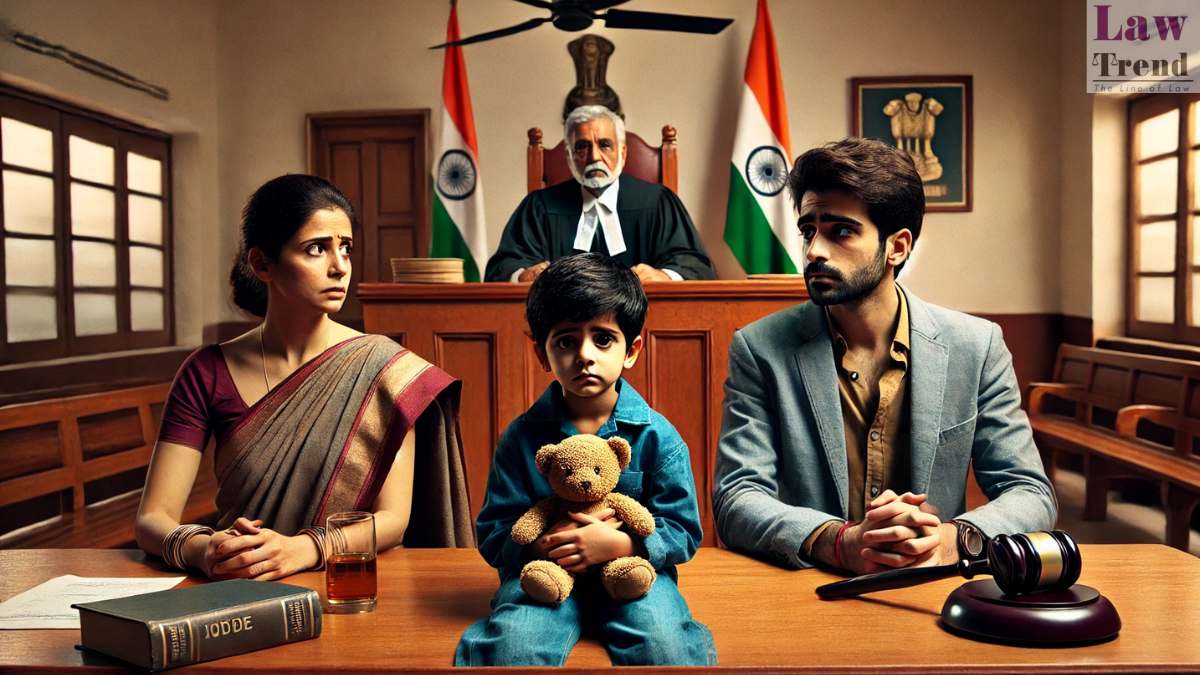

The Supreme Court of India has dismissed an appeal filed by a mother seeking custody of her minor son, upholding the order of the Punjab and Haryana High Court which had granted custody to the father. The Bench, comprising Justice Manoj Misra and Justice Ujjal Bhuyan, observed that while the High Court’s reliance on the father “working from home” as a factor for better care was not legally sustainable, the welfare of the child—who expressed a clear unwillingness to part with his father—remained paramount.

Background of the Case

The appeal challenged the order of the High Court of Punjab and Haryana dated July 1, 2024, in CRR No. 2069/2022. The High Court had set aside earlier orders from July and September 2022 that had granted custody of the minor son to the appellant-mother. At the time of the lower court’s decision, the child was under five years of age. However, during the pendency of proceedings, the child crossed the age of five.

The Supreme Court had previously directed the parties to explore mediation, noting that the dispute arose not from misconduct but “attitudinal problem[s]” between two financially independent working professionals. Despite efforts, including an interim arrangement for the couple to meet and plan outings, the parties informed the Court on November 25, 2025, that no settlement was possible and the respondent-father was not agreeable to a mutual consent divorce proposed by the appellant.

Arguments of the Parties

The Appellant (Mother): Represented by learned counsel, the appellant argued that the High Court’s order suffered from specific errors:

  • Work Arrangement: The High Court noted that the father, employed with Oracle, worked from home, while the mother, an Associate Manager at Virtusa, Gurugram, had long office hours. The appellant contended that this created an erroneous impression that a parent working from home provides better care. She argued her job also allowed for flexibility and this should not be a relevant consideration.
  • Distance to School: The appellant disputed the finding regarding the commute to the child’s school (Heritage School, Vasant Kunj), arguing the distance from her residence was equal to or less than that from the father’s home.
  • Sibling Company: It was urged that the minor son “desperately seeks” the company of his sister, who is in the mother’s custody. The appellant argued that since the sister is unwilling to be with the father, placing the son with the mother would ensure the siblings are together.
  • Conduct Allegations: The appellant challenged the High Court’s observation calling her “irresponsible” for traveling abroad during the Covid-19 period. She submitted she was fully vaccinated and traveled for work.
READ ALSO  Women Have Made It Big Across Sectors Solely on Merit: SG Tushar Mehta

The Respondent (Father): Per contra, the learned counsel for the respondent-father supported the High Court’s decision. Additionally, the respondent pressed an application to discharge the mother’s visitation rights (granted by the Supreme Court on May 3, 2024), arguing that shifting the child between homes disturbs his psyche and development.

Court’s Analysis and Observations

The Supreme Court provided a significant clarification regarding the assessment of working parents in custody battles.

On Working Parents: The Court explicitly rejected the notion that working from home automatically equates to better childcare capability. The Bench observed:

READ ALSO  सुप्रीम कोर्ट ने भ्रामक विज्ञापनों के लिए पतंजलि की माफी पर सवाल उठाए: क्या यह उनके विज्ञापनों की तरह ही दृश्यमान है?

“We, therefore, do not subscribe to the view that if one parent is working from home and the other not (i.e., has to visit his office for work) then it has to be inferred that child’s interest would be better served if he is placed in the custody of one who does not go to office for work.”

The Court noted that both parents work to secure a better future and education for their ward.

On Travel and Conduct: Regarding the High Court’s adverse inference on the mother’s travel during Covid-19, the Supreme Court held this was not a relevant consideration, stating:

“Be that as it may, even vacations are important and necessary for a person to maintain a proper frame of mind. Therefore, no adverse inference could have been drawn against the appellant on that ground.”

Welfare of the Child: Despite finding errors in the High Court’s reasoning regarding the work and travel aspects, the Supreme Court focused on the child’s present welfare. The Court noted:

  1. The child is a male aged above five years.
  2. His education at Heritage School remains undisturbed in the father’s custody.
  3. Crucially, during interaction, the Court noticed the child “was not willing to part company of his father.”
  4. The father has a support system at home, including the grandfather.
READ ALSO  Supreme Court Upholds Acquittal in Dowry Death Case, Explains Scope Of Interference In Appeals Against Acquittal

Decision

The Supreme Court dismissed the appeal, declining to interfere with the High Court’s order placing custody with the father. However, the Court rejected the respondent-father’s application to stop the mother’s visitation rights.

The Bench ordered:

“The application of the respondent seeking discharge of the visitation rights granted vide order dated 3rd May 2024… is rejected.”

The Court clarified that the High Court has left it open for the parties to pursue remedies for seeking custody under relevant statutes before the Family Court.

Law Trend
Law Trendhttps://lawtrend.in/
Legal News Website Providing Latest Judgments of Supreme Court and High Court

Related Articles

Latest Articles