

Wife Has Preferential Right Over Brother for Compassionate Appointment; Succession Certificate Not Required: MP High Court
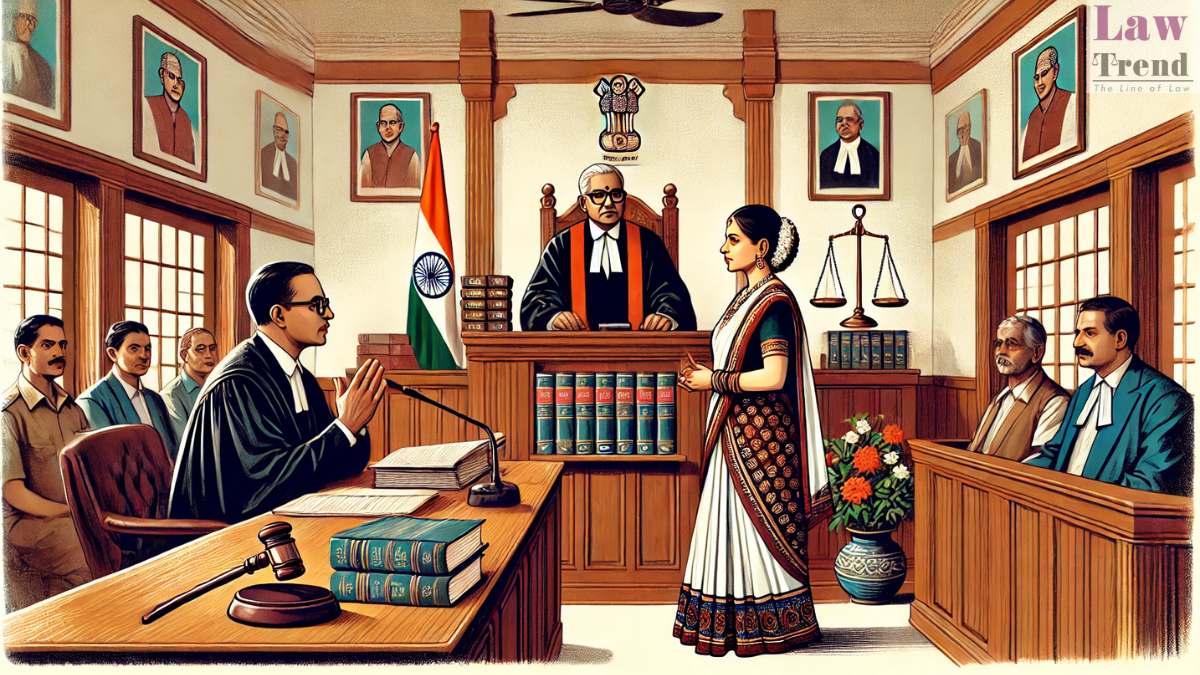

The High Court of Madhya Pradesh has ruled that administrative authorities cannot insist on a succession certificate for compassionate appointment when the applicable policy clearly establishes the priority of the deceased employee’s wife over other relatives. The Court quashed an order by the M.P. State Agriculture Marketing Board that had directed a widow to produce a succession certificate merely because the deceased’s brother had also applied for the appointment.

Justice Jai Kumar Pillai, presiding over the case, observed that under the state policy, the wife has the first preferential right, and a brother is only eligible if the deceased government servant was unmarried.

Background of the Case

The petitioner, Smt. Manisha, approached the High Court challenging an order dated December 30, 2024, issued by the M.P. State Agriculture Marketing Board. Her husband, late Shri Jitendra Solanki, was employed as an Assistant Sub-Inspector at Krishi Upaj Mandi Samiti, Dhar. He passed away on November 12, 2023.

Following his death, Smt. Manisha applied for compassionate appointment under the State Government policy dated September 29, 2014. Subsequently, the deceased’s younger brother, Shri Mahendra Solanki, also submitted an application for the same.

Citing the competing applications, the respondent authorities issued the impugned order directing the petitioner to obtain a succession certificate from a competent court to determine the rightful claimant. The petitioner contended that as the legally wedded wife, she had a preferential right, and the demand for a succession certificate was arbitrary.

READ ALSO  मध्य प्रदेश हाईकोर्ट ने डॉक्टरों की सुरक्षा के उपायों पर सरकार से रिपोर्ट मांगी

Arguments Before the Court

Counsel for the Petitioner: Shri Vijay Kumar Patwari, appearing for the petitioner, argued that under the compassionate appointment policy, the wife holds the first right of consideration. He submitted that the policy does not entitle a younger brother of a deceased married employee to such an appointment. Consequently, the insistence on a succession certificate was “arbitrary, illegal, and contrary to the compassionate appointment policy,” especially since the petitioner’s status as the wife was undisputed.

Counsel for the Respondents: Ms. Swati Ukhale (State) and Shri Abhinav Danodkar (Respondent Nos. 1, 2 & 4) opposed the petition. They argued that compassionate appointment is not a vested right but an exception. The respondents contended that due to the “competing claims” of the wife and the brother, demanding a succession certificate was a “bona fide administrative step” under Clause 2.7 of the policy to avoid future disputes. They relied on the Supreme Court judgment in State of Himachal Pradesh & Anr. v. Shashi Kumar (2019) to assert that there is no absolute right to compassionate appointment. They also raised an objection regarding the maintainability of the petition due to the availability of an alternative remedy under Section 59 of the Madhya Pradesh Krishi Upaj Mandi Adhiniyam, 1972.

Court’s Analysis and Observations

The Court examined the Compassionate Appointment Policy dated September 29, 2014, specifically Clauses 2.1, 2.6, and 2.7.

On Priority of Claims: The Court noted that Clause 2.1 lists the wife of the deceased government servant as the first dependent member in the order of priority. Conversely, Clause 2.6 provides for the consideration of a brother only in cases where the deceased government servant was unmarried.

READ ALSO  Can Complainant file appeal under Section 372 Cr.P.C. seeking enhancement of Sentence? [READ JUDGMENT OF SC]

Justice Pillai observed:

“Upon due consideration of Clause 2.1 and Clause 2.6, it becomes manifest that the wife of a deceased government servant occupies the first and highest priority for compassionate appointment. Clause 2.6, which provides for consideration of a brother, is expressly confined to cases where the deceased government servant was unmarried.”

On the Validity of the Brother’s Claim: The Court held that since it was undisputed that the deceased was married to the petitioner, the brother’s application did “not create a legally cognizable competing right under the policy.”

On the Requirement of Succession Certificate: The respondents had relied on Clause 2.7 of the policy to justify their demand. However, the Court clarified that Clause 2.7 applies only when neither the husband nor the wife of the deceased is alive.

“The insistence on production of a succession certificate, in the considered view of this Court, is misplaced in the context of compassionate appointment… This Court is of the opinion that where the policy itself clearly identifies the eligible dependent and the order of priority, the administrative authority cannot introduce an additional requirement, such as a succession certificate, which has the effect of defeating or delaying the object of the policy.”

On Alternative Remedy: The Court rejected the respondents’ objection regarding the alternative remedy, stating that the grievance pertained to a violation of policy and arbitrary exercise of administrative power, for which writ jurisdiction is attracted.

READ ALSO  Surrender of Mining Lease Requires Full Compliance with Rules and Payment of Dues: Allahabad High Court

Decision

The High Court allowed the writ petition and quashed the impugned order dated December 30, 2024. The Court held that the order suffered from non-application of mind to the governing policy.

The respondents were directed to consider the petitioner’s application “strictly in accordance with the compassionate appointment policy dated 29/09/2014, expeditiously and in accordance with law, without insisting upon submission of a succession certificate.”

The compliance of the order is to be ensured within 60 days.

Case Details:

  • Case Title: Smt. Manisha Vs. M.P. State Agriculture Marketing Board and Others
  • Case Number: W.P. No. 5454 of 2025
  • Bench: Justice Jai Kumar Pillai

Law Trend
Law Trendhttps://lawtrend.in/
Legal News Website Providing Latest Judgments of Supreme Court and High Court

Related Articles

Latest Articles

