

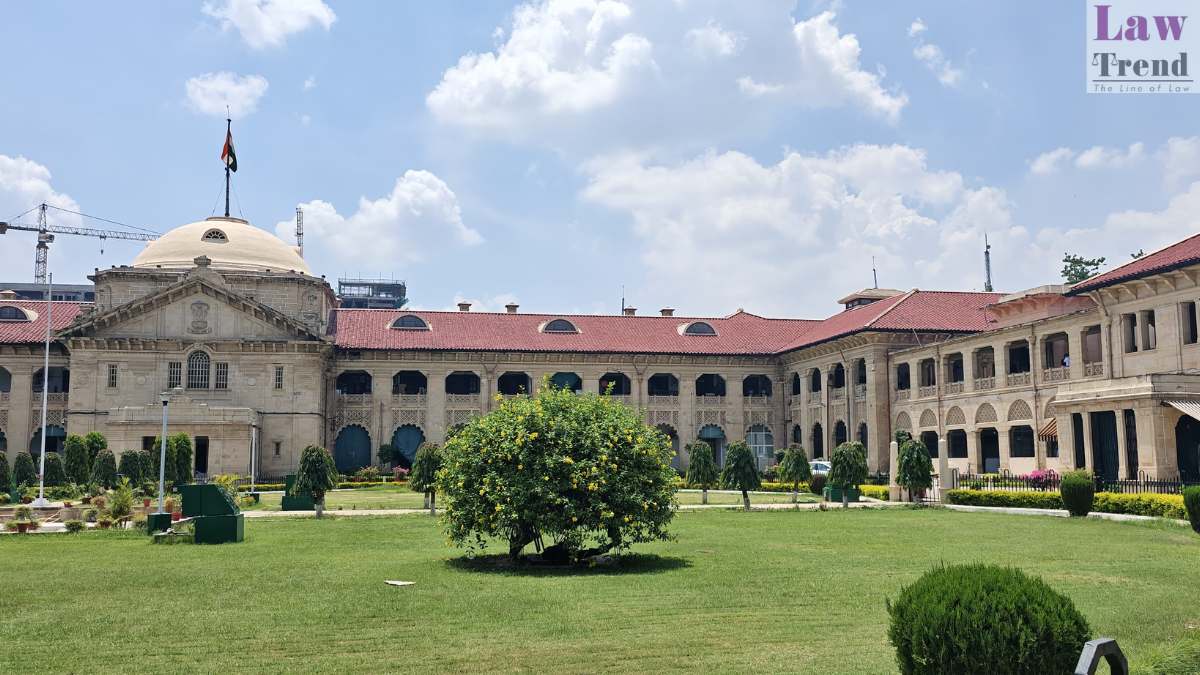
The Allahabad High Court has affirmed that the legal obligation to maintain a wife does not extinguish upon the death of her husband, ruling that a widowed daughter-in-law is entitled to seek maintenance from her father-in-law under specific conditions.
A bench comprising Justice Arindam Sinha and Justice Satya Veer Singh delivered this observation while dismissing an appeal filed by one Akul Rastogi. The court emphasized that the husband’s primary obligation to maintain his spouse extends to his estate and family responsibilities after his passing.
In its order dated March 17, the High Court clarified the transition of maintenance obligations from a husband to his father. The bench noted that while the law usually addresses maintenance during the lifetime of both spouses—often in cases of separation—the protection offered to a wife remains robust even in widowhood.
“It is well settled that a husband is obliged to maintain his wife,” the bench stated. “This position has emanated from situations where the spouses have separated and the wife has sought for maintenance, either on the criminal side or under maintenance provisions in Hindu law.”
The court further noted: “So much so, this obligation of the husband to maintain the wife attaches even after the death of the husband, allowing the widow to claim maintenance from her father-in-law.”
The ruling draws heavily from the Hindu Adoption and Maintenance Act, which outlines the specific circumstances under which a father-in-law becomes liable for his daughter-in-law’s upkeep.
According to the Act, a widowed daughter-in-law can claim maintenance if she meets the following criteria:
- Inability to Self-Maintain: She must be unable to maintain herself from her own earnings or property.
- Exhaustion of Other Sources: She can only approach her father-in-law if she is entirely unable to obtain maintenance from her deceased husband’s estate, her parents’ estate, or from her children and their estates.
- Estate Scope: Section 21 (viii) of the Act provides the scope for a widow to claim from her father-in-law’s estate, regardless of whether she became a widow before or after his death.
The court highlighted that this obligation is not absolute. The father-in-law is only liable to the extent that he possesses “coparcenary or ancestral property” from which the daughter-in-law has not already obtained a share. If the father-in-law lacks the means to pay from such ancestral property, the obligation becomes unenforceable.
Furthermore, the right to maintenance is conditional upon the woman’s marital status; the legal obligation of the father-in-law ceases immediately if the woman chooses to remarry.




