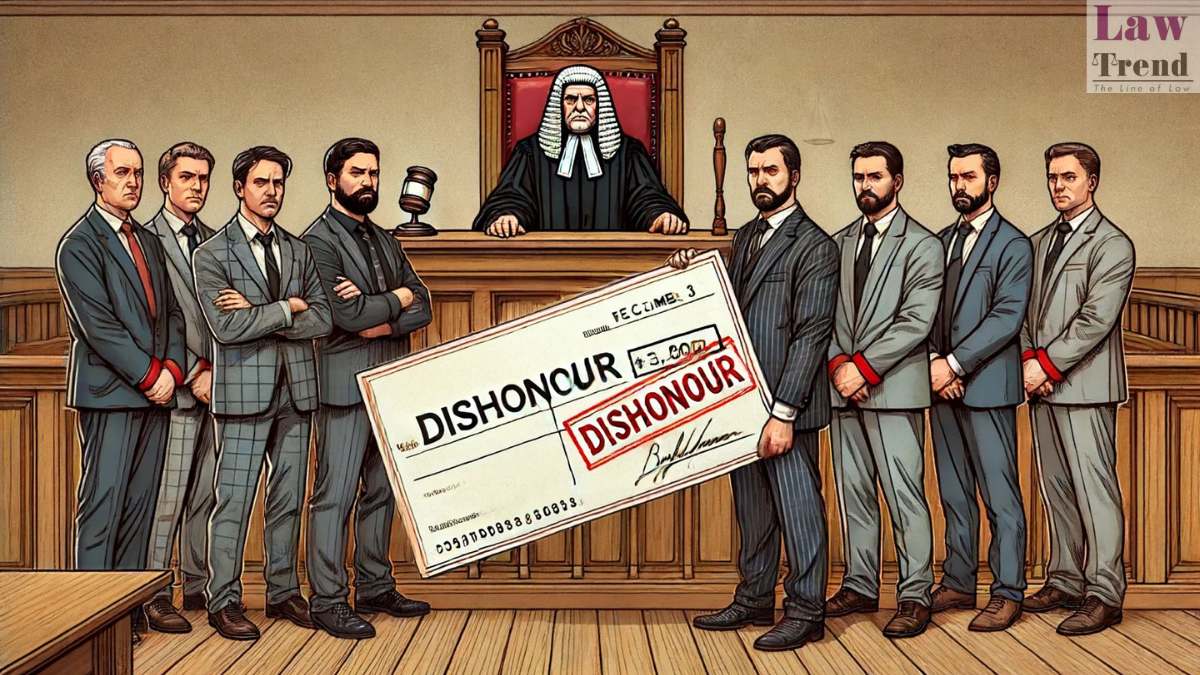
In a significant move aimed at curbing the massive pendency of cases under the Negotiable Instruments Act (NI Act), the High Court of Uttarakhand has issued strict directions to all District and Sessions Judges in the state to implement the Supreme Court’s recent guidelines.
The Registrar General of the High Court, through Circular Letter No. 03/UHC/IT/NI-Digital Courts/2025 dated January 5, 2026, has communicated the directions issued by the Supreme Court in the case of Sanjabij Tari Vs. Kishore S. Barcar & Anr. (2025). The circular mandates the use of electronic means, including WhatsApp and email, for serving summons and the integration of online payment links directly into court summons to encourage early settlement.
Digital Service of Summons and Online Payment
The High Court’s circular emphasizes that trial courts must now resort to the service of summons by electronic means in terms of the Uttarakhand Electronic Processes (Issuance, Service and Execution in Criminal Cases) Rules, 2025.
Key highlights of the new procedure include:
- Mandatory Contact Details: Complainants must provide the accused’s email address, mobile number, and messaging application details (e.g., WhatsApp) at the time of filing the complaint, supported by an affidavit.
- Auto-Generated Payment Links: The summons sent to the accused will now contain a direct link for online payment (e-Pay-Fine). The circular notes that the link https://pay.ecourts.gov.in/epay/ will be auto-generated in the Summon Template of the Case Information System (CIS).
- Immediate Settlement: The summons will explicitly state that the accused has the option to pay the cheque amount at the initial stage itself through the online facility. Upon confirmation of such receipt, the court may pass appropriate orders for the closure of proceedings.
Supreme Court’s Verdict in Sanjabij Tari Vs. Kishore S. Barcar
The guidelines stem from a judgment delivered by a bench comprising Justice Manmohan and Justice N.V. Anjaria of the Supreme Court on September 25, 2025. The Apex Court was hearing an appeal against a judgment of the Bombay High Court (Goa Bench) which had acquitted an accused in a cheque bounce case by questioning the financial capacity of the complainant.
Setting aside the acquittal and restoring the conviction, the Supreme Court observed that once the execution of a cheque is admitted, the presumptions under Section 118 and Section 139 of the NI Act arise. The Court held that the High Court erred in reversing concurrent findings of fact in its revisional jurisdiction without evidence of perversity.
“The intent behind introducing Chapter XVII is to restore the credibility of cheques as a trustworthy substitute for cash payment… By criminalizing the act of issuing cheques without sufficient funds… the law promotes financial discipline,” the Supreme Court observed.
Comprehensive Guidelines for Speedy Disposal
To address the backlog of over 3.5 million cheque bounce cases across India, the Supreme Court issued the following directions, which are now being implemented in Uttarakhand:
- Service of Summons: Apart from usual modes, summons shall be served dasti and via electronic means (Email/WhatsApp).
- No Pre-Cognizance Process: The Court clarified that there is no requirement to issue process to the accused under Section 223 of the Bharatiya Nagarik Suraksha Sanhita (BNSS), 2023 (formerly Cr.P.C.) at the pre-cognizance stage for NI Act complaints.
- Mandatory Synopsis: Every complaint must contain a synopsis in a specific format detailing the cheque, dishonour memo, and statutory notice, to be entered into the CIS.
- Revised Compounding Costs: To encourage early settlement, the Court tweaked the guidelines for compounding offences:
- Nil: If paid before recording of defence evidence.
- 5% of Cheque Amount: If paid after evidence but before judgment.
- 7.5%: If paid at the High Court/Sessions Court level.
- 10%: If paid at the Supreme Court level.
The Supreme Court also directed that if an accused is willing to pay the cheque amount, the court may suggest compounding. If the complainant insists on interest or other dues, the Magistrate may suggest the accused plead guilty and exercise powers under the Probation of Offenders Act or admonition.
Implementation in Uttarakhand
The High Court of Uttarakhand has confirmed that the CIS periphery has been customized to include the mandatory synopsis and the new summoning order templates that calculate timelines. A software patch is being provided to all District Courts to ensure smooth execution.
The Registrar General has requested all Criminal Courts dealing with NI Act cases to ensure strict compliance with these instructions to facilitate speedy trials.