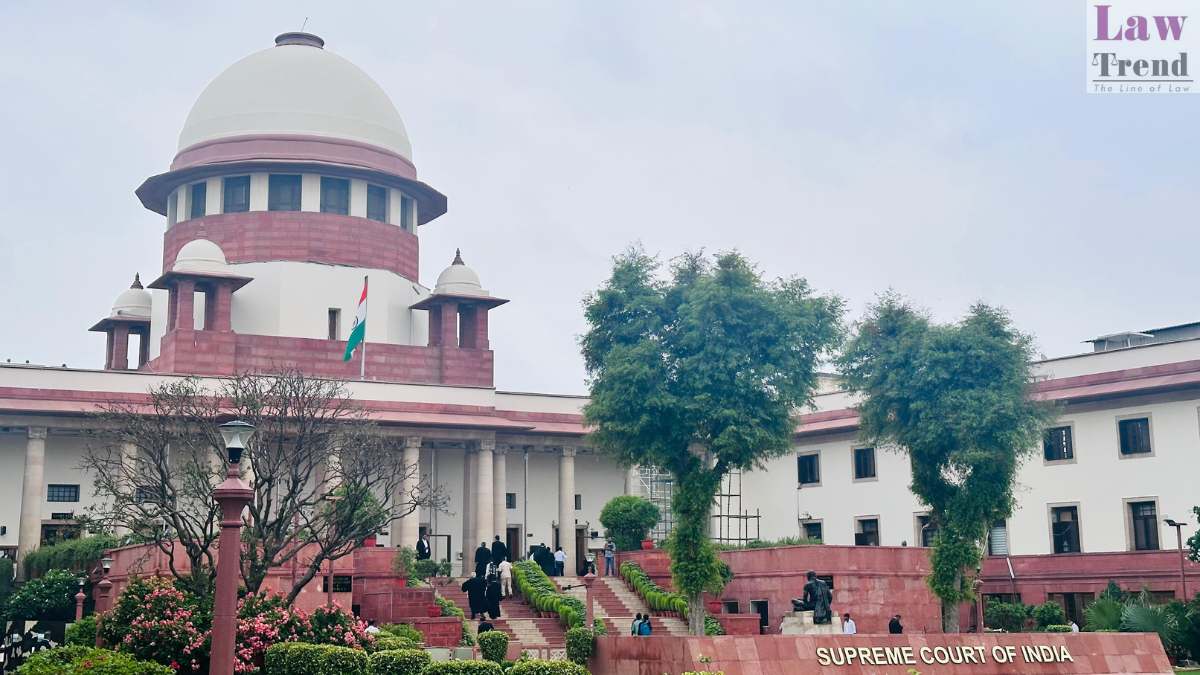
The Supreme Court on Monday approved the Union government’s proposal to extend the tenure of chairpersons and members of several tribunals across the country who are due to retire soon, allowing them to continue in office until September 8. The court said the extension was necessary to avoid disruption in the functioning of tribunals while the Centre prepares a new law governing their appointments and tenure.
A bench comprising Chief Justice Surya Kant and Justice Joymalya Bagchi accepted the proposal after Attorney General R. Venkataramani informed the court that the Union government is working on a fresh tribunal legislation. According to the government, the proposed bill may be introduced either in the ongoing Budget Session or during the Monsoon Session of Parliament.
The Attorney General told the court that discussions on the new framework are currently underway at different levels within the government. In the interim, around 21 tribunal members who are set to retire will be given a temporary extension until September 8 to ensure there is no disruption in the functioning of these quasi-judicial bodies.
“The Government is working on a proposal. A bill is being contemplated. We don’t want any interruption in the meantime,” Venkataramani submitted. He added that members appointed under the Tribunals Reforms Act, 2021 would continue in office for now, and the new legislation is expected to be enacted before September.
The development comes after the Supreme Court in November 2025 struck down provisions of the Tribunals Reforms Act, 2021 relating to the appointment and tenure of tribunal members, holding them inconsistent with earlier judicial rulings on the subject.
While approving the interim extension, Chief Justice Surya Kant raised broader concerns about the functioning and oversight of tribunals. He questioned the lack of a clear accountability framework governing their work and performance.
“They are not accountable to the government and they are not accountable to us. Who is going to evaluate their integrity and performance?” the CJI asked during the hearing.
He further observed that before granting blanket extensions of tenure, there should be a mechanism to evaluate tribunal members’ work. “Instead of granting extension alone by a sweeping order, we have to consider their accountability. To whom are they accountable? There should be some mechanism,” the Chief Justice said.
Senior advocate Sanjay Jain, appearing for the Central Administrative Tribunal (CAT) Bar Association, submitted that the Supreme Court’s Madras Bar Association judgment last year mandated a minimum tenure of five years for tribunal members. He informed the bench that around 31 members are likely to superannuate soon, raising concerns about continuity in tribunal functioning.
Jain also highlighted another issue before the court — the practice of administrative members acting as acting chairpersons when judicial members retire. According to him, this situation could affect the judicial character of tribunals.
The bench acknowledged that this concern had previously arisen in other matters relating to tribunal functioning.
Chief Justice Kant stressed the need for a comprehensive legislative framework that ensures accountability without placing tribunals fully under either executive or judicial control.
“There should be a comprehensive law which fixes accountability of members of tribunals. You can’t keep tribunals under government control, since there will be criticism. You can’t keep them under judicial control also. Then where?” the CJI remarked.
During the hearing, the Chief Justice also suggested a possible administrative mechanism to track reserved judgments in tribunals.
He said that whenever a tribunal bench reserves a judgment, it could confidentially inform the tribunal president or chairperson about the matter and indicate which member has been assigned to write the judgment and the expected timeline.
“Somebody should know who is going to write the judgment and how much time will be taken,” the CJI observed.
The issue of tribunal functioning had earlier come under sharp scrutiny from the Supreme Court. On February 26, the court had expressed serious dissatisfaction with the state of tribunals in the country, remarking that they had become a “liability” and a “mess” due to the absence of accountability mechanisms.
The bench had also flagged allegations that technical members of a financial tribunal were outsourcing the drafting of judgments, raising serious concerns about institutional integrity.
The court had observed that tribunals, which are creations of the government, were functioning like a “no-man’s land” without clear accountability to any authority.
It had also pointed out a structural issue under the existing regime where a technical member of the Telecom Disputes Settlement and Appellate Tribunal (TDSAT) could become the acting chairperson when the incumbent chairperson retires.
The court had asked the Attorney General to ensure that urgent steps are taken to fill vacancies and prevent functional crises in key tribunals.
After approving the temporary extension, the Supreme Court said it will review the progress of the proposed legislation in May, when the matter will be listed again for hearing.