

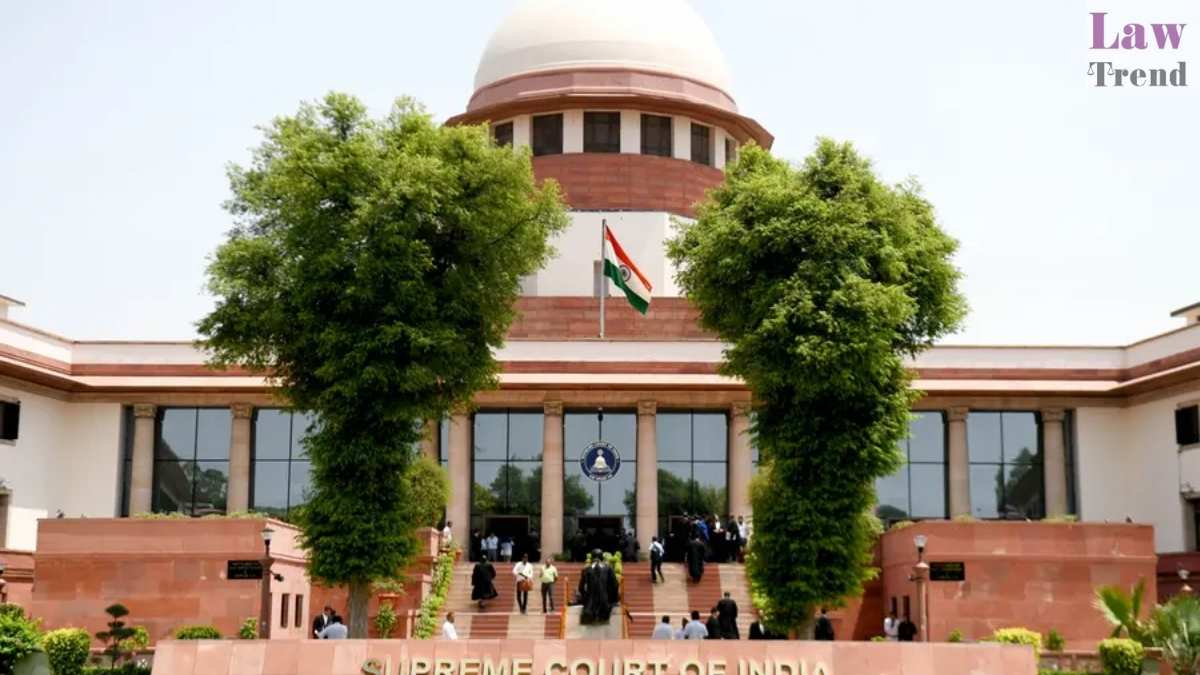
As the Supreme Court of India commences its judicial proceedings for 2026, the apex court is poised to adjudicate on a series of landmark cases with far-reaching constitutional implications. From the structural integrity of the Election Commission to the fundamental rights involving religious freedom and digital trade, the 2026 docket is set to reshape the legal landscape of the nation.
Here, we analyse the top five critical matters currently pending before the Supreme Court, highlighting the legal issues, background, and current status of each.
1. Constitutional Challenge to the Online Gaming Act, 2025
Case Title: Head Digital Works Pvt Ltd v. Union of India & Ors. (and connected matters)
Legal Issue: The primary constitutional question before the Court is whether Parliament possesses the legislative competence to impose a blanket ban on real-money online games, particularly those judicially recognized as “games of skill” (such as rummy and poker). The petitioners challenge the validity of Sections 14, 15, and 16 of the Promotion and Regulation of Online Gaming Act, 2025, arguing that equating skill-based games with gambling violates the fundamental right to trade and profession under Article 19(1)(g) and the right to expression.
Background: The petition, filed by Head Digital Works Pvt Ltd, contests the 2025 legislation which was enacted to curb online gaming addiction and money laundering. While the government defends the Act as a necessary social welfare measure, the industry argues that the legislation fails to distinguish between ‘games of skill’ and ‘games of chance,’ thereby imperiling a multi-billion-dollar sector. The petitioners have sought a stay on coercive actions by the Union government pending the final decision.
Current Status: The matter is currently pending before the Supreme Court. While no specific date has been fixed, the Court is expected to schedule a hearing this year to address the interim relief requests and the substantive constitutional challenge.
2. Challenge to Anti-Conversion Laws
Case Title: Citizens for Justice and Peace v. State of Uttar Pradesh & Ors. (and connected matters)
Legal Issue: This batch of petitions challenges the constitutional validity of anti-conversion laws enacted by several states, including Uttar Pradesh, Madhya Pradesh, Gujarat, Uttarakhand, and Haryana. The core legal issue is whether these statutes, which impose stringent regulations on religious conversions and interfaith marriages, infringe upon the Right to Freedom of Religion guaranteed under Article 25 and the right to privacy.
Background: The litigation, initiated by the NGO Citizens for Justice and Peace (CJP) and others, arises from amendments in state laws that mandate prior executive approval for conversion and prescribe heavy penalties for alleged fraudulent or forced conversions. High Courts in Gujarat and Madhya Pradesh have previously passed interim orders staying certain provisions that were deemed to reverse the burden of proof or interfere with personal liberty. The petitioners argue these laws are being weaponized to target minority communities.
Current Status: The Supreme Court has listed the batch of petitions for hearing in January 2026. The Bench has previously emphasized the gravity of the issue, noting the potential for social polarization.
3. Challenge to the Election Commissioners Appointment Act, 2023
Case Title: Dr. Jaya Thakur v. Union of India / Association for Democratic Reforms v. Union of India
Legal Issue: The petitioners challenge the constitutionality of the Chief Election Commissioner and Other Election Commissioners (Appointment, Conditions of Service and Term of Office) Act, 2023. The central contention is that the Act, by removing the Chief Justice of India (CJI) from the selection panel, dilutes the independence of the Election Commission of India (ECI) mandated under Article 324. The petitioners argue this directly contravenes the Supreme Court’s Constitution Bench judgment in Anoop Baranwal v. Union of India (2023).
Background: Following the 2023 judgment which directed that the selection committee should comprise the Prime Minister, the Leader of the Opposition, and the CJI, the Parliament enacted the impugned legislation substituting the CJI with a Union Cabinet Minister. The petitioners argue that a committee dominated by the Executive (2:1 majority) compromises the institutional integrity of the ECI, a prerequisite for free and fair elections.
Current Status: The matter is slated for hearing in January 2026. Given the implications for the democratic process, the Court is expected to prioritize the arguments regarding the separation of powers and institutional autonomy.
4. Plea Against Special Intensive Revision (SIR) of Electoral Rolls
Legal Issue: This petition invokes Article 326 (Universal Adult Suffrage) to challenge the Election Commission’s Special Intensive Revision (SIR) process. The petitioners allege that the process has led to the arbitrary and massive deletion of names from voter lists, resulting in widespread disenfranchisement.
Background: Initially focused on the state of Bihar, the scope of the SIR exercise was expanded to other States and Union Territories. The petitioners have approached the Court citing fears of biased removals that could skew electoral outcomes. While the Supreme Court had previously declined to stay the ongoing revision process, it agreed to examine the constitutional validity of the methodology used, acknowledging the seriousness of voter suppression allegations.
Current Status: The case is listed for hearing in January 2026. The Court will balance the ECI’s mandate to maintain clean electoral rolls against the fundamental right of citizens to vote.
5. Waqf Amendment Act, 2025
Case Title: In Re: Waqf Amendment Act, 2025 Challenges
Legal Issue: A batch of nearly 65 petitions challenges the Waqf Amendment Act, 2025, primarily on the grounds that it violates Article 26 of the Constitution, which grants religious denominations the right to manage their own affairs in matters of religion. Specific provisions under challenge include those granting District Collectors overriding powers over Waqf properties and the mandated inclusion of non-Muslim members in Waqf Boards.
Background: The Act was introduced to reform the management of Waqf properties and increase transparency. However, it faced immediate legal resistance from various Muslim bodies and organizations who argue that the state interference is excessive and discriminatory. The petitioners contend that empowering bureaucratic oversight over religious properties erodes the community’s proprietary rights.
Current Status: As of early 2026, the Supreme Court has already granted interim relief by staying certain contentious provisions, including the powers granted to Collectors and the composition of boards regarding non-Muslim members. Detailed hearings on the constitutional validity of the entire Act are expected throughout the year.
Together, these five cases place some of India’s most fundamental constitutional questions before the Supreme Court. Their outcomes will shape how far the state can regulate personal choice, religious practice, digital businesses, and electoral processes. As 2026 unfolds, the court’s rulings are likely to leave a lasting imprint on India’s constitutional jurisprudence and democratic framework.




