

Telecom Operators Liable to Pay Reserve Price from February 2, 2012, for Continued Operations After Licence Quashing: Supreme Court
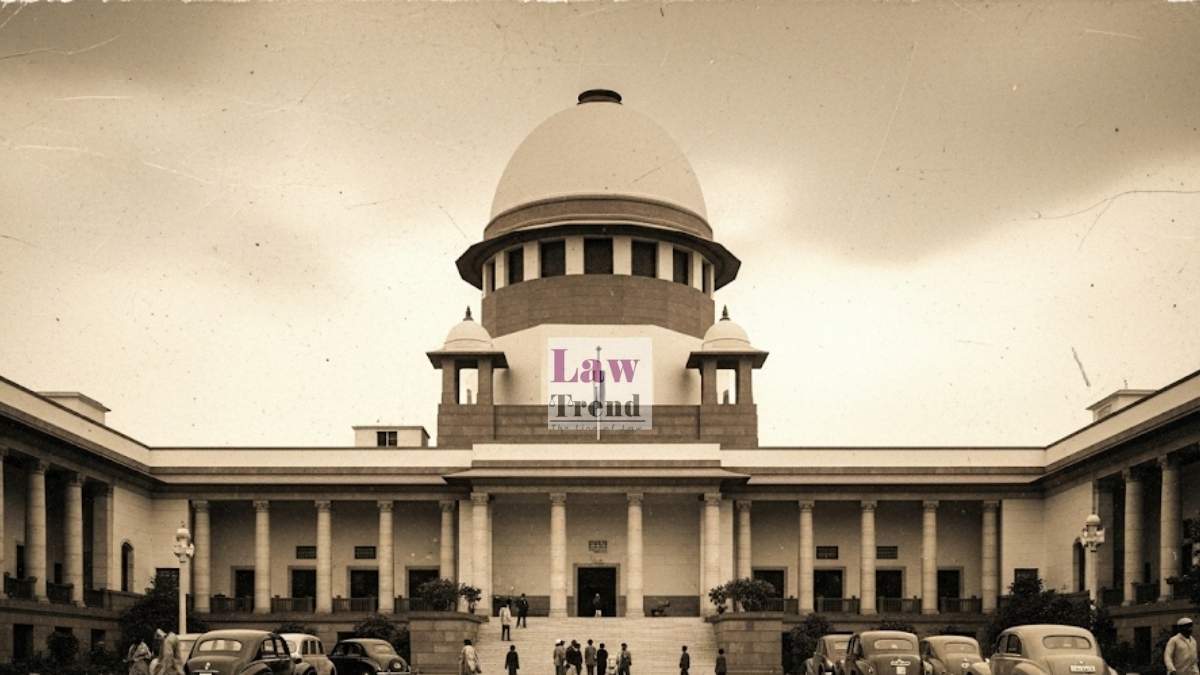

The Supreme Court of India has held that telecom operators whose licences were quashed in the 2012 2G case but who continued operations to ensure uninterrupted service to the public are liable to pay the reserve price starting from February 2, 2012.

A Bench of Justice Sanjay Kumar and Justice K. Vinod Chandran set aside an order by the Telecom Disputes Settlement and Appellate Tribunal (TDSAT) which had erroneously fixed the commencement date of this liability as February 15, 2013. The Court clarified that the liability to pay the premium for continued operations began on the date the licences were originally quashed.

Background of the Case

The legal dispute originated from the landmark judgment dated February 2, 2012, in Centre for Public Interest Litigation and others vs. Union of India and others, where the Supreme Court declared the grant of Unified Access Service (UAS) licences and 2G Spectrum allotment illegal and quashed them.

To prevent abrupt disruption of services for the general public, the Court allowed the quashed licences to remain operative for an interim period while fresh auctions were conducted. Due to delays in the auction process, the Department of Telecommunications (DoT) sought several extensions. Consequently, the existing licensees, including Sistema Shyam Teleservices Limited (the respondent), continued their operations well beyond the initial four-month window.

On February 15, 2013, the Supreme Court passed a specific order stating:

READ ALSO  Tripura, Punjab and Assam Cancel Class 12 physical exams, SC to hear the case tomorrow

“Such of the licensees, who continued operation after 2.2.2012… shall pay the reserve price fixed by the Government for the purpose of conducting auction in November 2012.”

Pursuant to this, the DoT issued a demand notice to the respondent for ₹926.5089 crore, including interest. The respondent challenged this before the TDSAT.

The TDSAT Ruling and Appeal

On May 10, 2018, the TDSAT disposed of the petition, opining that the Supreme Court had not specified a ‘starting date’ for the demand. The Tribunal held that since the Court permitted extensions and issued the payment direction only on February 15, 2013, the liability should commence from that date.

The Union of India, through the DoT, appealed this interpretation, arguing that the liability must be reckoned from February 2, 2012.

The Court’s Analysis

The Supreme Court found the TDSAT’s understanding to be “wholly erroneous.” Justice Sanjay Kumar, writing for the Bench, observed that the extension of operations was “only to protect the interest of the general public and not for the benefit of such licensees.”

Regarding the commencement date, the Court noted:

READ ALSO  आज सुप्रीम कोर्ट में ऐतिहासिक दिन- पहली बार होगा कोर्ट कार्यवाही का सीधा प्रसारण

“This Court specifically directed that those licensees who had continued their operations ‘after 02.02.2012’ should pay the reserve price… and it is manifestly clear from the context that such liability commenced from 02.02.2012 itself. This aspect was, therefore, not open to interpretation and inquiry.”

The Bench further remarked that if the intention was to start liability from the date of the order, the Court would have stated so explicitly. The reference to “02.02.2012” clearly demonstrated it as the commencement date for the levy.

End Date of Liability and Interest

On the issue of the ‘end date,’ the Court agreed with the TDSAT. Since the respondent was successful in the March 2013 auction and received a Letter of Intent (LoI) on April 30, 2013, the liability under the old quashed licences ended on the date of the LoI.

As for interest, the Court criticised the DoT for its “lassitude” in issuing demand notices. The DoT had waited until November 2014 to act on the Court’s February 2013 order.

READ ALSO  Section 58 NDPS Act | Proceedings Against Police Officials for Alleged Misconduct Must Be Tried Summarily: Supreme Court

“Having slept over the matter for that length of time, the DoT cannot take advantage of its own lassitude and seek to mulct upon the respondent interest liability for that period,” the Court held.

The Decision

The Supreme Court allowed the appeal in part, holding that:

  1. The respondent is liable to pay the reserve price (fixed for the November 2012 auction) from February 2, 2012, to April 30, 2013, for the 8 circles it successfully bid for.
  2. For the remaining 13 circles, the liability runs from February 2, 2012, to March 23, 2013.
  3. Interest at SBI’s Prime Lending Rate shall be payable only from December 8, 2014 (21 days after the first show-cause notice).

The Court directed the balance amount to be paid within three months of the receipt of a fresh demand from the DoT.

  • Case Title: Union of India v. Sistema Shyam Teleservices Limited
  • Case Number: Civil Appeal No. 12219 of 2018

Law Trend
Law Trendhttps://lawtrend.in/
Legal News Website Providing Latest Judgments of Supreme Court and High Court

Related Articles

Latest Articles

