

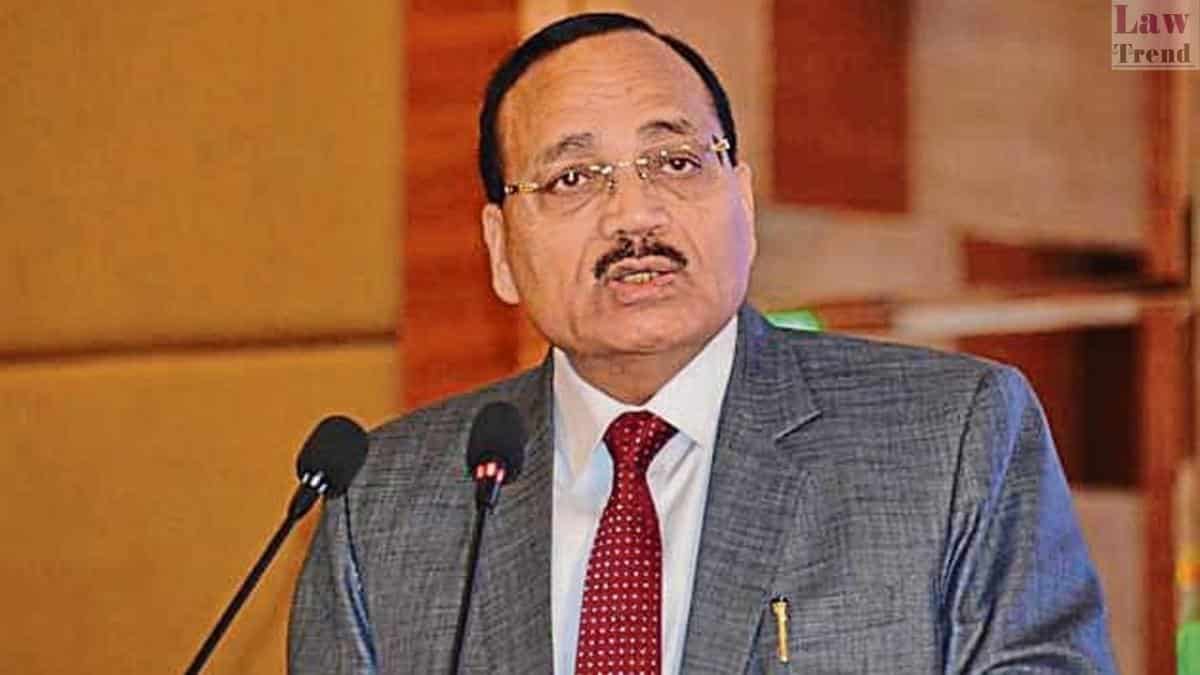
Chief Justice of India Justice Surya Kant on Sunday cautioned against overreliance on technology in the justice delivery system, stressing that it must aid judicial decision-making rather than supplant it.
Addressing a symposium on “Ensuring justice for the common man: strategies for reducing litigation costs and delays”, organised by the Orissa High Court Bar Association, the CJI said technology proved invaluable during the COVID-19 pandemic but also carried inherent risks.
“In an age of deep fakes and digital arrests, courts cannot afford naive optimism,” Justice Kant said. Emphasising inclusivity, he added that reforms which exclude the poor, elderly, or those unfamiliar with digital tools amount to regression, not progress. “Technology must remain a servant of justice, not its substitute. It should amplify human judgment, not replace it,” he observed.
Expressing concern over mounting case pendency, the CJI said congestion at higher courts inevitably increases pressure on lower courts. He identified two major barriers between citizens and justice: the high cost of litigation and excessive delays in case disposal.
Referring to what is often described as a vicious cycle of pendency, Justice Kant said his vision was to reverse it into a virtuous cycle. “When pendency falls, trust rises; when trust rises, respect for law deepens; when respect deepens, disputes diminish,” he said.
Justice Kant pointed to Alternative Dispute Resolution (ADR), particularly mediation, as one of the most effective tools to reduce backlog. Drawing from his judicial experience, he said he had witnessed deeply contested family, commercial, and even cross-border disputes being resolved through meaningful dialogue outside courtrooms.
He noted that experienced judges can often sense when a matter is ready for settlement, but emphasised that such intuition must translate into action by judges, lawyers, and parties alike. While India already has a strong legal framework for mediation, he said what is lacking is a cultural commitment to use it.
“For mediation to become a genuine legal avenue, parties must understand that settlement is not surrender; it is a strategy,” he said.
The CJI also criticised the routine filing of appeals by government departments, observing that many are driven by institutional anxiety rather than legal principle. In this context, he stressed the importance of training and accountability frameworks.
He further urged lawyers to approach appropriate forums instead of those perceived as strategically convenient.
Issuing a note of caution against uncritical adoption of new solutions, Justice Kant said India already possesses effective homegrown mechanisms. Citing the Lok Adalat system, he described it as one of the most successful grassroots justice innovations globally, particularly through National Lok Adalat drives.
“Everything new is not necessarily better, and every old structure is not obsolete,” he remarked.
Highlighting the importance of infrastructure, the CJI said that without adequate courts and facilities, even the most sincere justice system would collapse under logistical strain. He warned that lack of coordination among the executive, legislature, and judiciary weakens the rule of law.
“A system that does not move in harmony resembles a tricycle missing a wheel,” he said, adding that without timely trials, the promise of justice remains unfulfilled despite laws being enacted and offences being registered.
Orissa High Court Chief Justice Harish Tandon and judges from several high courts across the country were present at the event.




