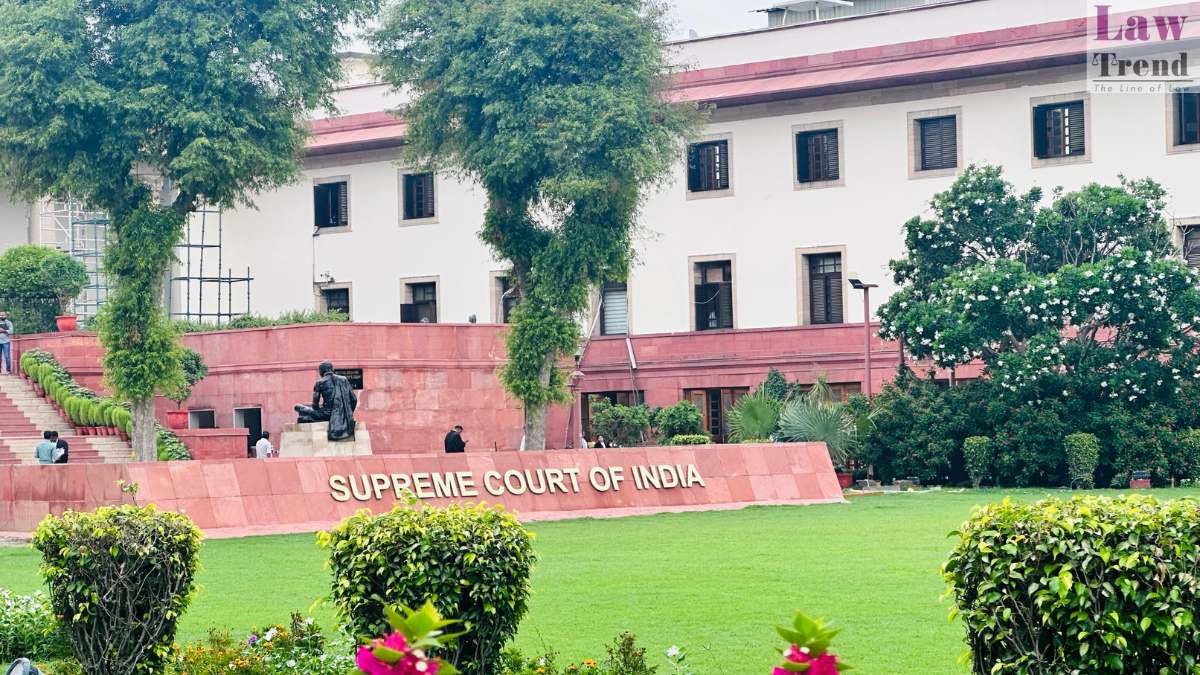
The Supreme Court on Tuesday expressed strong concern over reports that Booth Level Officers (BLOs) and other officials involved in the Special Intensive Revision (SIR) 2.0 of electoral rolls were being threatened in West Bengal and other states, cautioning that the situation could descend into “anarchy” if not dealt with urgently.
A bench of Chief Justice Surya Kant and Justice Joymalya Bagchi asked the Election Commission of India to promptly bring to the court’s notice any instance of obstruction, threat or lack of cooperation by state authorities in the ongoing SIR exercise.
“Bring to our notice instances of lack of cooperation, hindrances to work of BLOs and we will pass appropriate orders,” the bench told senior advocate Rakesh Dwivedi, appearing for the Election Commission.
The bench noted that SIR 2.0 requires field-level verification and coordination with state machinery, and warned that the threats being reported were a matter of “very serious” concern.
Dwivedi submitted that if the situation deteriorates, the poll panel may have no choice but to take police personnel — who fall under the jurisdiction of the state government — on deputation.
Justice Bagchi observed that the EC cannot simply take police “under its jurisdiction until the commencement of the election process”, seeking clarity on the circumstances under which the Commission can exercise such power.
Dwivedi maintained that the Election Commission “has all constitutional powers” to respond to threats against officers tasked with SIR duties.
At this point, Chief Justice Kant cautioned, “Deal with the situation or it will cause anarchy,” underlining the gravity of the matter.
Referring to reports from West Bengal, Dwivedi argued that there was no scenario where BLOs were under extreme pressure, stating they were required only to conduct enumeration for six to seven houses with 30 to 35 voters.
Justice Bagchi disagreed, noting the intensive nature of the work.
“It is not desk work and the BLOs have to go door to door, fill the enumeration form and then upload it. It is not as simple as it looks,” he observed, indicating that field-level challenges must be acknowledged.
Senior advocate V Giri, appearing for petitioner Sanatani Sangsad and others, submitted that incidents of threats and violence against BLOs and officials had been raised in the plea and urged the court to direct protective measures during the SIR process.
The bench signaled that if state machinery fails to cooperate or safeguard the process, it may be compelled to intervene with orders to ensure the electoral roll revision is carried out without intimidation or obstruction.