

High Courts Must Exemplify Standards of a ‘Model Employer’: SC Flays Arbitrary Discrimination in Staff Regularization
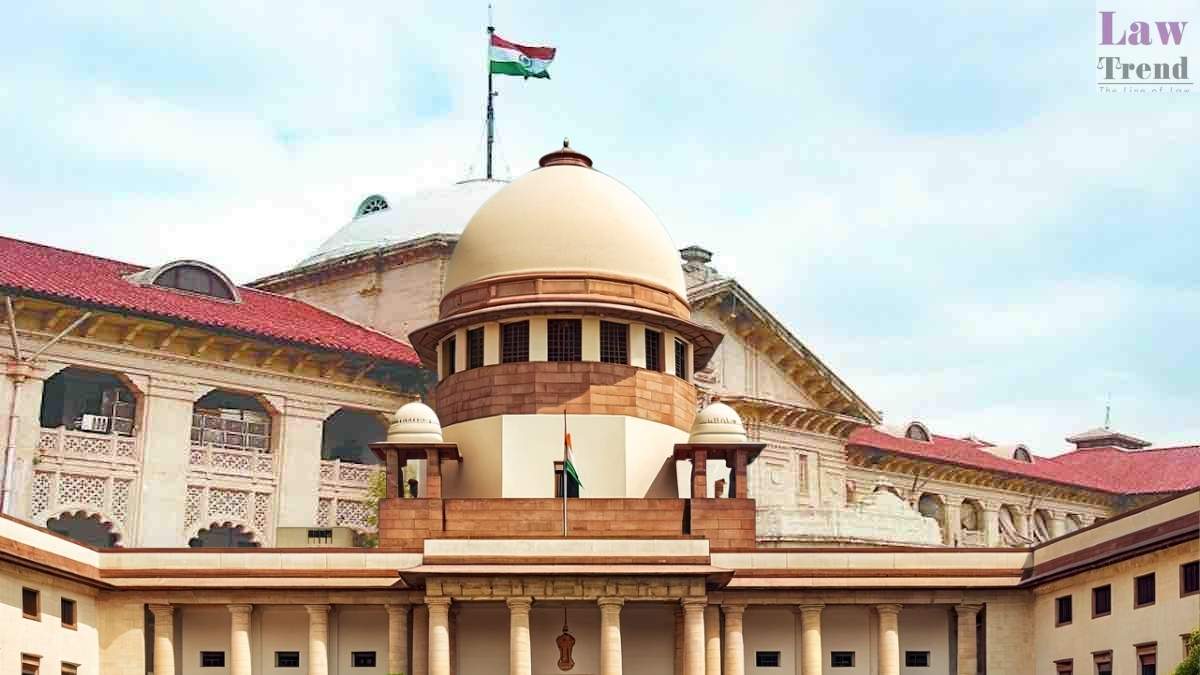

The Supreme Court has set aside the judgments of the Allahabad High Court and directed the reinstatement and regularization of several employees who had been denied confirmation on the post of Operator-cum-Data Entry Assistants/Routine Grade Clerks. The Bench comprising Justice J.K. Maheshwari and Justice Vijay Bishnoi observed that the High Court, as a “model employer,” had acted arbitrarily by denying regularization to the Appellants while granting it to similarly situated employees appointed through the same channel.

Invoking its inherent powers under Article 142 of the Constitution of India, the Court directed the reinstatement of the Appellants with all consequential benefits, excluding back wages.

Legal Issue and Outcome

The core legal issue involved the alleged discrimination in the regularization of Class-III employees appointed by the Chief Justice of the Allahabad High Court under his special powers. The Appellants contended that while numerous similarly situated employees were regularized, they were singled out and denied the benefit without reasonable justification.

The Supreme Court allowed the appeals, holding that the distinction drawn by the High Court’s administrative side between the Appellants and other employees was “arbitrary, unreasonable and superficial” and violative of Article 14 of the Constitution.

Background of the Case

The Appellants were appointed to the posts of Operator-cum-Data Entry Assistant/Routine Grade Clerk on an ad-hoc basis between 2004 and 2005. These appointments were made by the then Chief Justice of the Allahabad High Court exercising powers under Rule 8(a)(i) read with Rules 41 and 45 of the Allahabad High Court Officers and Staff (Conditions of Service and Conduct) Rules, 1976.

The controversy dates back to a Division Bench judgment of the High Court dated September 20, 2011 (Special Appeal No. 563 of 2008), which held that appointments made under the Chief Justice’s residuary powers were not illegal and directed the Registrar General to take steps for their confirmation/regularization. Following this, a Committee of two Judges was constituted to examine the cases of such appointees.

READ ALSO  Narco Terror Case: Supreme Court Dismisses Bail Plea Citing Serious Charges

In its report dated May 31, 2012, the Committee recommended the regularization of certain employees (referred to as Category A and Category B) but rejected the claims of the Appellants (Category C). The Committee reasoned that the Appellants’ appointment letters specified “ad-hoc” status and, since they were appointed after the cut-off date in the U.P. Regularization of Ad-hoc Appointments Rules, 1979, they were ineligible. Consequently, the Appellants’ services were eventually dispensed with in 2015.

The Appellants challenged the rejection before the High Court. A Single Judge dismissed their writ petitions, and the Division Bench affirmed this dismissal in the impugned judgments dated October 14, 2015, and October 30, 2015, leading to the present appeals before the Supreme Court.

Arguments of the Parties

For the Appellants: Senior Advocate P.S. Patwalia argued that the Appellants’ appointments were directly traceable to Rule 8(a)(i) of the 1976 Rules, which permits recruitment “in any manner so directed by the Chief Justice.” He submitted that the Appellants were appointed through the same channel and process as those who were regularized. Mr. Patwalia contended that failing to consider the Appellants on similar terms constituted a “glaring example of hostile discrimination” violating Articles 14, 16, and 21 of the Constitution.

For the Respondent (High Court): Advocate Preetika Dwivedi opposed the appeals, arguing that appointments outside the competitive channel should not be regularized. She asserted that the High Court retains discretion over its staffing patterns and that regularization is not a vested right. It was argued that the Division Bench correctly held that “ad-hoc appointments do not confer entitlement of regularization.” The Respondent also relied on a Full Bench decision of the High Court (In Re: Regularization of Class IV Employees) to justify the denial.

READ ALSO  Caste Scrutiny Committee Findings Should Not Ordinarly be Interfered by High Court: SC

Court’s Analysis

The Supreme Court meticulously analyzed the Committee’s report which had segregated the employees into three categories. The Court noted that:

  • Category A employees were ad-hoc but had a condition for an examination in their letters. The Committee recommended them because the exam condition had “lost force.”
  • Category B employees were recommended because their letters did not explicitly state “ad-hoc.”
  • Category C (Appellants) were rejected because their letters stated “ad-hoc” and no specific High Court rule existed for their regularization.

The Bench termed this classification “arbitrary, unreasonable and superficial.” The Court observed:

“All three categories of employees i.e., Category A, Category B, and Category C (the Appellants), were appointed through the same channel of recruitment, namely the exercise of powers vested in the Chief Justice under Rules 8(a)(i), 41, and 45 of the 1976 Rules sans following the regular recruitment process.”

The Court held that differentiating solely based on stipulations in the appointment letter, when the nature of work and the source of power for appointment were identical, violated the principle of equality. The Bench stated:

“Merely because the appointment orders contained different stipulations regarding the nature of appointment i.e. whether labeled ad-hoc or not, or whether containing a condition for examination or not, cannot be a rational basis for differential treatment for purpose of regularization when the channel of such appointments is identical.”

The Court emphasized the High Court’s duty as a constitutional institution:

READ ALSO  Supreme Court Clarifies Territorial Jurisdiction for Cheque Bounce Cases

“High Courts, being Constitutional Courts entrusted to uphold equality and fairness, are expected to encompass such principles within their own administrative functioning as well, and must exemplify the standards of a model employer.”

The Court also rejected the Respondent’s argument regarding the post being a “dead cadre” merged with ‘Assistant Review Officer’ or ‘Computer Assistant’, noting that similarly situated persons were granted regularization despite this merger.

Decision

The Supreme Court set aside the impugned judgments of the Allahabad High Court. Exercising its powers under Article 142, the Court issued the following directions:

  1. Reinstatement: The Appellants shall be reinstated to the posts they held at the time of discontinuance.
  2. Regularization: The Respondent is directed to regularize the service of the Appellants “after one year from their respective dates of appointment.”
  3. Consequential Benefits: The Appellants are entitled to seniority, promotion, pay fixation, increments, and retiral benefits. However, they are not entitled to salary for the period they did not work.
  4. Compliance: The directions must be complied with within 8 weeks.

The Court clarified that this judgment is limited to the specific facts of these appeals and “shall in no manner or form be treated as a precedent.”

Case Details

  • Case Title: Ratnank Mishra & Others Vs. High Court of Judicature at Allahabad through Registrar General (and connected appeals)
  • Case No: Civil Appeal No. 428 of 2022 (with Civil Appeal Nos. 429, 430, and 431 of 2022)
  • Citation: 2025 INSC 1477
  • Coram: Justice J.K. Maheshwari and Justice Vijay Bishnoi
  • Counsel for Appellants: Mr. P.S. Patwalia, Senior Advocate
  • Counsel for Respondent: Ms. Preetika Dwivedi, Advocate

Law Trend
Law Trendhttps://lawtrend.in/
Legal News Website Providing Latest Judgments of Supreme Court and High Court

Related Articles

Latest Articles

