

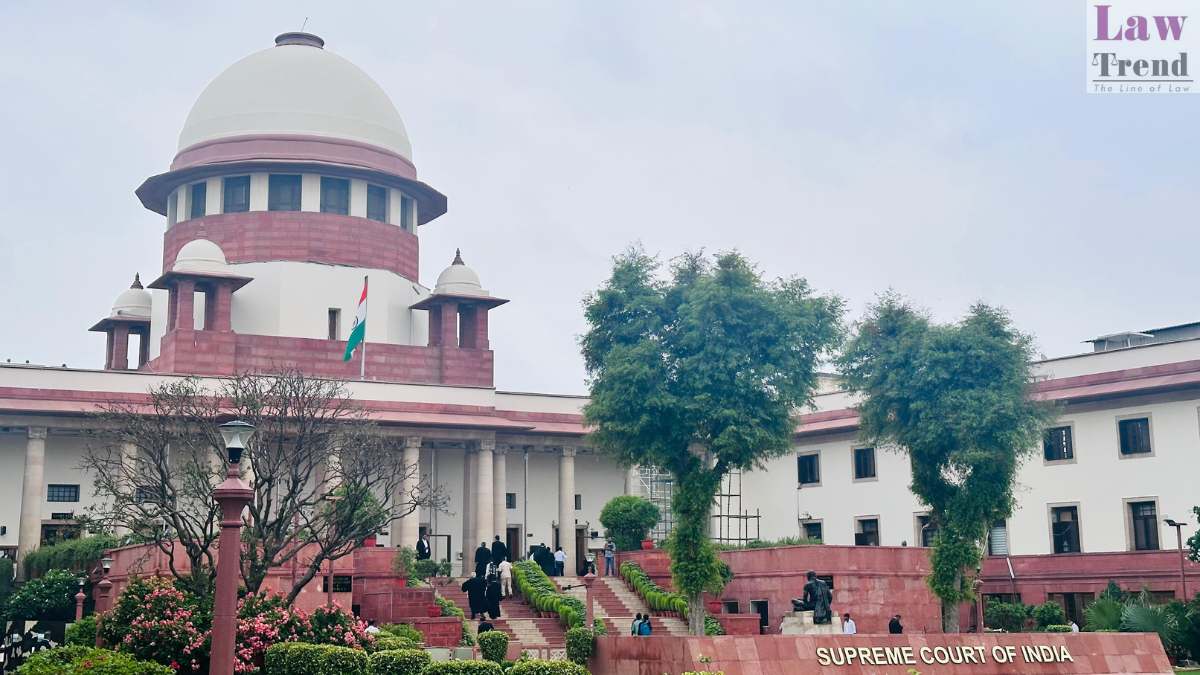
The Supreme Court of India on Monday agreed to examine a plea seeking the implementation of finger and iris-based biometric identification systems at polling stations across the country. The move aims to tackle persistent issues of electoral fraud, including duplicate and “ghost” voting.
A bench comprising Chief Justice Surya Kant and Justice Joymalya Bagchi issued notices to the Central Government, the Election Commission of India (ECI), and several states, seeking their responses to the proposal.
While the court showed a willingness to deliberate on the technical upgrade to the voting process, it explicitly ruled out any changes for the ongoing state Assembly elections.
“The prayer sought in the plea can’t be considered for the current state Assembly elections in some states,” the bench observed. However, the court emphasized the long-term importance of the issue, stating, “Whether such a recourse deserves to be followed before the next parliamentary election and/or state assembly elections needs to be examined.”
The petition, filed by advocate Ashwini Kumar Upadhyay, argues that the current manual verification methods are insufficient to protect the “purity and integrity” of the democratic process. According to the plea, the lack of a robust biometric system allows for several forms of malpractice to persist.
“The injury to citizens is extremely large as bribery, undue influence, personation, duplicate voting, and ghost voting still affects the purity and integrity of the electoral process,” the submission stated.
The petitioner contends that by linking voter IDs with finger and iris scans at the point of voting, the system would effectively eliminate the possibility of one individual casting multiple votes or someone voting in the name of a deceased or absent citizen.
The Supreme Court’s decision to issue notice marks the beginning of a formal legal examination into the feasibility and necessity of biometric polling. The responses from the Centre and the Election Commission will likely focus on the logistical, financial, and privacy implications of such a massive technological overhaul of the world’s largest democratic exercise.




