The Supreme Court of India on Monday stayed the operation of a Madhya Pradesh High Court order that contained severe personal remarks against an Additional Sessions Judge, including observations that he was “prima facie not fit” to discharge his duties.
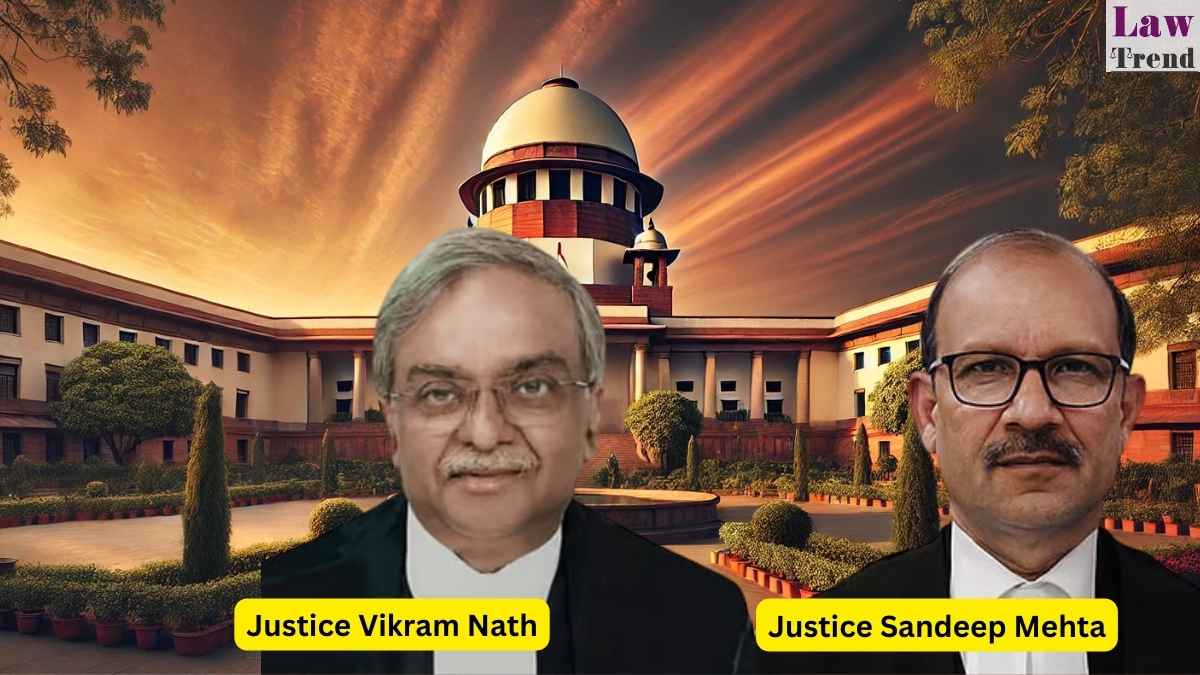
A Division Bench comprising Justice Vikram Nath and Justice Sandeep Mehta issued notice to the State of Madhya Pradesh and the High Court administration, effectively halting any administrative action that might have ensued from the impugned strictures.
The controversy reached the Apex Court via a petition filed by Additional Sessions Judge Pankaj Chaturvedi, who sought the expunction of caustic remarks made against him by the High Court while deciding a criminal appeal.
The High Court had observed that the trial judge “has absolutely no appreciation of evidence” and “prima facie is not fit to discharge work of Additional Sessions Judge.” The Supreme Court has now stayed the portion of the order containing these remarks and directed that the operation of the impugned order shall remain stayed in the meantime.
Background of the Case
The matter originated from a sensitive criminal case involving charges under the Indian Penal Code and the Protection of Children from Sexual Offences Act (POCSO Act). As the presiding officer of the trial court, Judge Chaturvedi had convicted the accused and sentenced him to 20 years of rigorous imprisonment.
The convict subsequently preferred an appeal before the Madhya Pradesh High Court. In November 2025, a Division Bench of the High Court, comprising Justice Vivek Agarwal and Justice Avanindra Kumar Singh, allowed the appeal and acquitted the accused.
However, beyond overturning the conviction, the High Court passed a separate order criticizing the trial judge’s competency. The High Court bench observed that Judge Chaturvedi had failed to properly appreciate the evidence on record, specifically disagreeing with his findings regarding the prosecutrix’s age and the evidentiary value of the DNA report. The High Court remarked that the trial court had relied on “concocted” school documents to establish the victim’s minority.
Escalating the criticism, the High Court noted that the judge did not know how to handle evidence and was unfit to handle Sessions cases. Consequently, the matter was placed before the Chief Justice of the High Court to assess whether the officer required training. Aggrieved by these directions and observations, Judge Chaturvedi approached the Supreme Court.
Arguments and Representation
Senior Advocate Mr. Sanjay R. Hegde appeared on behalf of the Petitioner, contending that the High Court had travelled beyond its jurisdiction by questioning the competence of the judge instead of limiting its adjudication to the merits of the appeal.
Mr. Hegde submitted that the conviction judgment delivered by Judge Chaturvedi was “well-reasoned and comprehensive.” He argued that the trial court had meticulously assessed both oral and documentary evidence, including school records, mark sheets, and testimonies of teachers, to determine the victim’s age in accordance with binding precedents.
The petitioner further argued that he was “condemned unheard.” It was submitted that the adverse observations violated the principles of natural justice as well as the rights guaranteed under Articles 14 and 21 of the Constitution of India. The petition emphasized that a judicial officer should not be subjected to personal attacks for a judgment rendered in the discharge of official duties, even if an appellate court takes a different view on the evidence.
The Petitioner was also represented by Advocate-on-Record Mr. Prathvi Raj Chauhan and advocates Mr. Prakash Sharma, Mr. Venkatesh Rajput, Mr. Hanumant Singh, Mr. Sachin Singh, and Mr. Ankit Tiwari.
Court’s Order and Decision
Taking cognizance of the grievances raised, the Supreme Court granted permission to file the Special Leave Petition and acceded to the request to implead the High Court of Madhya Pradesh as a respondent.
The Bench ordered:
“Issue notice, returnable within four weeks. In the meantime, the effect and operation of the impugned order shall remain stayed.”
This interim order effectively pauses the administrative process initiated by the High Court against the trial judge. The matter is listed for further hearing after the respondents file their response.