

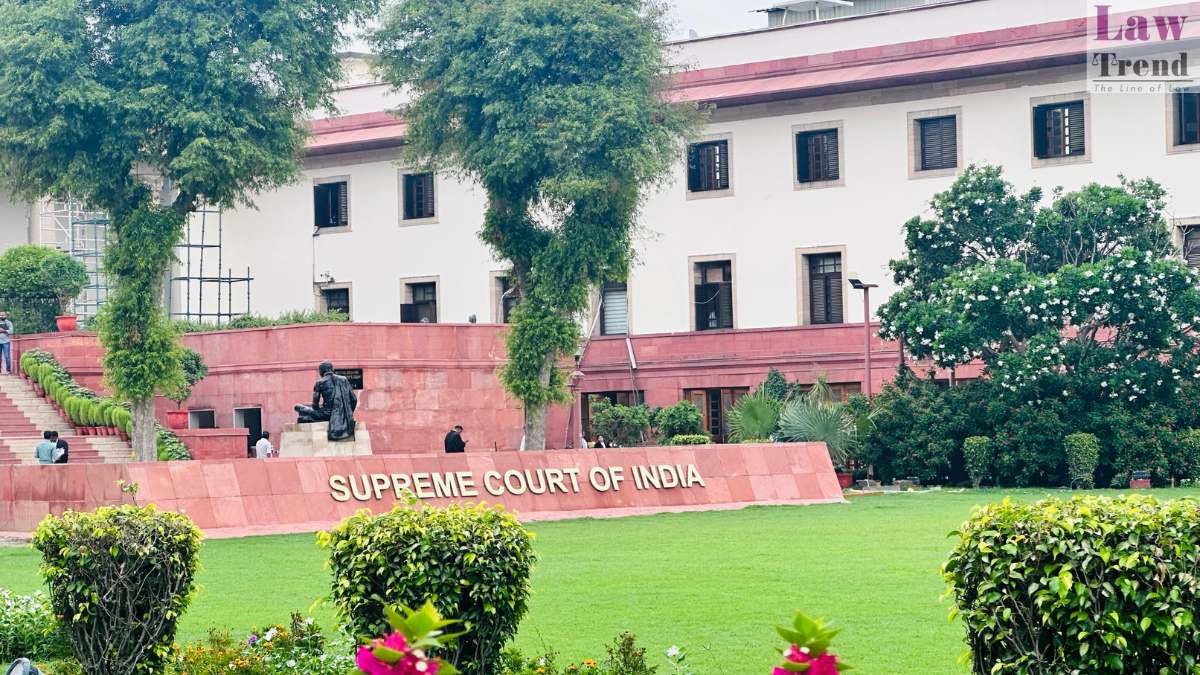
The Supreme Court on Thursday issued notices to the Union government and the Election Commission of India on a petition seeking a statutory ceiling on election expenditure by political parties, arguing that the current framework creates an uneven electoral field and undermines free and fair polls.
A bench comprising Chief Justice Surya Kant and Justices Joymalya Bagchi and Vipul M. Pancholi directed the respondents to file their replies and posted the matter for further hearing on April 27. The petition has been filed by NGOs Common Cause and the Centre for Public Interest Litigation, represented by advocate Prashant Bhushan.
The plea challenges the existing legal regime under the Representation of the People Act, 1951, which prescribes strict limits on campaign spending by individual candidates but does not impose any ceiling on political parties. According to the petitioners, this distinction distorts electoral competition by allowing parties to incur substantial expenses in support of candidates without those amounts being counted toward the candidates’ statutory spending limits.
At the centre of the challenge is Explanation 1(a) to Section 77(1) of the Act. The provision excludes from a candidate’s expenditure account the money spent by political parties for the purpose of promoting that candidate’s election. The petition contends that this creates a “legal fiction” that permits large-scale spending to influence electoral outcomes while formally maintaining candidate spending caps.
The NGOs have sought a declaration that Explanation 1(a) is unconstitutional on the ground that it violates Articles 14 and 19(1)(a) of the Constitution. They argue that the absence of limits on party spending results in an “unlevel playing field” and erodes the principle of equality in electoral contests.
The petition emphasises that free and fair elections are a basic feature of the Constitution and that unchecked money power poses a direct threat to democratic integrity. It also cites the Court’s past observations on the growing role of financial influence in elections, including concerns that campaign funding often comes from undisclosed or illegal sources with vested interests.
According to the plea, limiting only candidate expenditure while leaving party spending unrestricted defeats the purpose of the statutory cap and weakens safeguards against corruption in the electoral process.
The matter will now be taken up after responses are filed by the Centre and the Election Commission.




