

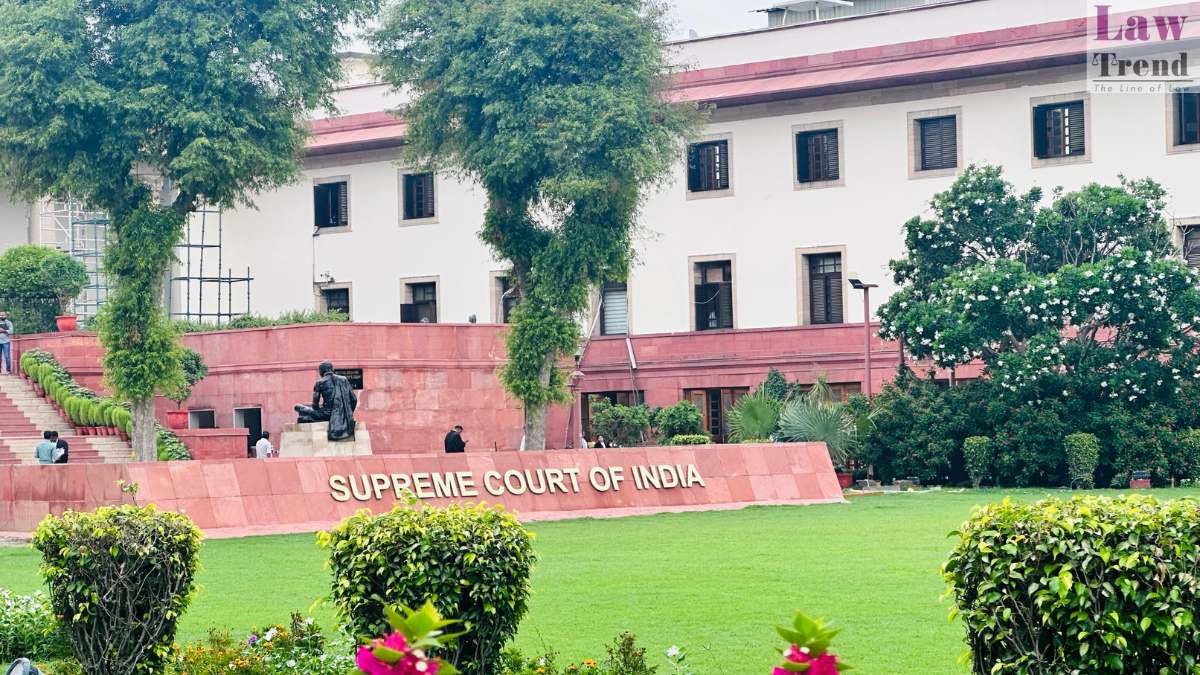
The Supreme Court of India on Monday declined to interfere with a Delhi High Court verdict that upheld the Election Commission’s authority to recognize political parties as “national” or “state-level” entities. The decision effectively reaffirms the validity of the Election Symbols (Reservation and Allotment) Order, 1968, which governs how symbols are distributed to various political groups across the country.
The core legal challenge centered on the validity of the Election Symbols (Reservation and Allotment) Order, 1968. The petitioner argued that the Election Commission (EC) lacked the statutory power to classify political parties into hierarchical categories like “national” or “state” parties. Furthermore, the plea alleged that this classification created an unconstitutional and discriminatory advantage for established parties over “newly-born” political entities in the electoral process.
The matter reached the apex court following a January 9 judgment by the Delhi High Court. The High Court had dismissed the original petition, observing that the issues raised were not novel and had already been settled by previous Supreme Court rulings. The petitioner subsequently moved the Supreme Court to challenge the High Court’s refusal to strike down the classification system.
The petitioner’s primary contention was that the EC’s recognition of parties as national or state-level entities was “illegal” due to a lack of specific power.
A significant portion of the argument focused on the “unfair” advantage regarding campaign time. The petitioner asserted that:
- Established Parties: National and state-level parties are allotted reserved symbols well in advance of the election, allowing for prolonged campaigning.
- New Parties: Candidates from newly formed parties only receive their symbols after the date of scrutiny. This, the petitioner claimed, leaves new entrants with a “very short span of time” to familiarize the electorate with their symbol, thereby creating an uneven playing field.
A bench comprising Chief Justice Surya Kant and Justice Joymalya Bagchi heard the petition against the High Court’s verdict.
In its January 9 judgment, which the Supreme Court has now refused to entertain, the Delhi High Court had noted that the petitioner was essentially “re-agitating” issues that the Supreme Court had already decided. The High Court found no reason to conclude that the Symbols Order was either “without any statutory powers” or “discriminatory.”
Crucially, the High Court had observed that the apex court had previously established that the “allotment of election symbols could not be claimed as a fundamental right.” By refusing to entertain the petition, the Supreme Court has maintained the status quo regarding the EC’s regulatory framework for political parties.


