

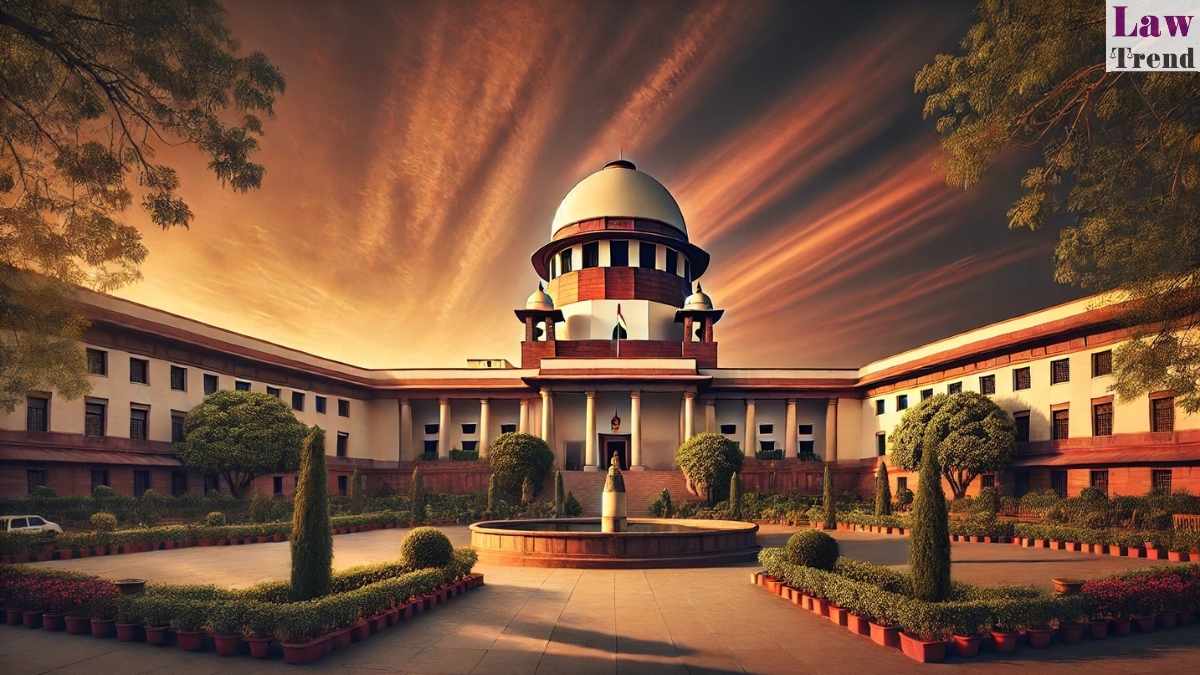
The Supreme Court on Friday declined to entertain a petition seeking recognition of hate speech against the Brahmin community as a punishable offence, termed as “Brahmophobia”, while reiterating that hate speech should not be directed at any community in the country.
A bench comprising Justice B.V. Nagarathna and Justice Ujjal Bhuyan made it clear during the hearing that the issue of hate speech cannot be confined to the protection of a single community. The court underscored that the principle must apply universally, without singling out any particular group.
Justice Nagarathna observed, “We don’t want hate speech against any community in the country. It depends on education, intellectual development, tolerance, and patience. Once everyone follows the fraternity, automatically there will be no hate speech.”
During the proceedings, the bench questioned the approach of the petitioner, Mahalingam Balaji, who appeared in person, asking why protection was being sought specifically for one community rather than addressing hate speech in general. The court indicated that instances of alleged hate speech could be taken up before appropriate forums, rather than seeking broad judicial directions.
When the petitioner raised concerns about the judiciary itself being targeted on social media, the bench remarked that it was not concerned with such attacks.
Balaji had sought directions to the Centre and state governments to recognise hate speech against Brahmins as a form of caste-based discrimination and to initiate prompt legal action. He also urged the court to order a detailed investigation into alleged coordinated campaigns—both domestic and foreign—aimed at inciting caste-based tensions through targeted hatred against the Brahmin community.
In addition, the plea called for the constitution of a high-level truth and justice commission to investigate historical incidents, including the 1948 Maharashtra Brahmin violence and the 1990 Kashmiri Pandit exodus, and to recommend rehabilitative, economic, and educational support measures for survivors and their descendants.
The petitioner further sought directions to disqualify public servants or constitutional office holders found engaging in caste-based hate speech against Brahmins.
However, before the court could pass any substantive order, Balaji requested permission to withdraw the petition. Accepting the request, the bench recorded, “The petitioner, who has appeared in person, has sought permission to withdraw this petition. His submission is placed on record. The writ petition is dismissed as withdrawn.”
The case was accordingly closed without any adjudication on the merits of the issues raised.




