

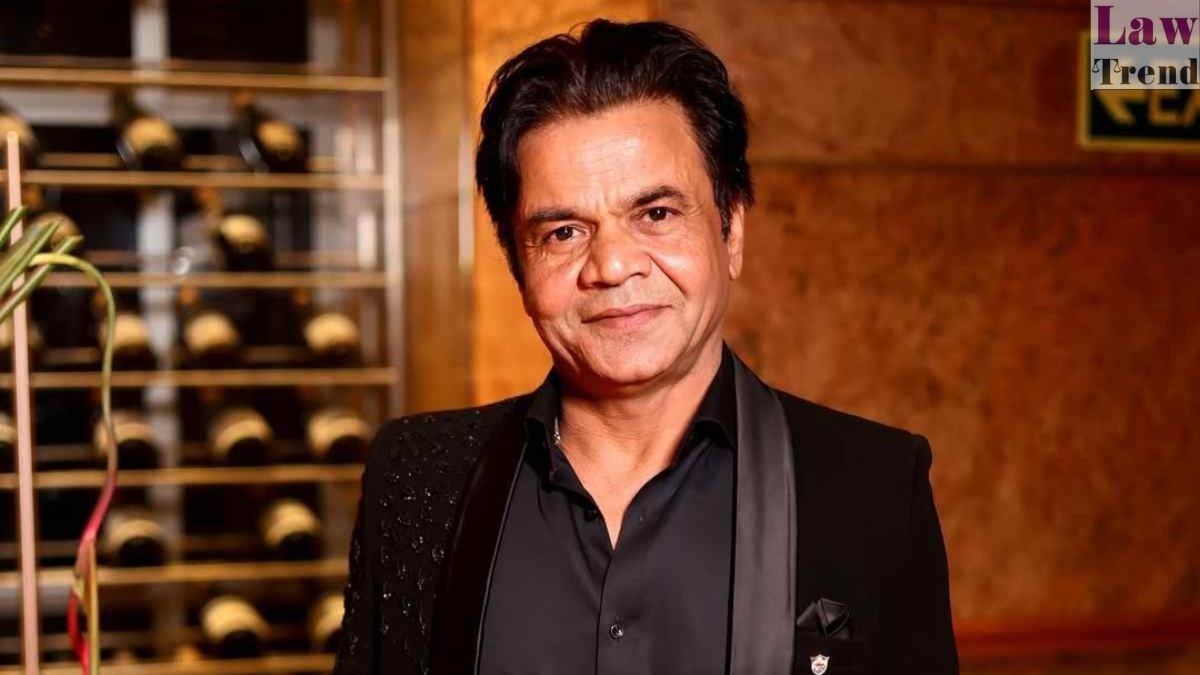
The Supreme Court on Thursday directed Bollywood actor Rajpal Yadav and Murli Projects Private Limited to explore an amicable settlement in the long-running cheque bounce dispute after the actor deposited ₹2 crore towards his outstanding dues.
A Bench comprising Chief Justice of India Surya Kant and Justice Joymalya Bagchi referred the matter to the Supreme Court Mediation Centre, observing that the dispute over the remaining payment could potentially be resolved through negotiations.
The Court also allowed Yadav to apply for the release of his passport for professional travel abroad, subject to conditions that may be imposed by the trial court.
Supreme Court Encourages Settlement
During the hearing, the Bench took note of Yadav’s earlier proposal to sell his ancestral property to arrange funds for clearing the outstanding amount.
The judges expressed concern that the actor had reached a stage where he was considering selling his ancestral property to bring the litigation to an end.
The Court indicated that although it could examine the legal merits of the appeal, the scope for interference was limited in view of the proceedings before different courts. It therefore encouraged the parties to settle the dispute instead of continuing the litigation.
Both Yadav and the counsel representing Murli Projects agreed to mediation.
Recording their consent, the Bench directed the parties to participate in proceedings before the Supreme Court Mediation Centre and approach the process with an open mind.
Yadav Deposits ₹2 Crore Following Earlier Undertaking
At the previous hearing on October 7, Yadav had appeared personally before the Supreme Court and submitted demand drafts worth ₹1.15 crore.
His lawyer informed the Bench that a prospective purchaser of the actor’s ancestral property would contribute another ₹85 lakh, bringing the immediate payment to ₹2 crore.
The remaining liability, counsel submitted, would be discharged using the proceeds from the proposed sale of the property.
The Supreme Court had accepted the proposal and indicated that it would determine a schedule for payment of the outstanding amount.
With Yadav having deposited the promised ₹2 crore, the Bench decided on Thursday to refer the dispute concerning the balance payment to mediation.
Dispute Originated From Loan for 2012 Film
The proceedings arise from financial arrangements connected with Yadav’s 2012 film Ata Pata Laapata.
Yadav and his wife had received ₹5 crore from Murli Projects for the film being produced by the actor. Difficulties in completing the project within the agreed period led the parties to execute four agreements.
Under the third agreement, Yadav issued eight security cheques to the company.
A subsequent consent agreement dated April 21, 2013, replaced the earlier arrangement. According to Yadav’s petition, the new agreement required Murli Projects to return the eight security cheques and provided for the issuance of four fresh cheques of ₹10 crore each.
Yadav has maintained that the company retained the earlier cheques despite the revised agreement and presented seven of them for payment. The cheques were dishonoured, resulting in criminal complaints against the actor and his wife.
He has argued that the later consent agreement rendered the previous cheques invalid and that complaints based on those instruments were not maintainable under Section 138 of the Negotiable Instruments Act.
Earlier Conviction and High Court Proceedings
In May 2024, a sessions court convicted Yadav in the cheque bounce case and sentenced him to six months’ imprisonment.
The Delhi High Court subsequently suspended his sentence after his counsel assured the Court that efforts would be made to settle the dispute. The matter was also referred to the Delhi High Court Mediation Centre.
However, the High Court later expressed dissatisfaction over repeated failures to honour payment commitments despite several opportunities.
Among the unfulfilled assurances was a proposal to deposit ₹2.5 crore in instalments.
In February 2026, the High Court directed Yadav to surrender before the jail authorities for non-compliance with its orders. His request for additional time was rejected, following which he surrendered on February 5.
The High Court subsequently granted him interim suspension of sentence after he deposited ₹1.5 crore with the complainant.
Further defaults in making the remaining payments, despite repeated undertakings, resulted in a three-month imprisonment order, which Yadav challenged before the Supreme Court.
Supreme Court Had Extended Payment Deadlines
During the proceedings before the Supreme Court, the actor sought relief from the requirement to surrender.
On September 8, the Court exempted him from surrendering, subject to depositing the required amount by September 9.
When the payment was not completed, the Bench granted another two weeks on September 15 and extended the deadline to October 5.
Yadav subsequently proposed paying ₹2 crore immediately and arranging the remaining amount through the sale of his ancestral property.
Following compliance with the ₹2 crore payment undertaking, the Supreme Court has now opted for mediation to explore a settlement of the outstanding financial dispute.
The appeal remains before the Supreme Court, with the parties expected to pursue negotiations through its Mediation Centre.




