

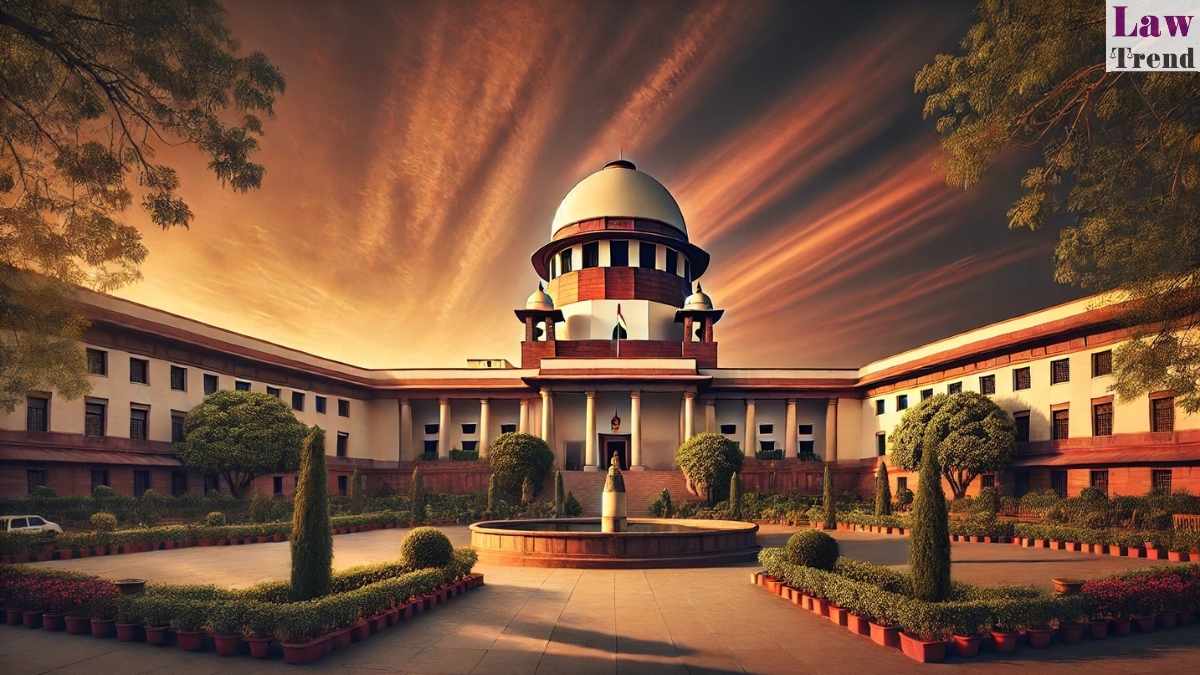
The Supreme Court of India has rejected a plea seeking a review of its earlier ruling, which declared that individuals from Scheduled Caste communities instantly forfeit their reservation status upon converting to any religion other than Hinduism, Sikhism, or Buddhism.
A bench comprising Justice Prashant Kumar Mishra and Justice Manmohan declined to reconsider the March 24, 2026 judgment, stating in a July 15 order that no error was evident in the record. The court also turned down an application requesting an oral hearing on the matter, leaving the original verdict intact.
The ruling upholds a prior decision by the Andhra Pradesh High Court, which established that converting to Christianity results in an immediate and complete loss of Scheduled Caste classification regardless of an individual’s birth heritage.
Constitutional Provisions and Legal Limits
Under Clause 3 of the Constitution (Scheduled Castes) Order, 1950, eligibility for Scheduled Caste status is strictly restricted to individuals who adhere to Hinduism, Sikhism, or Buddhism. The apex court noted that this legal bar is absolute, meaning that adopting any unlisted faith leads to the immediate termination of all associated statutory reservations, protections, preferences, and government entitlements.
The court observed that individuals cannot simultaneously practice an unrecognised faith for personal, social, or spiritual purposes while asserting Scheduled Caste membership to obtain legal or economic benefits. Any person claiming protected status must offer clear and convincing proof that they belong to a specifically notified community under the relevant presidential orders.
Legislative History and Religion Exclusions
Tracing the history of the 1950 presidential order, the court highlighted that Scheduled Caste recognition was initially limited exclusively to followers of the Hindu faith. Subsequent parliamentary amendments expanded the framework, incorporating Sikhs in 1956 and Buddhists in 1990.
However, Christianity was never included in these statutory revisions. The court explained that Christianity’s core theological principles do not recognise or accommodate the caste system, making conversion to the faith incompatible with maintaining caste-based reservations.
Impact on Tribal Status and Customs
Addressing the criteria for Scheduled Tribes designated under Clause 1 of Article 342 of the Constitution, the court clarified that individuals must actively retain their tribal identity in substance to claim constitutional benefits.
When a member of a Scheduled Tribe converts to another religion and abandons traditional customs, rituals, and cultural practices over time, questions regarding their tribal identity become factual matters that must be decided during a trial. The court noted that a person who fully assimilates into a converted religion and casts off tribal traditions can reasonably be presumed to no longer form part of that tribe.
Conditions Governing Reconversion
The ruling also outlined specific standards for individuals seeking to reclaim Scheduled Caste status through reconversion back to Hinduism, Sikhism, or Buddhism. To regain eligibility, a claimant must satisfy three mandatory legal conditions:
- Unquestionable proof of original membership in a caste recognized under the 1950 order.
- Verifiable and genuine evidence demonstrating a bona fide reconversion to the original faith.
- Clear proof that the individual has been accepted and re-assimilated by members of their original caste and broader community.


