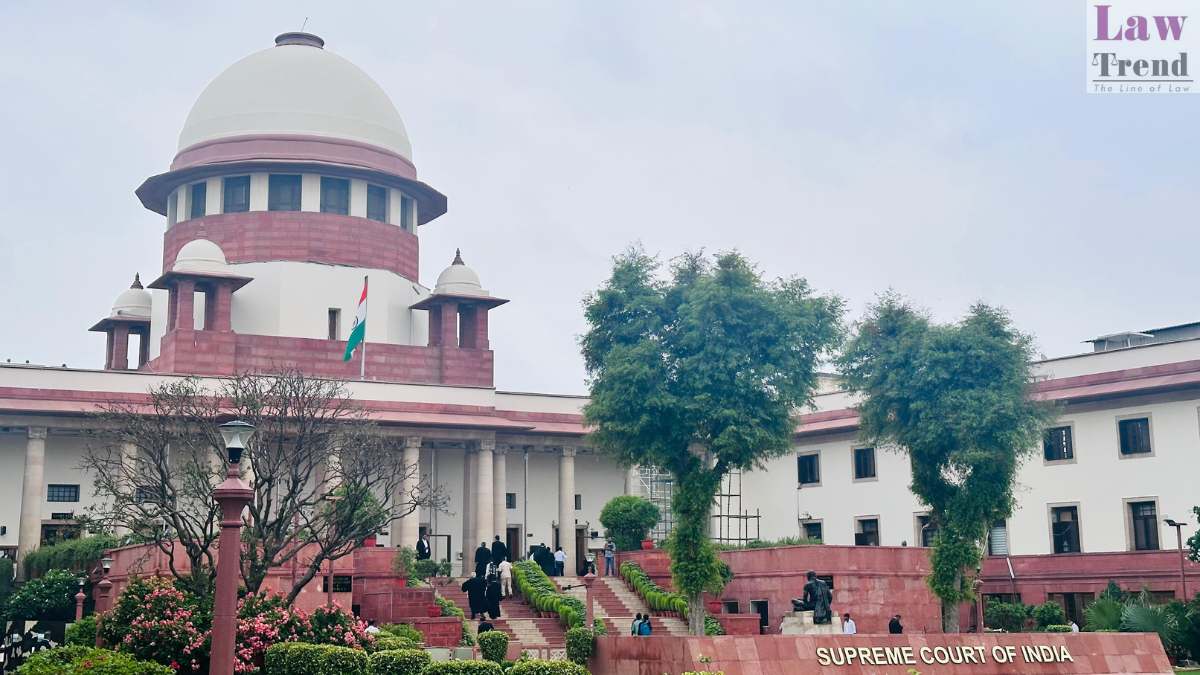
The Supreme Court on Monday signaled that it may lay down comprehensive guidelines for courts across the country on how observations and orders should be framed in sexual assault cases, warning that insensitive judicial remarks can create a chilling effect on survivors, their families, and society at large.
A bench of Chief Justice Surya Kant and Justice Joymalya Bagchi was hearing suo motu proceedings triggered after the court took cognisance of remarks contained in a March 17 order of the Allahabad High Court. During the hearing, lawyers flagged several recent instances of troubling oral and written observations made by different courts while adjudicating sexual offence matters.
Senior advocate Shobha Gupta pointed to a recent matter where the Allahabad High Court reportedly observed that since the alleged incident occurred at night, it constituted an “invitation” to the accused. She cited similar concerns arising from cases in the Calcutta and Rajasthan High Courts. Another counsel informed the bench that earlier in the day, despite an in-camera proceeding before a trial court, several people remained present and the survivor was allegedly harassed during the hearing.
Chief Justice Kant remarked that such observations may not only deter survivors from pursuing justice but may also be used to pressure them into withdrawing complaints. “These kinds of observations at the trial court level must be going unnoticed and we would like to issue some comprehensive directions,” the bench said, asking lawyers to submit concise written suggestions before the next hearing.
The suo motu matter concerns an incident in which three men allegedly stopped a woman and her 14-year-old daughter, grabbed the minor’s breasts, broke the string of her garment, and attempted to drag her beneath a culvert.
The Allahabad High Court, in its impugned March 17 order, held that the act was insufficient to infer an attempt to commit rape and directed that lesser charges be framed under Section 354B of the IPC, relating to assault with intent to disrobe.
Section 354B carries a punishment of three to seven years imprisonment.
Taking note of the facts, the Supreme Court said it would set aside the High Court’s order and let the trial proceed on the more serious allegations. To avoid prejudice to the survivor, the bench stayed the High Court’s directions and ordered that if the trial court issues summons, it must summon the accused under Sections 376 and 511 of the IPC and relevant provisions of POCSO, without being influenced by the High Court’s conclusions. The court clarified that this is not an indication of guilt.
The bench also observed that the accused had been served notices twice by state agencies but failed to appear. Senior advocate H S Phoolka submitted that the accused were regularly attending trial court proceedings and were well aware of the case before the apex court. The Supreme Court directed the concerned SHO to inform the accused and allowed them the option to join proceedings on the next date, making clear that the matter would not be adjourned over service issues thereafter.
The Supreme Court initiated proceedings suo motu after receiving a letter from the “We the Women of India” collective flagging concerns over the judicial remarks in the Allahabad High Court order.
In an earlier hearing on March 26, a bench led by Justice B R Gavai had described the High Court’s observations as “totally unknown to the canons of law” and reflective of an “inhuman approach.”
The matter will next be heard after written suggestions on potential guidelines are placed before the court.