Supreme Court Issues Comprehensive Directions to Curb Student Suicides in HEIs; Mandates 24/7 Medical Access and Time-Bound Filling of Vacancies
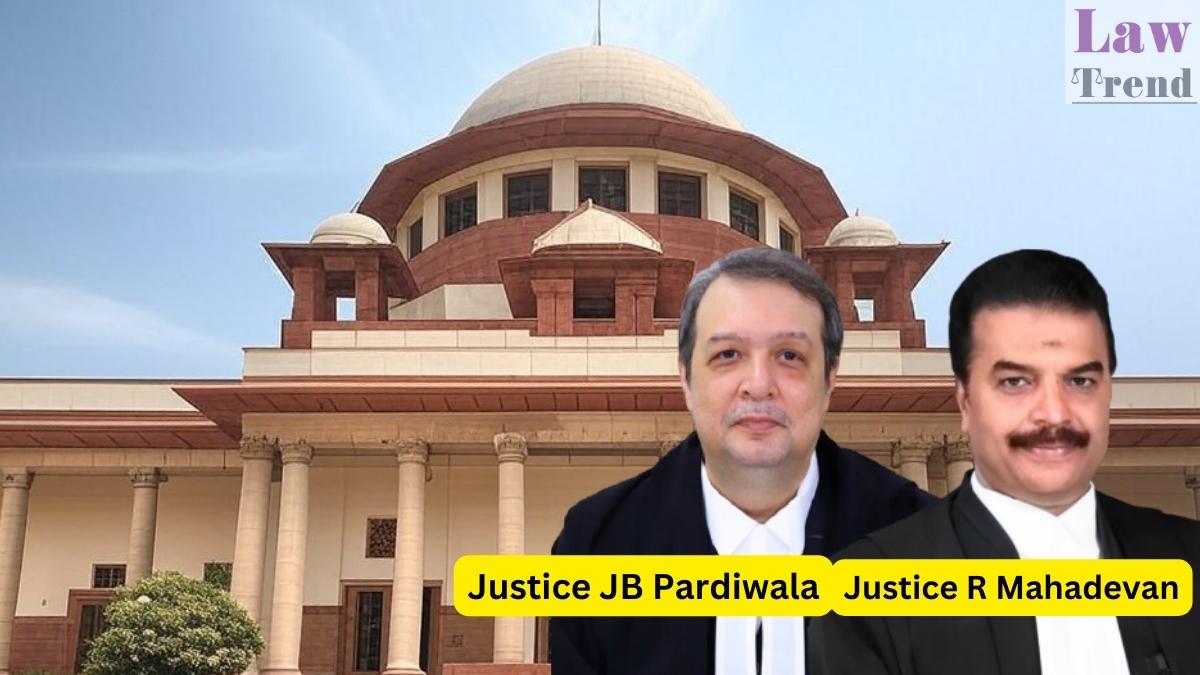

The Supreme Court of India has issued a slew of comprehensive directions to the Union of India, State Governments, and Higher Educational Institutions (HEIs) to address the “disturbing pattern” of student suicides across the country. In a significant order delivered on January 15, 2026, the bench of Justice J.B. Pardiwala and Justice R. Mahadevan mandated 24/7 access to medical help for residential HEIs, time-bound filling of faculty and administrative vacancies, and the clearing of scholarship backlogs.

The order was passed after the Court perused the interim report of the National Task Force (NTF), which was constituted by the Court in its previous judgment dated March 24, 2025, to identify the causes of student suicides and recommend preventive measures.

Background of the Case

The proceedings arose from the case Amit Kumar & Ors. v. Union of India & Ors., where the Supreme Court had earlier clarified the law regarding the mandatory registration of an FIR in the event of a student suicide. Recognizing the gravity of the issue, the Court had constituted the NTF to analyze the underlying causes of distress among students in HEIs.

The bench noted that despite its previous directions, it had come across “several more incidents of student suicides” reported in educational institutions across the country. The Court observed that these incidents reminded them of the “gravity and enormity of the issue.”

Findings of the National Task Force (NTF)

The NTF, in its interim report, identified several “sub-merged sections of the ice-berg of student distress.” The key findings highlighted by the Court include:

  • Massification without Support: The “massification” and privatization of higher education have led to unprecedented enrollment without adequate institutional support frameworks, leaving students vulnerable.
  • Structural Inequalities: Students from marginalized groups (SC/ST/OBC), persons with disabilities (PwDs), and those from rural backgrounds face persistent structural inequalities. The NTF found that support systems like Equal Opportunity Cells (EOCs) and Internal Complaints Committees (ICCs) often exist “only on paper” or are “merely tokenistic.”
  • Ragging: The menace of ragging persists, often normalized as “bonding exercises.”
  • Academic Pressure: Transitioning students face intense pressure, rigid attendance policies, and “borderline exploitative academic culture,” particularly in medical and technical institutions.
  • Lack of Mental Health Services: A survey by the NTF revealed that 65% of the surveyed institutes do not provide access to any Mental Health Service Providers (MHSPs), and 73% lack full-time MHSPs.
  • Financial Stress: Delays in scholarship disbursements and institutional policies holding students accountable for fee payments during such delays were identified as major stressors.
READ ALSO  Schools shall not debar students for Non-Payment of Fees; 15% Deduction be Given: Supreme Court

The Court expressed deep disappointment with the “apathetic attitude” of most HEIs, noting that only 3.5% of 60,383 HEIs responded to the NTF’s online survey.

Directions Issued by the Supreme Court

Exercising its plenary powers under Article 142 of the Constitution, the Court issued the following specific directions in Paragraph 45 of the order:

  1. Data Maintenance: The Sample Registration System (SRS) data on suicides (15-29 age group) must be centrally maintained. The National Crime Records Bureau (NCRB) must distinguish between school-going students and HEI students in its annual reports.
  2. Mandatory Reporting: All HEIs must report any incident of suicide or unnatural death of a student (on campus or outside) to the police authorities immediately. An annual report of such deaths must be submitted to the UGC, AICTE, NMC, and other regulatory bodies, or the Ministry of Education.
  3. Medical Access: Every residential HEI must have access to qualified medical help round the clock, either on campus or within a one-kilometer radius, to provide emergency support.
  4. Filling Vacancies: All vacant faculty positions (teaching and non-teaching) must be filled within four months, with priority given to reserved posts. Special recruitment drives must be held for marginalized communities.
  5. Administrative Posts: Vacancies for Vice-Chancellors, Registrars, and other key positions must be filled within four months. Future vacancies must be filled within one month of arising.
  6. Scholarships: The backlog of pending scholarship disbursements must be cleared within four months by Central and State authorities. The Court strictly directed that “no student should be prevented from appearing in an examination, removed from hostels, barred from attending classes, or have their marksheets and degrees withheld because of delays in disbursal of scholarships.”
  7. Strict Compliance: HEIs were put to strict notice to remain fully compliant with binding regulations, including those on ragging, equity, and sexual harassment.
READ ALSO  Name of an Individual is an Identity Marker and the Right to Be Identified by One’s Name is Fundamental to One’s Very Identity: Delhi HC

Future Steps

The Court has further requested the NTF to create model Standard Operating Procedures (SOPs) for:

  • Periodic “well-being audits” of HEIs.
  • Faculty sensitization and training.
  • Mental Health Services, including gatekeeper training and confidentiality protocols.

The Court directed the Union of India and State Governments to communicate these directions to all HEIs at the earliest for appropriate action.

Case Details

  • Case Title: Amit Kumar & Ors. v. Union of India & Ors.
  • Case Number: Criminal Appeal No. 1425 of 2025 (Arising out of S.L.P. (Criminal) No. 13324 of 2024)
  • Coram: Justice J.B. Pardiwala and Justice R. Mahadevan

READ ALSO  Successor Judge Not Required to Rehear Conviction, Only Sentence Hearing Needed: Supreme Court
Ad 20- WhatsApp Banner

Law Trend
Law Trendhttps://lawtrend.in/
Legal News Website Providing Latest Judgments of Supreme Court and High Court

Related Articles

Latest Articles