

Supreme Court Directs West Bengal Education Secretary to Decide Part-Time Teachers’ Salary Claims After Fresh Hearing
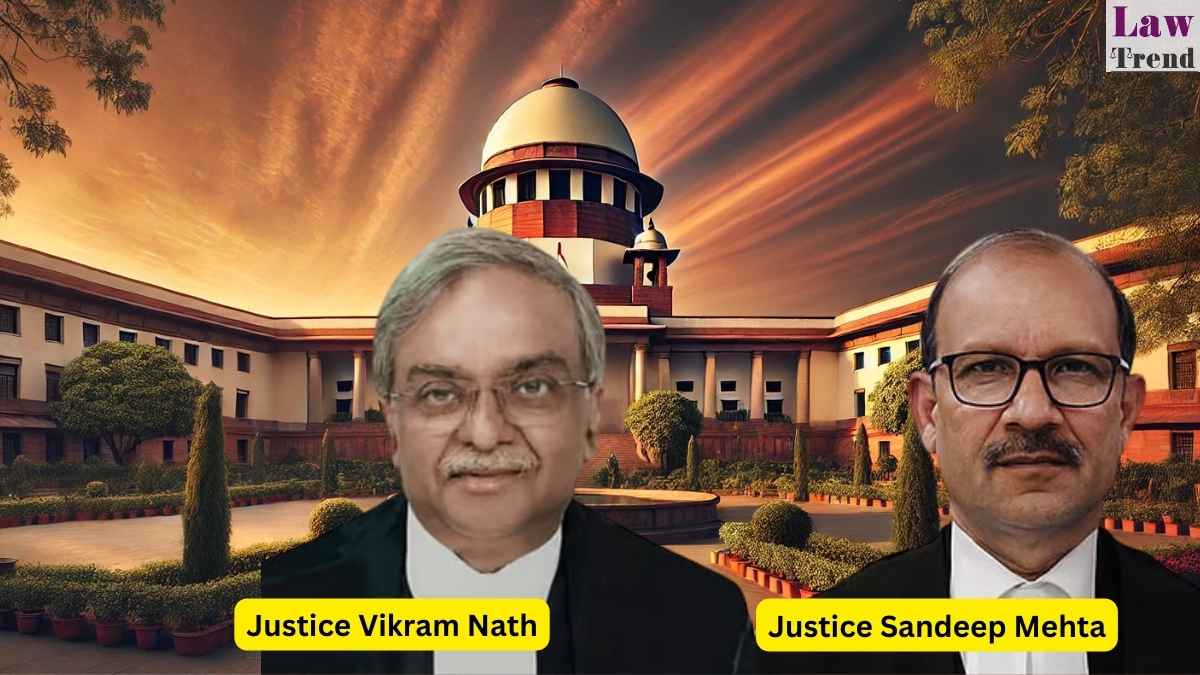

The Supreme Court of India has disposed of a batch of contempt petitions filed by part-time contractual teachers against the State of West Bengal, directing the Secretary, School Education Department, to decide their claims for salary arrears afresh after affording them an opportunity of hearing.

The Bench of Justice Vikram Nath and Justice Sandeep Mehta passed the order while hearing allegations of non-compliance with the Court’s previous directions regarding the disbursement of salaries equivalent to the basic pay of regular teachers.

Background of the Case

The contempt proceedings stemmed from the alleged violation of the Supreme Court’s order dated July 16, 2024, in The State of West Bengal and Ors. v. Anirban Ghosh and Ors. In that order, the Supreme Court had directed the State Government to comply with the Calcutta High Court’s judgment dated September 3, 2020.

The High Court’s 2020 judgment had modified a Single Judge’s order and directed the State to:

  1. Pay salaries equal to the basic pay of a regular teacher working in the Higher Secondary Section of a Non-Government Aided Higher Secondary School for the period from July 28, 2010, to December 24, 2013.
  2. Consider representations from teachers justifying their claim to basic pay for the period from April 2007 to December 2009 and for the period subsequent to December 24, 2013.
READ ALSO  Termination Based on Allegations Without Inquiry Violates Natural Justice Principles: Andhra Pradesh High Court

The petitioners alleged that despite these specific directions, the relief had not been extended to them.

Arguments of the Parties

The petitioners, represented by Senior Counsel, contended that the State had failed to release the payments due for the entire period of their service. They argued that although representations were submitted, “no opportunity of hearing was ever afforded to them.” Furthermore, they submitted that “relevant records were not summoned from the concerned school authorities,” which prevented the proper calculation and release of dues.

The petitioners relied heavily on the High Court’s direction which mandated that the Secretary “shall consider such representation… upon giving an opportunity of hearing to the writ petitioners as well as concerned schools.”

On the other hand, the respondent-contemnors filed a reply asserting that there was “no willful breach” of the Court’s orders. They pleaded that the arrears for the specific period from July 28, 2010, to December 24, 2013, “stand duly disbursed.”

Court’s Analysis and Observations

During the hearing, Shri Kapil Sibal, learned Senior Counsel appearing for the respondent-contemnors, made a significant concession regarding the procedural lapses. The Court noted in its judgment:

READ ALSO  MP High Court Directs State to Pay Rs 50,000 for Unnecessarily Protracting Plea on Government Circulars

“Learned senior counsel, Shri Kapil Sibal, fairly conceded that the petitioners were not granted an opportunity of hearing in terms of the directions issued by the High Court, as expanded by this Court, nor were the records of the concerned schools called for while deciding their representations.”

Acknowledging this procedural lapse, the Court determined that a fresh consideration of the petitioners’ grievances was necessary.

Decision and Directions

The Supreme Court disposed of the contempt petitions with the following specific directions:

  1. Fresh Representation: The petitioners were granted liberty to submit a fresh representation before the Secretary, School Education Department, within six weeks, setting out their “entire grievances/claims/entitlements in terms of the order passed by the High Court.”
  2. Opportunity of Hearing: The Court directed that the Secretary “shall afford an opportunity of hearing to the petitioners in representative capacity either in person or through a legal advisor/advocate.”
  3. Inspection of Records: The Court mandated that “corresponding records pertaining to the engagement of the petitioners shall be summoned from the respective schools prior to proceeding with the hearing and the parties shall be permitted to inspect the same.”
  4. Timebound Decision: The competent authority was directed to pass a “detailed reasoned order” within a period of four months.
READ ALSO  Sec 357 CrPC | Where Fine Imposed U/Sec 138 NI Act, Court Ought to Order Compensation From Fine: Kerala HC

The Court clarified that if an adverse order is passed, it shall be open to the petitioners to avail such legal remedies as may be available to them.

Case Details:

  • Case Title: Gurupada Bera & Ors. v. Binod Kumar & Ors.
  • Case Number: Contempt Petition (Civil) Diary No(s). 18826 of 2025 in SLP (Civil) No. 14355 of 2021 (and connected matters)
  • Bench: Justice Vikram Nath and Justice Sandeep Mehta

Law Trend
Law Trendhttps://lawtrend.in/
Legal News Website Providing Latest Judgments of Supreme Court and High Court

Related Articles

Latest Articles

