

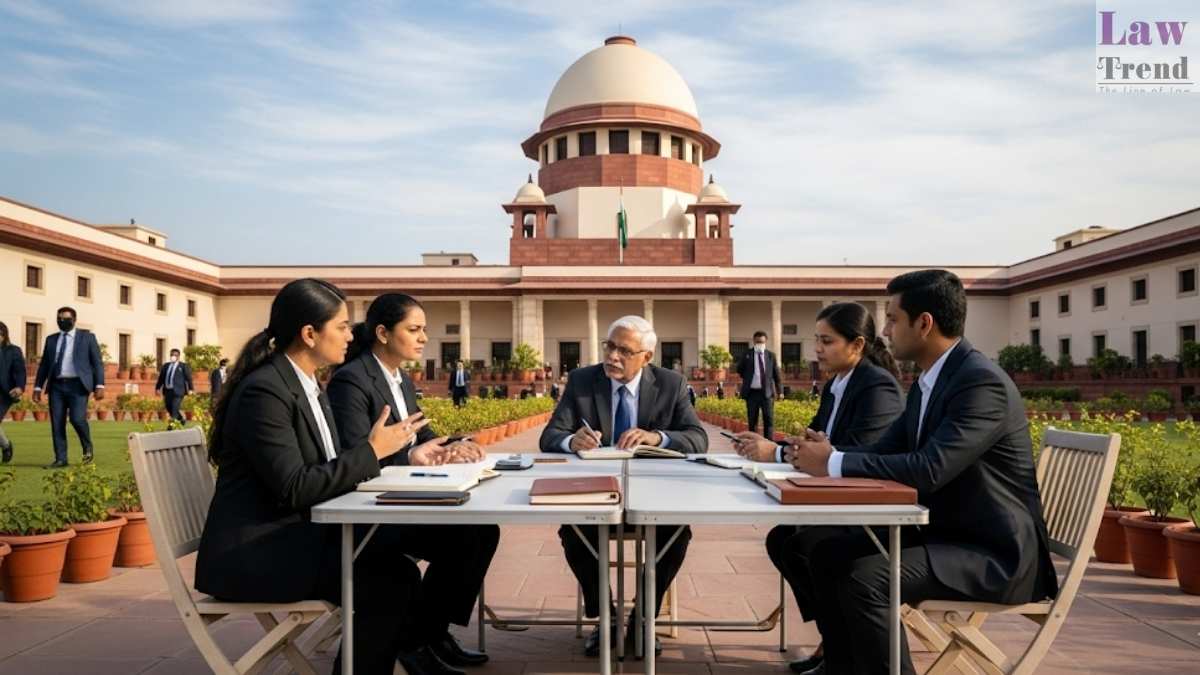
A bench led by Chief Justice of India Surya Kant and Justice Joymalya Bagchi was hearing a PIL by lawyer Pankaj Sinha seeking meaningful representation for specially abled advocates in bar councils. During the hearing, the BCI, represented by its chairperson and senior advocate Manan Kumar Mishra, informed the court that the current legal framework does not allow reservation for such candidates in the main councils.
However, the BCI agreed to ensure their participation by co-opting them into various committees of state bar councils. The court welcomed this as a temporary arrangement but emphasised the need for statutory amendments to institutionalise such representation in the future.
A major concern highlighted during the hearing was the steep nomination fee of ₹1.25 lakh for contesting elections. Senior advocate Indira Jaising argued that this amount was “prohibitive” and effectively barred specially abled lawyers from participating. The CJI agreed, suggesting a symbolic fee of ₹25,000. Jaising countered that even this might be too high, following which the BCI chairperson consented to fix it at ₹15,000.
The court clarified that this concession would apply only to specially abled advocates and not to other candidates.
The bench acknowledged that mere co-option, especially if left to the discretion of bar council authorities, may lack transparency and permanence. It stressed that a statutory amendment was necessary to avoid arbitrariness and ensure institutional representation.
The BCI chairperson pointed out that the Parliament has not provided for any reservation for specially abled persons in bar councils. Nonetheless, the court directed the BCI to begin the process of amending its statutory framework to ensure future compliance with broader constitutional and welfare mandates.
“We have to begin somewhere. In the times to follow, maybe this reservation will be seen in different public institutions,” the CJI observed.
Court’s Broader Observations and Directions
- The bench noted the election process in most states was already underway and accepted BCI’s assurance of co-opting specially abled lawyers into bar council committees as an interim measure.
- The court directed BCI to approach the Centre for reviewing enrolment fee structures.
- High Courts have been asked not to entertain similar petitions once the election process has commenced.
- The court reiterated its earlier directive to BCI to ensure 30% reservation for women in the state bar council elections.
Conclusion
The Supreme Court’s directions mark a significant step toward creating a more inclusive legal profession. While the current move ensures immediate relief through fee reduction and committee-level representation, the court has clearly indicated that permanent reform will require legislative and structural change—something it expects the BCI to actively pursue.




