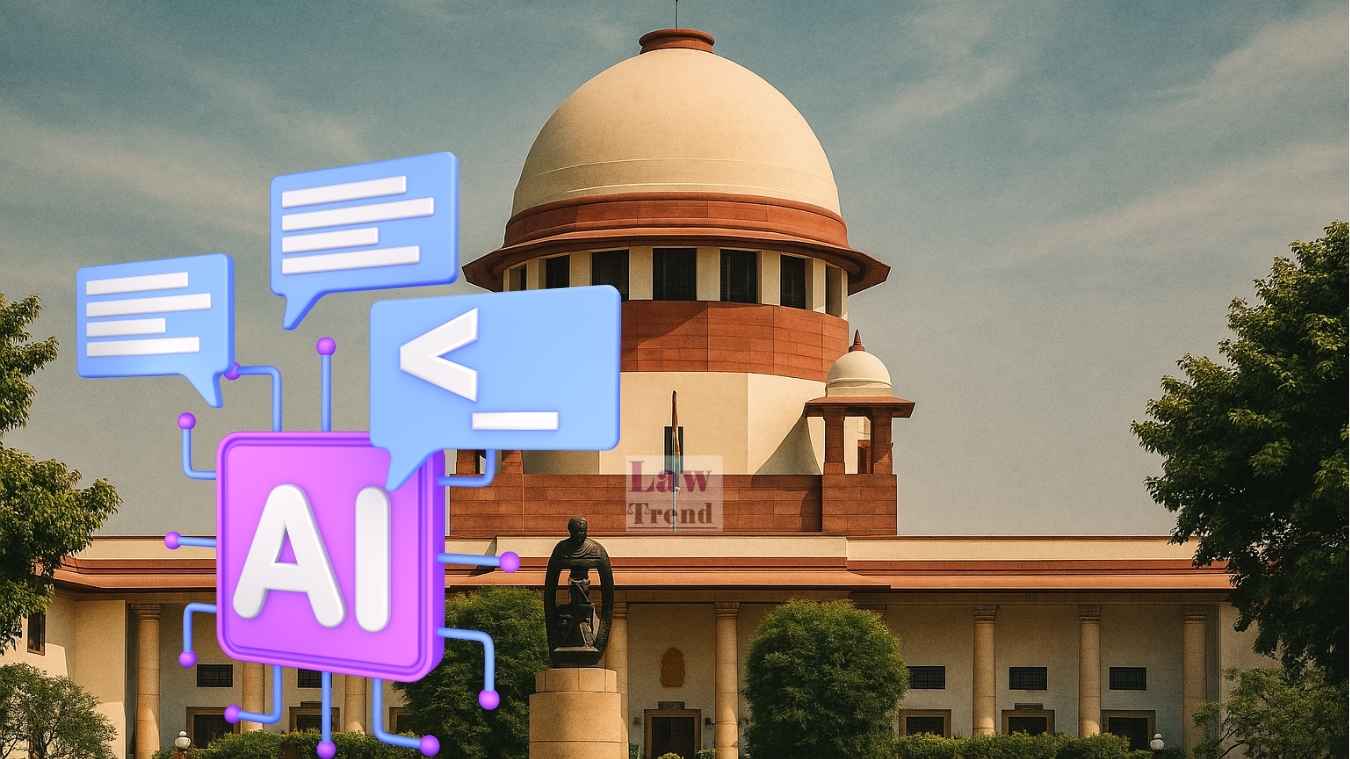
In a concerning precedent for the Indian legal system, the Supreme Court has detected the first known instance of Artificial Intelligence (AI) misuse within its proceedings. The apex court was left stunned after discovering that a litigant had utilized AI tools to draft a legal response, which resulted in the citation of hundreds of fake cases and fabricated questions of law.
The issue surfaced before a division bench comprising Justice Dipankar Datta and Justice A G Masih during the hearing of a high-profile dispute between Omkara Assets Reconstruction Private Limited and Gstaad Hotels Private Limited. The matter had reached the Supreme Court following a hearing in the National Company Law Appellate Tribunal (NCLAT).
Senior Advocate Neeraj Kishan Kaul, appearing for Omkara Assets Reconstruction, brought the anomaly to the bench’s attention. Kaul submitted that the rejoinder filed by the opposing party—Gstaad Hotels Bengaluru promoter Deepak Raheja—relied on legal precedents that simply did not exist.
Kaul argued that the document cited numerous cases that were not part of any judicial record. Furthermore, in instances where the cases were real, the AI tool had “misreported” the actual questions of law decided in them. Kaul characterized the act not just as a technological error, but as the “fabrication of case laws and concoction of points of law.”
Confronted with the fabrication, the legal team for Gstaad Hotels admitted the blunder immediately. Senior Advocate C A Sundaram, representing Deepak Raheja, expressed deep regret over the submission.
“I have never been more embarrassed,” Sundaram told the bench, acknowledging the “terrible error” committed in court. He read out an affidavit filed by the Advocate-on-Record (AoR), asserting that the lawyer had tendered an unconditional apology. The affidavit clarified that the response was drafted under the guidance of the litigant, who had employed AI tools to generate the content.
Sundaram stated he was in complete agreement with the concerns raised by the petitioner and sought permission to withdraw the tainted response, assuring the court that caution would be exercised in the future to prevent such occurrences.
The incident sparked a critical discussion in the courtroom regarding the reliability of legal submissions. Senior Advocate Kaul argued that the erring party was not entitled to be heard after such a “grave mistake.”
Kaul highlighted the practical dangers posed by AI hallucinations in a busy court system. He pointed out that benches often hear 70 to 80 cases a day, making it difficult to fact-check every citation manually. He warned that if the court were to inadvertently rely on “AI-generated falsehood,” the consequences would be “disastrous for the judicial system.”
Taking serious cognisance of the matter, the Supreme Court refused to let the issue slide unnoticed. “We cannot simply brush it aside,” the bench remarked. The Court further questioned why the Advocate-on-Record should take the blame when the response explicitly stated it was drafted under the litigant’s guidance.
Despite the controversy regarding the fabricated filings, the Supreme Court decided to proceed and hear the primary dispute on its merit.