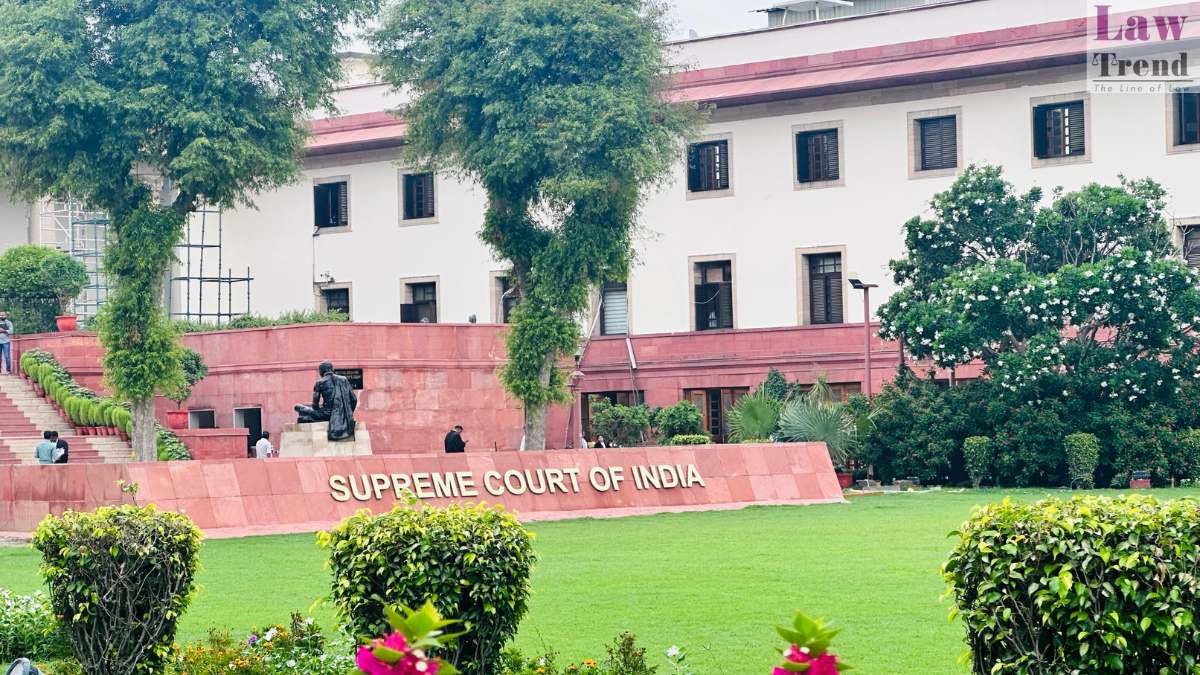
The Supreme Court on Friday refused to entertain a plea filed by 84-year-old Swamy Shraddananda, convicted of murdering his wife over three decades ago, seeking a review of its earlier decision directing that he remain in prison for the rest of his life without remission.
A bench of Justices JK Maheshwari and Vijay Bishnoi remarked that Shraddananda should approach the Karnataka government for any grievances related to his imprisonment. Following this observation, Advocate Varun Thakur, appearing for Shraddananda, withdrew the plea, prompting the court to dismiss it as withdrawn.
Shraddananda, also known as Murali Manohar Mishra, had sought a review of the Supreme Court’s landmark July 2008 judgment delivered by a three-judge bench, which substituted his death sentence with imprisonment for life without the possibility of release. The convict’s wife, Shakereh, was the granddaughter of Sir Mirza Ismail, former dewan of the erstwhile princely state of Mysore.
This is not the first time Shraddananda has attempted to reopen the issue. The Supreme Court had last year turned down a similar plea seeking review of the 2008 decision, and on September 11 last year, dismissed his separate writ petition seeking release from jail.
In those proceedings, the convict relied on his “continuous incarceration”, absence of any adverse record in jail, and the fact that he had not received parole or remission. He also told the court that his mercy petition filed before the President in December 2023 remained pending.
Shraddananda and Shakereh married in April 1986. She mysteriously disappeared in May 1991, a fact recorded by the Supreme Court in its 2008 judgment.
The matter escalated when, in March 1994, the Central Crime Branch in Bengaluru took over the investigation. Under sustained interrogation, Shraddananda confessed to the killing. Shakereh’s exhumed body was recovered, leading to his arrest.
A trial court convicted him in 2005 and sentenced him to death. The Karnataka High Court upheld both conviction and sentence the same year.
When the matter reached the Supreme Court, a two-judge bench agreed on the conviction but differed on what punishment was appropriate. While one judge said he should remain in prison till death, the other held that only the death penalty was justified. The issue was then referred to a three-judge bench.
In its verdict dated July 22, 2008, the Supreme Court stated:
“We accordingly substitute the death sentence given to the appellant by the trial court and confirmed by the high court by imprisonment for life and direct that he shall not be released from prison till the rest of his life.”
With the latest petition now withdrawn, that position remains unchanged. The court has left it to the Karnataka government to address any further grievances raised by the convict.