

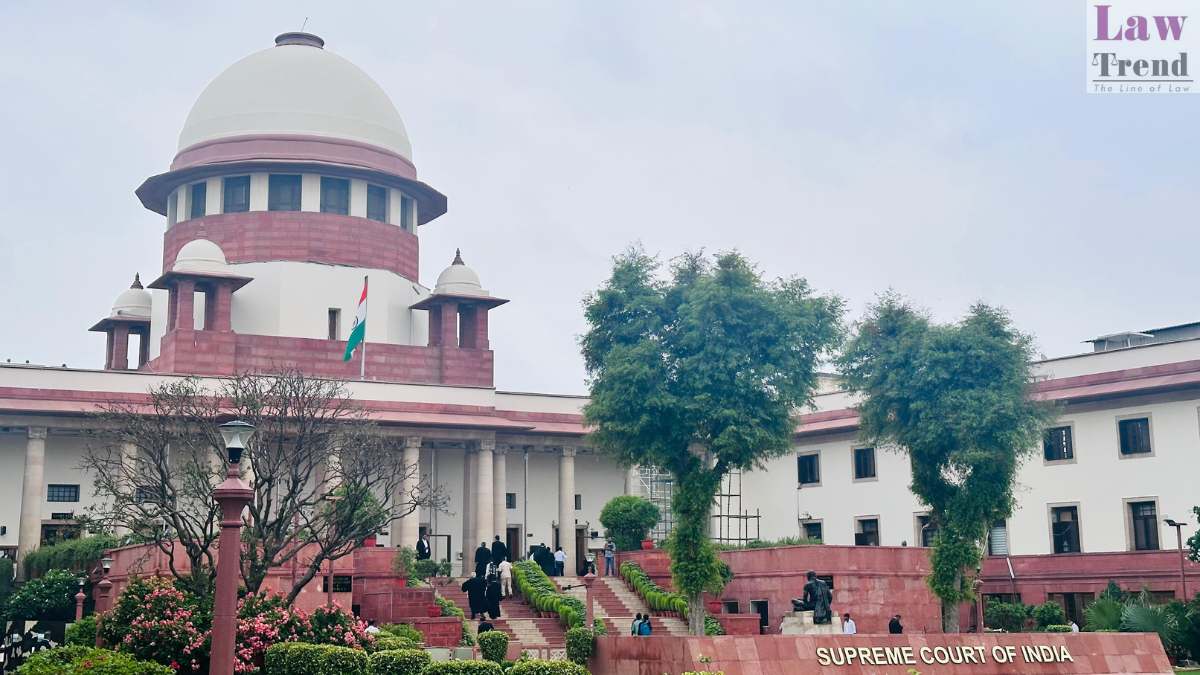
The Supreme Court on Monday refused to entertain a Public Interest Litigation (PIL) challenging the procedure proposed for recording, classifying, and verifying caste data in the upcoming 2027 general census, but directed the Centre and the Registrar General of India to consider the suggestions raised in the plea.
A Bench headed by Chief Justice of India Surya Kant observed that the concerns raised were policy-driven and better addressed by the executive authorities under the Census Act, 1958, and its corresponding rules framed in 1990. However, the court acknowledged the petitioner’s effort in highlighting relevant procedural concerns and advised the authorities to consider his suggestions.
The PIL was filed by academician Aakash Goel and argued by senior advocate Mukta Gupta. The petitioner had sought a transparent and accountable mechanism to record caste data, particularly since the upcoming census will include comprehensive caste enumeration for the first time since 1931.
Gupta submitted that the Directorate of Census Operations had failed to publicly disclose the criteria or methodology for recording citizens’ caste identity, despite acknowledging that the enumeration exercise will extend beyond the Scheduled Castes (SCs) and Scheduled Tribes (STs).
She stressed the need for a transparent questionnaire to be placed in the public domain to ensure proper classification and verification of caste data.
In its order, the bench noted that census operations are governed strictly by the statutory framework and that the authorities are empowered under the law to determine the manner and particulars of the exercise.
“The census exercise is regulated under the Census Act, 1958 and the 1990 Rules framed thereunder, which empowers the respondent authorities to determine the particular and manners of census operations,” the bench noted.
CJI Surya Kant further remarked, “We have no reason to doubt that respondent authority, with the aid and assistance of domain experts, must have evolved a robust mechanism in order to rule out any mistake as apprehended by the petitioner and several like-minded persons.”
While dismissing the PIL, the bench acknowledged that the petitioner had raised “some relevant issues” and had already made representations to the Registrar General. The authorities, the court said, may consider these representations and the suggestions made in the legal notice and petition.
The 2027 Census, officially the 16th national census of India, is set to be historic in more ways than one. It will be the first fully digital census and the first to include comprehensive caste enumeration in nearly a century.
The court’s refusal to interfere in the policy domain marks a significant reaffirmation of the executive’s discretion in census matters, even as the demand for transparency in caste enumeration gains momentum ahead of the politically significant exercise.




