

Supreme Court Criticizes ‘Consider Jurisprudence’ in 16-Year-Old Salary Dispute; Directs High Court to Decide Merits Without Remand
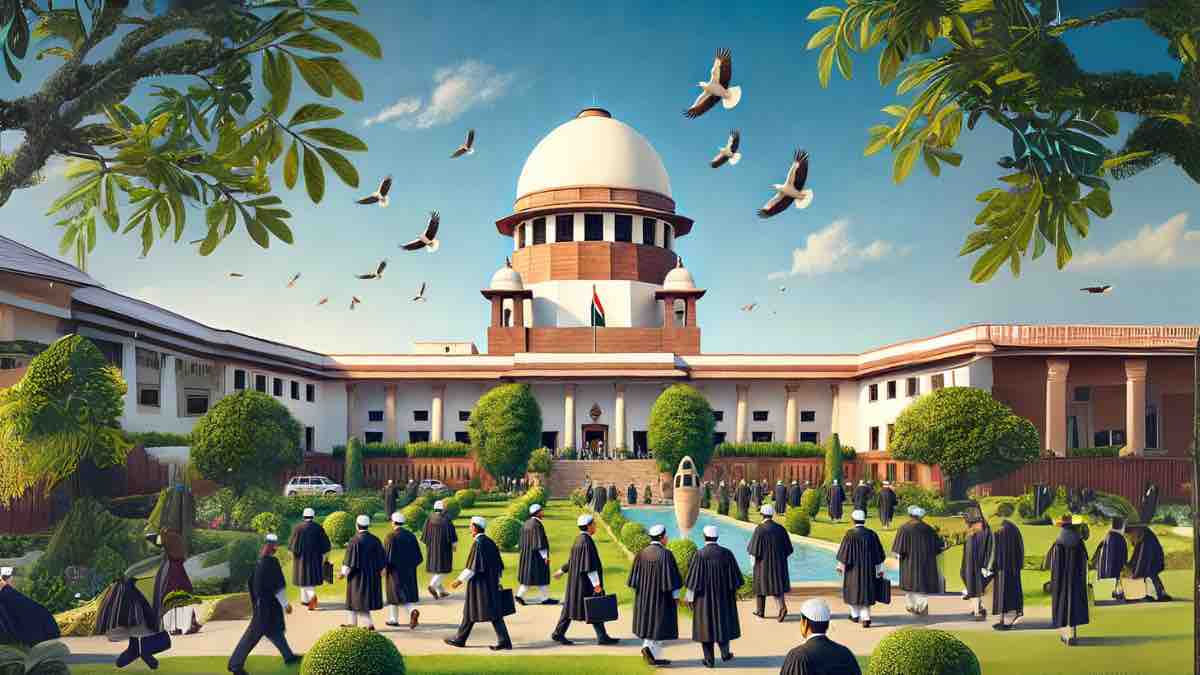

The Supreme Court of India has expressed strong disapproval of the “consider jurisprudence” often adopted by courts, where matters are repeatedly remitted to authorities without final adjudication. While hearing an appeal by an alleged contemnor against a High Court order to frame charges, the Bench of Justice Pamidighantam Sri Narasimha and Justice Alok Aradhe observed that such practices “throw the ball out of the Court” and harm the judicial system.

The case involved a protracted legal battle spanning over 16 years initiated by lecturers of a private college seeking salary payments from the State exchequer. The High Court had repeatedly directed the State to “reconsider” the claims, leading to a cycle of multiple rejections and successive writ petitions. The Supreme Court was called upon to examine an interim order passed by the High Court in contempt proceedings which directed the framing of charges against the government official.

Background of the Case

The respondents were appointed as lecturers in a private college in 1993. The college initially received financial assistance, which ceased following a 2000 Government policy banning financial aid to non-aided colleges. The respondents challenged this policy under Article 226, seeking the sanction of posts and payment of salaries.

The litigation history involved three distinct rounds:

  1. First Writ Petition (2010): Disposed of with a direction to the Director of Education to pass a “speaking and reasoned order.” This led to a rejection on March 25, 2011.
  2. Second Writ Petition (2013): The High Court quashed the 2011 rejection and directed authorities to “reconsider” the claim. This resulted in a second rejection on July 1, 2013.
  3. Third Writ Petition (2023): The High Court quashed the 2013 order and again remitted the matter to the Principal Secretary for a “fresh order.”
READ ALSO  Civil Judge Cannot Be Penalized by Removing Him From Service Merely for Having Passed Wrong Orders: Allahabad HC

While a contempt petition alleging non-compliance was pending, the department rejected the claim again on December 13, 2023, and subsequently on May 9, 2025. Despite these orders, the High Court continued to direct the filing of fresh affidavits of compliance, eventually ordering the framing of charges on May 28, 2025.

Court’s Analysis of “Consider Jurisprudence”

The Supreme Court characterized the litigation as a series of “episodes,” noting that the “First Season” of rejection orders was followed by a “Second Season” of inconclusive contempt directions.

The Court made several key observations regarding judicial practice:

  • Ineffectiveness of Remand: “There is no doubt about the fact that the ‘consider jurisprudence’, so routinely adopted these days and if we may use the expression to throw the ball out of the Court, is counterproductive and harms the system.”
  • Duty to Grant Relief: “When a claim of a right is legal and justified, relief must follow. The Constitutional or statutory remedies are not intended for academic discourse. If a case deserves relief, it must be granted then and there, unflinchingly if need be.”
  • Clarity of Directions: The Court noted that the High Court’s orders lacked “clear and categorical direction about existence of a right” or “what exactly the government is to comply.”
  • Misuse of Contempt Jurisdiction: The Bench noted a “recent tendency… to invoke contempt jurisdiction for quick relief, even when appealable orders have already been passed.”
READ ALSO  Supreme Court Closes Curious Case of “Put Mine”

The Decision

The Supreme Court disposed of the appeal by laying down a roadmap to end the 16-year litigation:

  1. Challenge to Latest Order: The respondents are permitted to file a writ petition against the Government’s latest rejection order dated May 9, 2025.
  2. Consolidated Hearing: The new writ petition shall be heard alongside the pending contempt proceedings.
  3. No Further Remand: The Supreme Court explicitly directed: “The High Court shall not remand the matter back to the authorities for reconsideration as the perspective of the government is clearly evident.”
  4. Final Adjudication: If satisfied with the merits, the High Court must issue “clear and categorical directions for compliance.” If not, it should dismiss the petition with simple reasons.
  5. Timeline: The Hon’ble Chief Justice of the High Court is requested to assign the matters to an appropriate bench for a final order by April 30, 2026.
  • Case Title: Mahendra Prasad Agarwal v. Arvind Kumar Singh & Ors.
  • Case No: Civil Appeal No. of 2026 (SLP (C) No. 17141 of 2025)

READ ALSO  सुप्रीम कोर्ट ने NEET-UG 2024 की दोबारा परीक्षा कराने से किया इनकार, NTA में सुधार करने का निर्देश दिया
Ad 20- WhatsApp Banner

Law Trend
Law Trendhttps://lawtrend.in/
Legal News Website Providing Latest Judgments of Supreme Court and High Court

Related Articles

Latest Articles

