

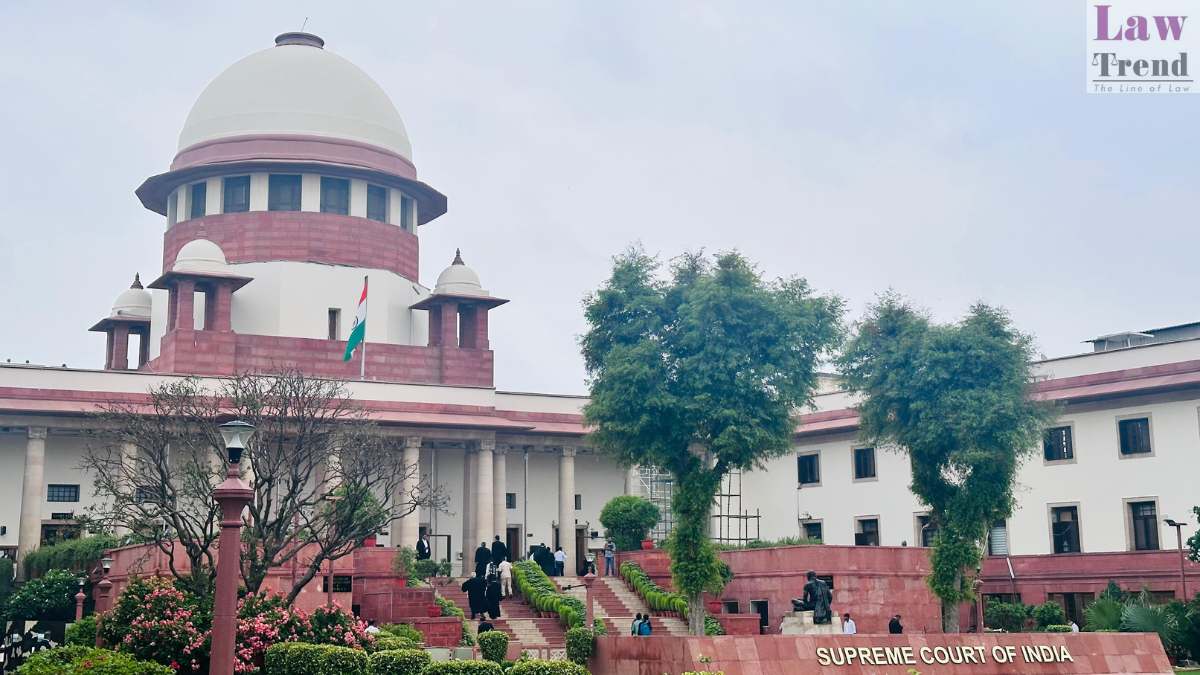
A bench of Justices J K Maheshwari and A S Chandurkar issued the directive while disposing of a petition filed by social activist Naveen Prakash Nautiyal. The court allowed Nautiyal to submit a fresh representation to the Centre within two weeks, along with a copy of the court’s order, and asked the government to decide on it within four months.
The petition challenged the long-standing stagnation in the wage ceiling under the EPFO Scheme, arguing that it excluded a large number of workers in the organised sector from its coverage.
Represented by advocates Pranav Sachdeva and Neha Rathi, the petitioner contended that the current ceiling of ₹15,000 per month was outdated and failed to keep pace with the rising cost of living and prevailing minimum wages across several states. They argued that this arbitrary ceiling deprived many employees of social security benefits under the scheme, violating Articles 14 and 21 of the Constitution.
The petition pointed out that the wage ceiling has been revised sporadically over the last 70 years — often with gaps of 13–14 years — and with no fixed correlation to economic indicators such as inflation, minimum wage, per capita income, or consumer price index.
The plea cited findings from the Public Accounts Committee of the 16th Lok Sabha and a 2022 EPFO Sub-Committee report, both of which recommended a rational and periodic revision of the wage ceiling. These recommendations, approved by the Central Board (EPF) in July 2022, are still pending action by the Centre.
The petition also included a statistical analysis revealing that while the scheme began with an inclusive framework in its early decades, it has gradually become exclusionary over the past 30 years. This shift has significantly reduced the number of workers covered by the EPF.
The Employees’ Provident Fund Scheme, 1952, was framed under the Employees’ Provident Funds and Miscellaneous Provisions Act to provide social security to workers in the organised sector. However, employees earning above the wage ceiling — currently ₹15,000 — are not compulsorily covered.
The Supreme Court’s directive puts the spotlight on the need to update social welfare thresholds in line with current economic realities. With the court-mandated deadline now in place, the onus is on the central government to address a gap that potentially affects millions of salaried workers across the country.




