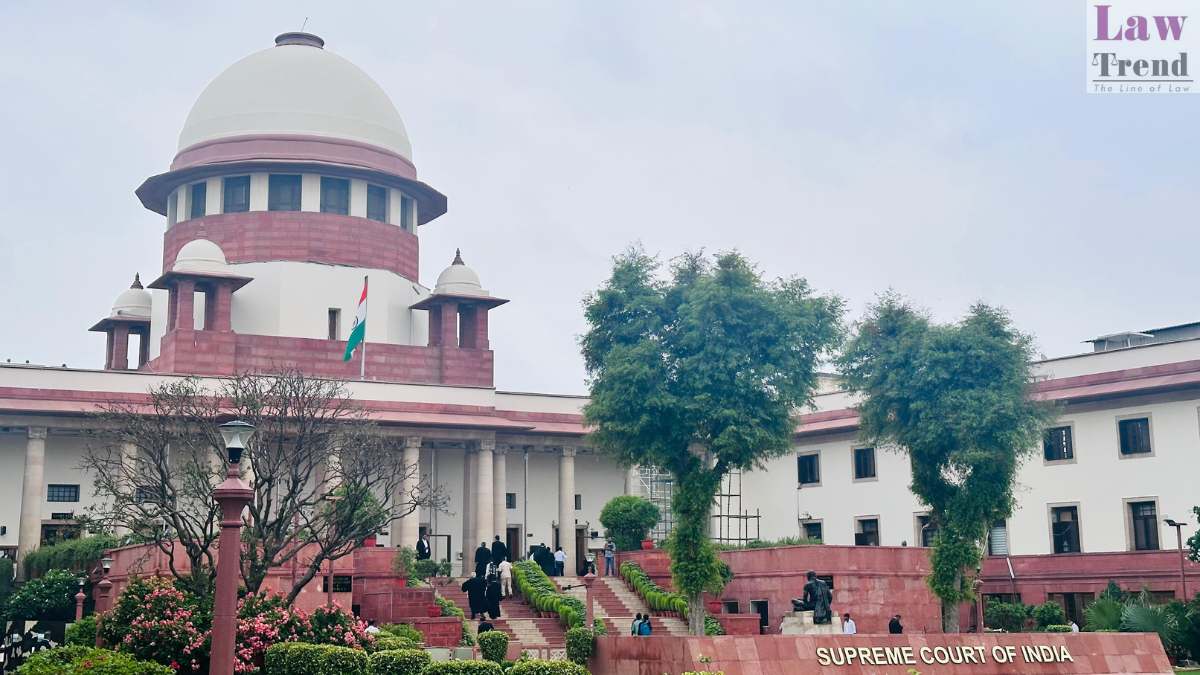
The Supreme Court on Tuesday agreed to examine the Union government’s appeal challenging the Bombay High Court’s decision that struck down the 2023 amendments to the Information Technology Rules designed to regulate fake and misleading content about the government on social media. While issuing notices to the petitioners who had challenged the rules, the top court declined to stay the High Court’s judgment declaring the amendments unconstitutional.
A three-judge bench comprising Chief Justice of India Surya Kant and Justices R. Mahadevan and Joymalya Bagchi took up the Centre’s plea against the Bombay High Court ruling delivered in September 2024. The bench issued notices to the original petitioners, including stand-up comedian Kunal Kamra, the Editors Guild of India, and the Association of Indian Magazines, and asked them to file their counter-affidavits within four weeks.
At the same time, the court condoned a delay of around 400 days by the Union government in filing its appeal against the High Court verdict.
During the hearing, Solicitor General Tushar Mehta, appearing for the Centre, urged the court to stay the High Court’s decision. He argued that the government’s objective was not to block online content entirely but to regulate the spread of misinformation.
The bench, however, declined to suspend the High Court ruling at this stage.
Chief Justice Surya Kant raised concerns about the functioning of social media platforms and the spread of misinformation online. Referring to examples placed on record, he pointed to instances of false messages relating to the Indian Army and national policies circulating on digital platforms. The CJI questioned whether the current system effectively places the entire burden on government machinery without imposing sufficient responsibility on intermediaries.
Opposing the Centre’s plea, senior advocate Arvind Datar, appearing for one of the respondents, argued that the existing legal framework already allows authorities to remove problematic content within 24 hours. He contended that the 2023 amendments were problematic because the expression “misleading information” was not clearly defined. Citing precedent from the Kartar Singh case, Datar argued that the absence of a clear definition created uncertainty and could lead to misuse.
The dispute concerns the Information Technology (Intermediary Guidelines and Digital Media Ethics Code) Amendment Rules, 2023. These amendments authorised the Central Government to set up a Fact-Check Unit (FCU) tasked with identifying information related to “government business” that it considers fake, false, or misleading on social media platforms.
Under the framework, if the FCU flagged such content, social media intermediaries such as X, Facebook, or YouTube would be required to remove it or risk losing their “safe harbour” protection from liability for user-generated content.
The amendments were challenged before the Bombay High Court by several petitioners, including Kunal Kamra, the Editors Guild of India, the News Broadcast and Digital Association, and the Association of Indian Magazines.
The High Court eventually struck down the rule after a split verdict from a division bench. Justice A. S. Chandurkar acted as the third judge and held on September 20, 2024, that the amended rule was vague and overly broad, warning that it could create a chilling effect not only on individuals but also on social media intermediaries.
Following this opinion, a division bench of Justices A. S. Gadkari and Neela Gokhale formally pronounced the verdict on September 26, 2024, declaring Rule 3(1)(v) unconstitutional and allowing the petitions challenging the amendments.
With the Supreme Court now agreeing to examine the Centre’s appeal, the constitutional validity of the Fact-Check Unit framework and the broader regulation of online misinformation will come under further judicial scrutiny.