

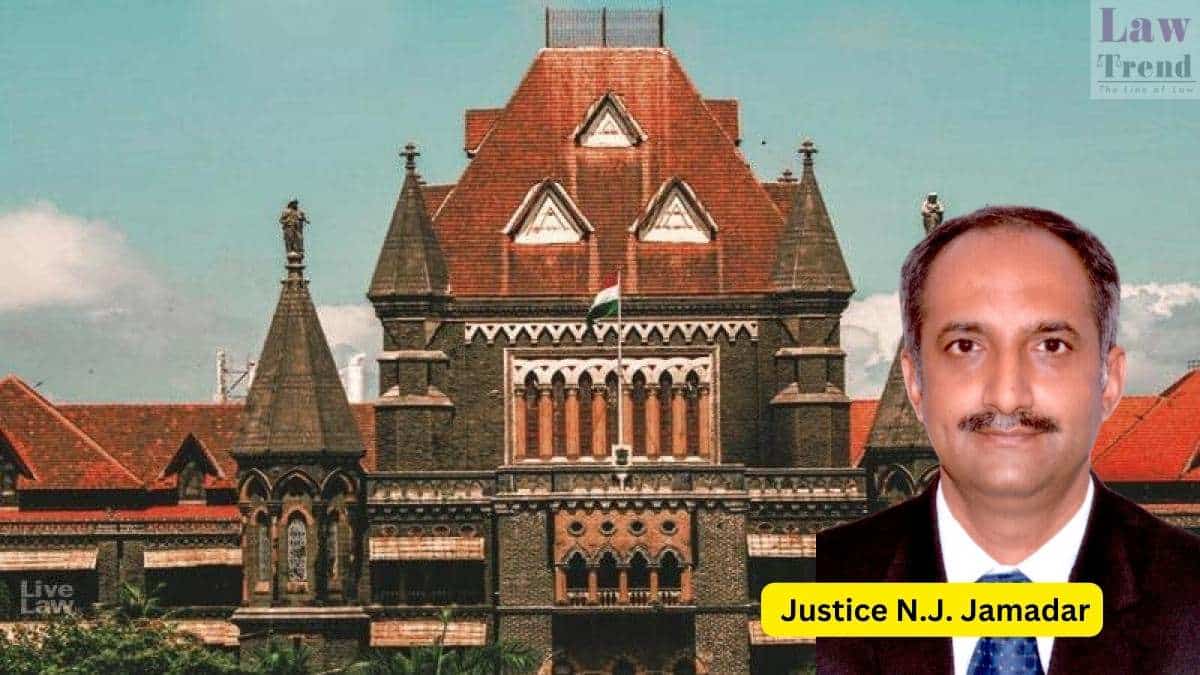
The Bombay High Court has held that the City Civil Court has the jurisdiction to entertain a suit for permanent injunction against nuisance and obstruction in common amenities, even when eviction proceedings are pending between the parties in the Court of Small Causes. Justice N. J. Jamadar dismissed a Civil Revision Application filed by Zenobia R. Poonawala and another, who had challenged the City Civil Court’s refusal to reject a plaint under Order VII Rule 11 of the Code of Civil Procedure (CPC).
Background of the Case
The dispute pertains to “Rutton Manor,” a building in Colaba, Mumbai. The first applicant (Defendant No. 1) and the first respondent (Plaintiff No. 1) are siblings. Following the demise of their mother, Pervin Ginwalla, disputes arose regarding the ownership and possession of the building.
The applicants claimed that Defendant No. 1 is the sole landlord of the building and had instituted eviction suits against several respondents (Plaintiff Nos. 1, 4, 7, 8, 9, and 10) in the Court of Small Causes. Conversely, Plaintiff No. 1 asserted co-ownership of the building based on a registered Gift Deed executed by their late father, Farhad Ginwalla, in 2017.
In 2022, the plaintiffs filed a suit in the City Civil Court alleging that the defendants were resorting to illegal acts—such as obstructing the use of the lift, interfering with repairs, and preventing access to common areas like the terrace, water tanks, and meter rooms—to exert pressure on them. They sought permanent injunctions to ensure the peaceful use and enjoyment of these amenities.
Arguments of the Parties
The applicants (defendants) moved a Notice of Motion under Order VII Rule 11 of the CPC, arguing that the City Civil Court lacked subject-matter jurisdiction. They contended that since the relationship between the parties was that of landlord and tenant, Section 33 of the Maharashtra Rent Control Act, 1999, conferred exclusive jurisdiction on the Court of Small Causes. They argued that any dispute regarding the withholding of essential services (covered under Section 29 of the Rent Act) must be adjudicated by the Small Causes Court.
The respondents (plaintiffs) resisted the motion, arguing that the suit was a tortious claim for nuisance and harassment and did not pertain to tenancy rights, recovery of possession, or rent. They pointed out that Defendant No. 1 had herself disowned the landlord-tenant relationship in other proceedings, specifically in a High Court suit (Suit No. 405/2023), where she termed the plaintiffs “trespassers.”
Court’s Analysis
The High Court examined whether the suit satisfied the conditions for ouster of jurisdiction under Section 33 of the Rent Act. Justice Jamadar observed that for the jurisdiction of a Civil Court to be barred, the suit must be between a landlord and tenant and must relate to the recovery of rent or possession.
The Court noted that the plaintiffs had instituted the suit as “occupants” and not as tenants seeking protection from eviction. The judgment stated:
“From the tenor of the plaint, it becomes abundantly clear that the suit nowhere involves the claim of either recovery of possession or protection of the possession of the Plaintiffs… Nor the suit relates to recovery of rent or charges.”
The Court specifically addressed the applicants’ “approbate and reprobate” stance. It noted that while the applicants sought to invoke the Rent Act in the City Civil Court, they had simultaneously filed a suit in the High Court asserting that the tenancies were “null and void-ab-initio” and that the plaintiffs were “trespassers.”
The Court cited the Supreme Court’s decision in Natraj Studios (P) Ltd. vs. Navrang Studios, emphasizing that jurisdictional facts must be decided by the court where the question arises. It also referred to Abdulla Bin Ali and Ors. vs. Calappa and Ors., noting that a suit against trespassers lies only in the Civil Court.
Decision
The Court concluded that since the defendants had disowned the tenancy of some plaintiffs and described them as trespassers in separate proceedings, they could not seek the rejection of the plaint on the ground of exclusive jurisdiction of the Small Causes Court.
The Court held:
“A party cannot be permitted to approbate and reprobate… it would be impermissible for the Defendants to take a somersault and seek rejection of the plaint on the ground that the suit of the present nature would fall within the exclusive jurisdiction of the Court of Small Causes.”
Finding no jurisdictional error or material irregularity in the City Civil Court’s order dated May 29, 2024, the High Court dismissed the Civil Revision Application.
Case Details:
- Case Title: Zenobia R. Poonawala & Anr. vs. Dr. Rustom Farhad Ginwalla & Ors.
- Case No.: Civil Revision Application No. 388 of 2024
- Bench: Justice N. J. Jamadar
- Date: March 24, 2026




