

Statutory Cooling Period for Divorce Can Be Waived if No Possibility of Cohabitation Exists: Supreme Court
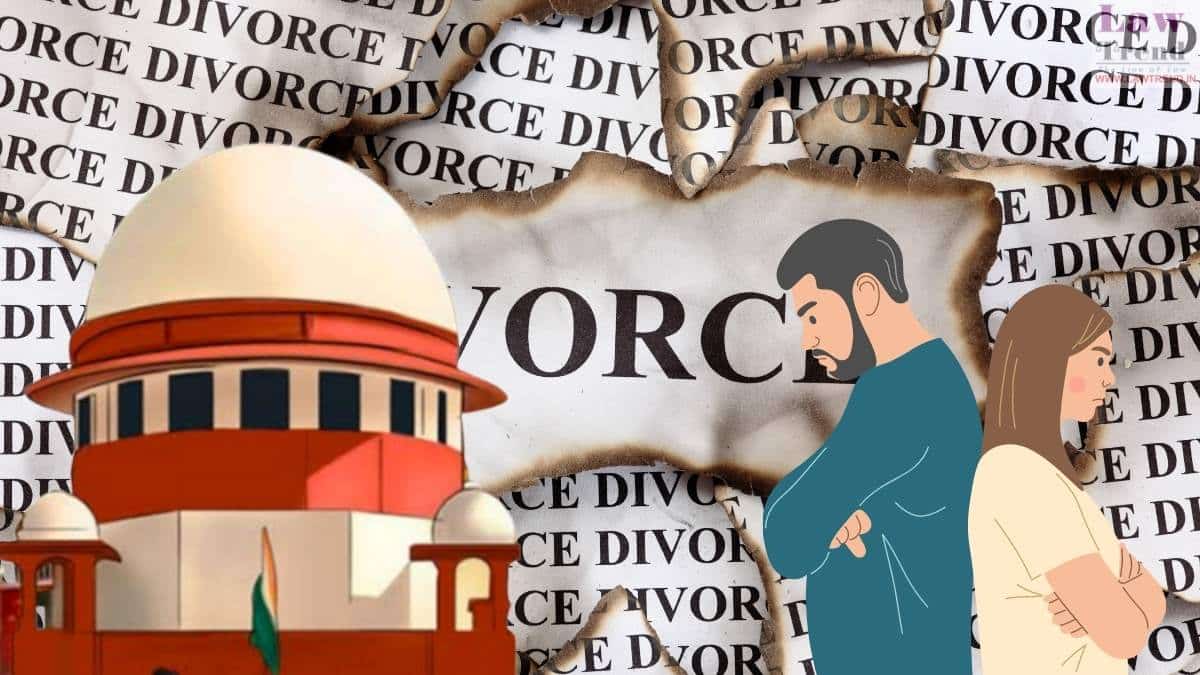

The Supreme Court of India has set aside a High Court order that refused to waive the statutory cooling period under Section 13B(2) of the Hindu Marriage Act, 1955. The Apex Court held that the High Court had misconstrued previous legal precedents, reiterating that enforcing the waiting period is meaningless when there is no possibility of reconciliation between the parties.

The Division Bench comprising Justice M.M. Sundresh and Justice Nongmeikapam Kotiswar Singh heard the appeal regarding the waiver of the statutory cooling period. The primary legal issue before the Court was whether the six-month statutory cooling period prescribed for divorce by mutual consent could be waived given the specific facts of the case. The Supreme Court ruled in favor of the parties, setting aside the High Court’s rejection and granting the decree of divorce.

Background and Proceedings

The case involved a husband and wife who were ad idem (in agreement) regarding the dissolution of their marriage by mutual consent. The parties had approached the High Court seeking a waiver of the cooling period of six months mandated under Section 13B(2) of the Hindu Marriage Act, 1955.

However, the High Court rejected their request. In doing so, the High Court relied on the judgment passed by the Supreme Court in Amardeep Singh v. Harveen Kaur (2017) 8 SCC 746, interpreting the conditions laid down in that judgment as mandatory hurdles that prevented the waiver in this instance.

READ ALSO  Allahabad HC Orders Rs. 2 Lakh Additional Compensation for Delay in Rape Victim Payout, Cites "Reprehensible Inaction" of Officials

Arguments and Observations

The counsel appearing for the parties submitted that the High Court had misconstrued the decision in Amardeep Singh. It was argued that the principles regarding the waiver of the cooling period were further explained by the Supreme Court in Amit Kumar v. Suman Beniwal (2023) 17 SCC 648.

The Supreme Court agreed with this submission. The Bench observed that the High Court erred in its reliance on Amardeep Singh by treating the factors listed therein as rigid conditions rather than illustrative guidelines.

Court’s Analysis

To clarify the legal position, the Supreme Court extensively quoted paragraphs 18 to 21 from the judgment in Amit Kumar v. Suman Beniwal. The Court reiterated that the objective of the cooling period is to explore reconciliation.

The Court cited the following observation from Amit Kumar:

“Where there is a chance of reconciliation, however slight, the cooling period of six months from the date of filing of the divorce petition should be enforced. However, if there is no possibility of reconciliation, it would be meaningless to prolong the agony of the parties to the marriage.”

The Bench further highlighted the principle that if the marriage has broken down irretrievably and the spouses have mutually decided to part ways, it is better to end the marriage to enable them to move on.

Regarding the legal nature of the waiting period, the Court referred to the precedent stating:

“Since we are of the view that the period mentioned in Section 13-B(2) is not mandatory but directory, it will be open to the court to exercise its discretion in the facts and circumstances of each case where there is no possibility of parties resuming cohabitation and there are chances of alternative rehabilitation.”

READ ALSO  Supreme Court Upholds Bail for Ashish Mishra in Lakhimpur Kheri Violence Case

The Bench emphasized that the Family Court and High Court had proceeded on the incorrect basis that the conditions specified in Amardeep Singh were mandatory. The Supreme Court clarified that if the conditions regarding the failure of mediation and genuine settlement of differences are met, the Court is obliged to exercise its discretion to waive the period.

Concluding its analysis on the facts of the present case, the Bench stated:

READ ALSO  Proof of Demand and Acceptance of Bribe is a Sine Qua Non: Allahabad HC Grants Bail 

“When the parties have taken a conscious decision to seek a decree of divorce by mutual consent under Section 13B of the Act, there is no point in keeping the marriage continuing.”

Decision

In light of these observations, the Supreme Court held that the order passed by the High Court was liable to be set aside.

Consequently, the Court invoked its power under Article 142 of the Constitution of India to grant a decree of divorce by mutual consent. The Court directed that a decree for divorce be drawn up and ordered that the terms of the Settlement Agreement placed before the Court (Annexure P/1) shall form part of the order.

The appeal was disposed of accordingly.

Case Details:

  • Case Name: Misha Somani v. Rituraj Somani
  • Case Number: Civil Appeal No. 801/2026 (@ SLP [C] No. 3775/2026)
  • Court: Supreme Court of India
  • Coram: Justice M.M. Sundresh and Justice Nongmeikapam Kotiswar Singh
  • Date of Order: February 02, 2026

Law Trend
Law Trendhttps://lawtrend.in/
Legal News Website Providing Latest Judgments of Supreme Court and High Court

Related Articles

Latest Articles

