

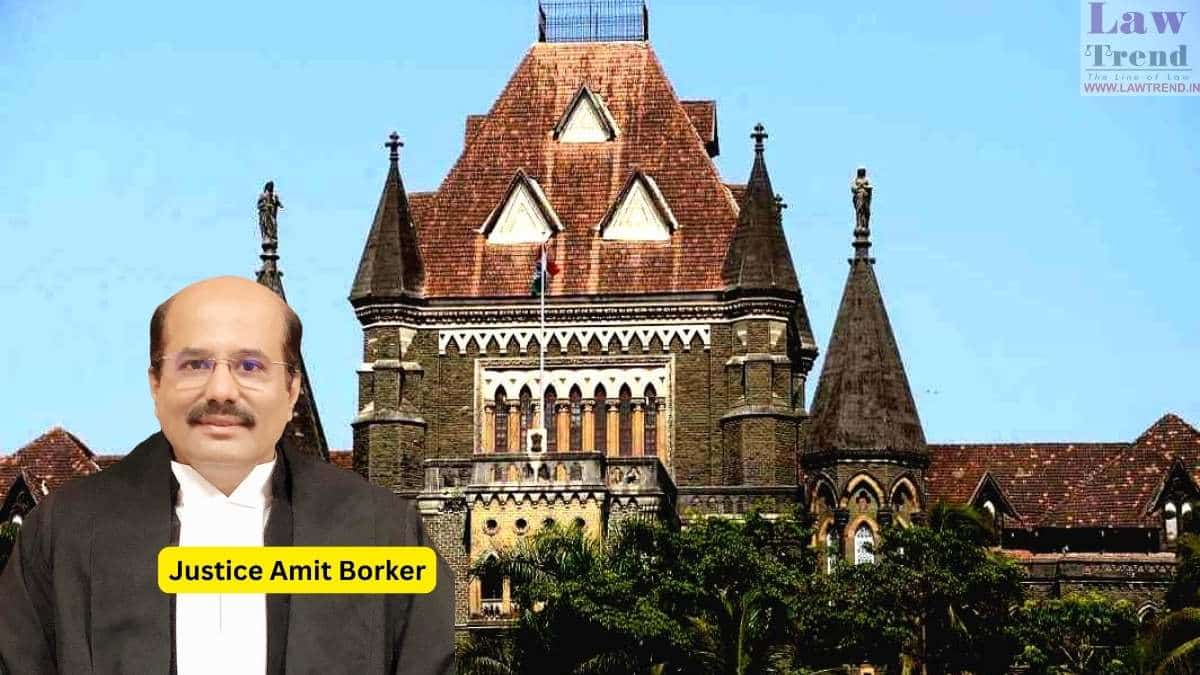
The Bombay High Court has affirmed that the Kalelkar Award, being an industrial settlement under the Industrial Disputes Act, holds statutory force and its benefits cannot be curtailed by subsequent Government Resolutions (GR). The Court upheld an Industrial Court order directing the State of Maharashtra to grant the status of ‘Converted Regular Temporary’ employee to a deceased daily wager, emphasizing that the right to such benefits flows from the Award itself.
The central legal issue was whether a daily wage worker under the State of Maharashtra could claim benefits under the Kalelkar Award if they did not meet the specific eligibility criteria (such as a cut-off date) mentioned in a subsequent Government Resolution (GR dated April 24, 2001). Justice Amit Borkar ruled that the Kalelkar Award is a binding statutory settlement and the State cannot modify or withdraw its provisions through administrative instructions. The High Court dismissed the State’s writ petition and upheld the Industrial Court’s decision in favor of the respondent, Smt. Devubai Bhagwan Kharat.
Background of the Case
The respondent, Devubai Bhagwan Kharat, filed a complaint (ULP No. 117 of 2010) under the Maharashtra Recognition of Trade Unions and Prevention of Unfair Labour Practices (MRTU & PULP) Act, 1971. She asserted that her late husband, Bhagwan Bhikaji Kharat, had worked as a Mazdoor for Petitioner No. 1 since 1988.
Although his services were terminated in 1990, he was reappointed on a nominal muster roll in February 1996 following the intervention of the Assistant Commissioner of Labour. The respondent alleged that despite completing the requisite service, her husband was never regularized or brought onto the permanent muster roll, thereby being deprived of benefits under the Kalelkar Award. The Industrial Court at Thane partly allowed the complaint in 2012, finding the State guilty of unfair labour practices under Item 9 of Schedule IV of the Act.
Arguments of the Parties
For the State (Petitioners): The Assistant Government Pleader (AGP) argued that the deceased workman did not satisfy the criteria set by the Government Resolution dated April 24, 2001. Specifically, the GR required the completion of five years of continuous service prior to the cut-off date of December 31, 1998. The State contended that since the workman was reappointed only in 1996, he had not completed five years by the cut-off date. They further argued that his initial engagement was purely temporary and he did not fulfill the conditions for conversion.
For the Respondent: Mr. Nair, representing the widow, argued that the entitlement to Kalelkar Award benefits is based on the completion of five years of service as contemplated in the Award itself, irrespective of any cut-off dates in subsequent GRs. He relied on the High Court’s previous rulings, asserting that “the Government Resolution cannot cut down the benefit which the Award already gives.”
Court’s Analysis and Observations
The Court examined the nature of the Kalelkar Award, noting it was the result of conciliation proceedings under Section 12(3) and recorded under Section 13(2) of the Industrial Disputes Act, 1947.
Statutory Force of the Award: Justice Borkar observed that once a settlement is arrived at in the course of conciliation and published, it acquires a binding character under Section 18(3) of the Act. The Court stated:
“The position becomes clear that if the State Government desired to alter, modify, or withdraw any part of the Kalelkar Award, it could not have done so by issuing administrative instructions or circulars.”
Continuous Service vs. 240 Days: Citing the precedent in State of Maharashtra vs. M. V. Ghalge (1992), the Court clarified that “continuous service” under the Kalelkar Award does not strictly mean 240 days of work in every calendar year. Instead, it means the worker should be part of the daily rated establishment for five consecutive years in substance.
On the State’s Defence: The Court rejected the State’s argument that the absence of a specific GR supporting a claim is a valid defense:
“Accepting such argument would mean that the State can avoid its responsibility by remaining silent. Therefore, it is held that a daily wage-worker can approach the Labour Court or Industrial Court for claiming benefits under the Kalelkar Award even if there is no specific Government Resolution in force.”
The Decision
Upon reviewing the service book, the Court found that the deceased workman had worked continuously from February 1996 until May 2000, satisfying the five-year requirement when his prior service was considered alongside his re-engagement.
The High Court dismissed the Writ Petition and directed the State to:
- Extend the benefits admissible to a temporary worker to the respondent.
- Grant the status of ‘Converted Regular Temporary’ employee in terms of the Kalelkar Award based on the deceased’s service.
- Comply with these directions within twelve weeks.
No order as to costs was made, and all pending interim applications were disposed of.
Case Details
- Case Title: The State of Maharashtra & Others vs. Smt. Devubai Bhagwan Kharat
- Case Number: Writ Petition No. 642 of 2013
- Bench: Justice Amit Borkar
- Date: April 2, 2026




