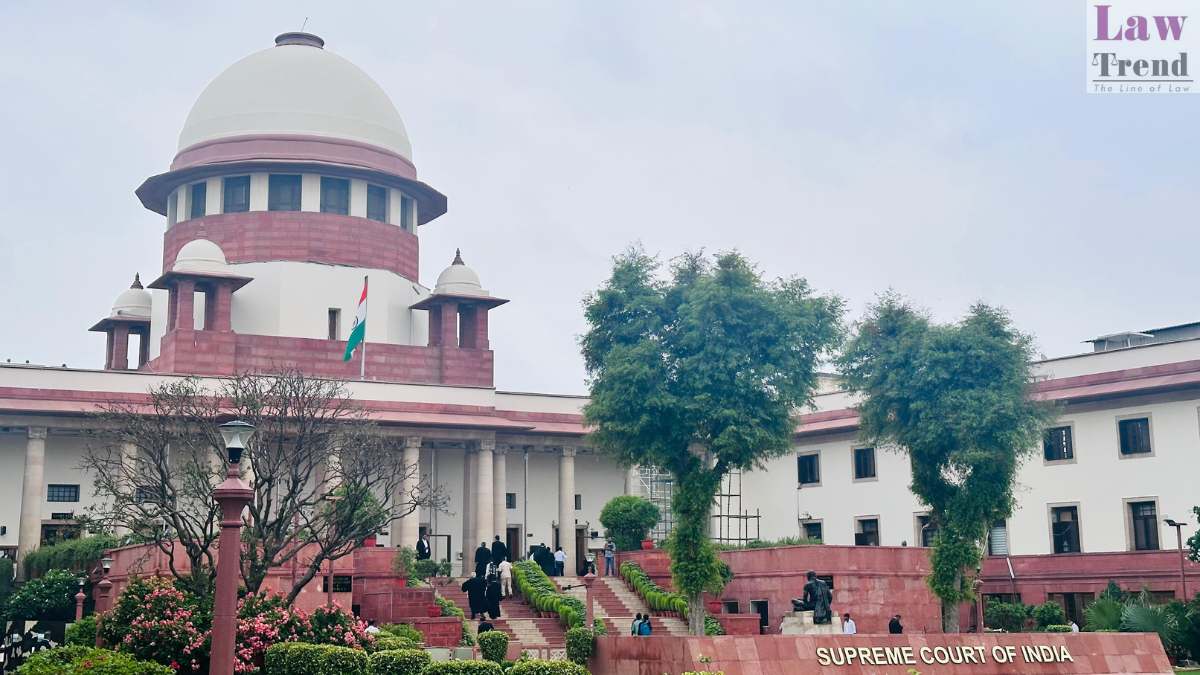
The Supreme Court has clarified that state police authorities are competent to investigate and file chargesheets against central government employees for offences under the Prevention of Corruption Act (PC Act). The court firmly held that no prior approval from the Central Bureau of Investigation (CBI) is required for such registration or investigation by the state agencies.
A bench comprising Justice J B Pardiwala and Justice Satish Chandra Sharma passed the ruling while upholding a Rajasthan High Court order that declined to quash a corruption FIR against a central government employee.
The bench interpreted Section 17 of the PC Act, which deals with the persons authorised to investigate offences under the Act, and stated:
“Section 17 does not exclude or prevent the state police or a special agency of the state from registering a crime or investigating cases relating to bribery, corruption, and misconduct against central government employees.”
The court emphasised that although the CBI is often entrusted with cases involving central officials, this is a matter of convenience and administrative arrangement, not a legal compulsion.
“It is for convenience and to avoid duplication of work that the CBI — a specialised investigating agency under the Delhi Special Police Establishment Act — is usually tasked with such investigations. But this does not oust the jurisdiction of the state anti-corruption bureaus (ACBs).”
It also reiterated that offences under the PC Act are cognisable, meaning state police are empowered to take up such cases without prior approval from the central government or the CBI.
The judgment came in a matter where the Rajasthan ACB had filed a corruption case against a central government employee, and the accused had sought quashing of the FIR on the ground that only the CBI could have initiated the prosecution.
The Rajasthan High Court had rejected this plea, and the Supreme Court affirmed the decision, observing:
“The high court has taken the correct view while saying that it is incorrect to say that it is only the CBI who could have instituted the prosecution.”