Solitary Testimony of Victim Insufficient to Convict When Riddled with Improbabilities: Tripura HC Acquits Man of Rape Charges
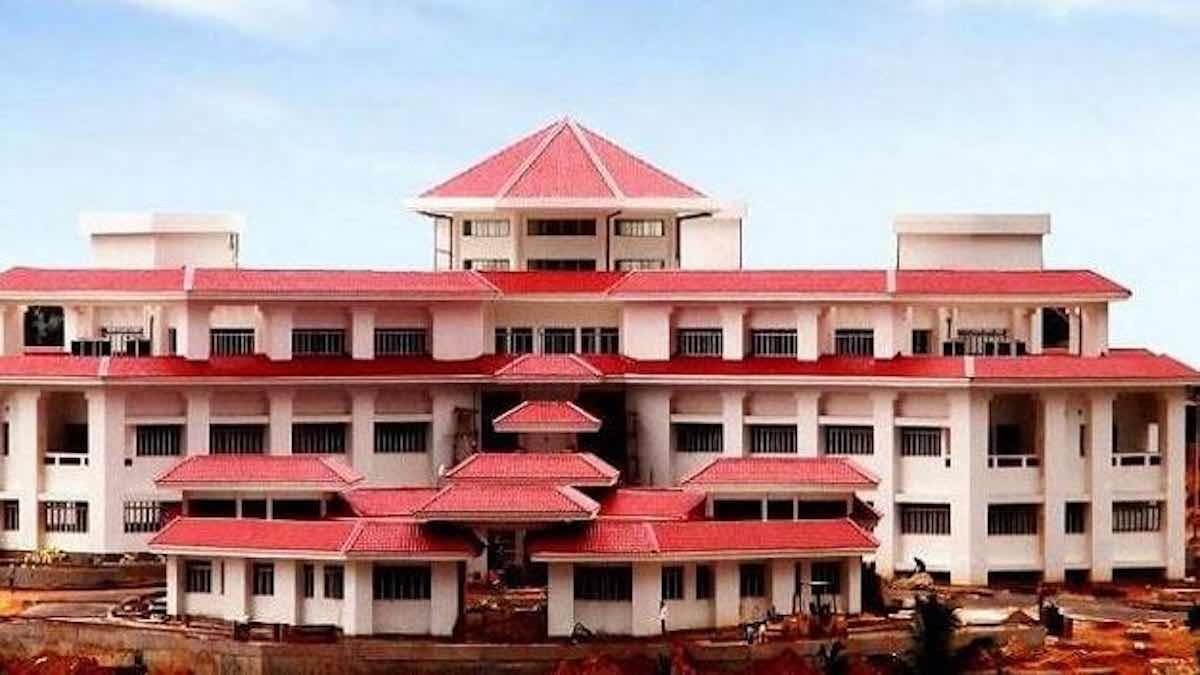

The High Court of Tripura has set aside the conviction of a man sentenced to 20 years of rigorous imprisonment for the rape of a minor, ruling that the prosecution’s case suffered from “fatal infirmities” and material contradictions. The Division Bench of Justice T. Amarnath Goud and Justice S. Datta Purkayastha acquitted the appellant, holding that the solitary, uncorroborated testimony of the victim was insufficient to sustain a conviction given the improbabilities in the narrative.

Background of the Case

The case originated from an FIR lodged by the victim’s mother (PW-1) on September 19, 2020. She alleged that on September 17, 2020, the appellant forcibly took her daughter to his residence, brought her into a room, and committed sexual intercourse. The Bishalgarh Women Police Station registered the case under Sections 376A/376B of the IPC and Section 4 of the POCSO Act.

Following the investigation, a charge sheet was filed, and charges were framed under Sections 376AB/506 of the IPC and Section 6 of the POCSO Act. The appellant pleaded not guilty. The Trial Court, after examining 13 prosecution witnesses, convicted the appellant under Section 376AB of the IPC, sentencing him to 20 years of rigorous imprisonment with a fine of Rs. 2,00,000. He was also convicted under Section 506 of the IPC with a three-year sentence.

Arguments of the Parties

Appellant’s Submissions The learned counsel for the appellant argued that the prosecution’s case was “riddled with material contradictions and inconsistencies.” The defense highlighted conflicting testimonies regarding the date of occurrence and the sequence of events:

  • PW-1 (Mother): Stated the incident occurred on September 17, 2020, and she visited the accused’s house the next morning.
  • PW-2 (Victim): In her medical examination, she stated the incident took place on September 8, 2020. In court, she claimed she went to the accused’s house on the night of the incident itself.
  • PW-3 (Father): Asserted that they went to the accused’s house after 2-3 days.
READ ALSO  Supreme Court Collegium Recommends Transfer of Three High Court Judges

The defense also questioned the medical evidence, arguing that the victim (137 cm tall) allegedly had intercourse in a standing position with the accused (5’7″), which was “practically improbable.” Furthermore, the defense pointed out that despite the incident occurring during strict COVID-19 lockdowns when family members were indoors, no other natural witnesses (the victim’s brothers or grandmother residing in the same house) were examined. Reference was also made to a prior boundary dispute, suggesting a motive for false implication.

The appellant relied on the Supreme Court judgments in GNCT of Delhi Vs. Vipin@lalla (2025) and Santosh Prasah @ Santosh Kumar Vs. State of Bihar (2020) to argue that a conviction cannot be based on the sole testimony of a prosecutrix if it fails to inspire confidence.

READ ALSO  Centre Notifies Appointment of Justice Todupunuri Amarnath Goudas Tripura HC Chief Justice

Respondent’s Submissions

The Public Prosecutor argued that the victim’s evidence was unshaken and consistent in her statements under Sections 161 and 164 of the Cr.P.C. He contended that the minor contradictions were due to the illiteracy of the parents. The State relied on Birbal Nath Vs. State of Rajasthan (2023) and Phool Singh Vs. State of Madhya Pradesh (2022), submitting that the court should rely on the testimony of a sexual assault victim without seeking corroboration, as doing so would amount to “adding insult to injury.”

Court’s Analysis and Observations

The High Court, upon a “careful and comprehensive appraisal of the entire evidence,” observed significant inconsistencies that undermined the prosecution’s case.

  1. Material Contradictions: The Court noted the conflicting versions regarding the timeline given by PW-1, PW-2, and PW-3. The judgment stated: “The sequence of events following the alleged incident is inconsistent… which undermine the credibility of the prosecution’s case.”
  2. Medical Evidence: The Bench observed that the medical opinion—stating the injury was about 11 days old—conflicted with the alleged date of the crime (September 17, 2020) and the medical examination date (September 19, 2020). The Court held: “The medical evidence fails to corroborate the prosecution’s narrative… raising substantial doubt regarding the timeline.”
  3. Non-Examination of Witnesses & Motive: The Court highlighted the prosecution’s failure to examine natural witnesses like the victim’s brothers and grandmother. It also acknowledged that the admitted prior enmity over a boundary dispute provided a “plausible motive for false implication.”

Decision

The Division Bench held that the cumulative effect of the contradictions, the unreliability of the sole testimony, the lack of corroborative medical evidence, and the motive for false implication created a reasonable doubt.

READ ALSO  Prime Accused in 2017 Murder Case of Tripura Scribe Granted Bail

“Upon a careful and comprehensive appraisal of the entire evidence, this Court finds that the prosecution’s case suffers from fatal infirmities, making a conviction unsafe. The inconsistencies in the testimonies of PW-1, PW-2, and PW-3, combined with the improbabilities in the narrative, render the victim’s solitary, uncorroborated testimony insufficient to sustain a conviction,” the Court ruled.

Consequently, the High Court allowed the appeal, set aside the conviction and sentence, and acquitted the appellant of all charges, ordering his immediate release.

Law Trend
Law Trendhttps://lawtrend.in/
Legal News Website Providing Latest Judgments of Supreme Court and High Court

Related Articles

Latest Articles