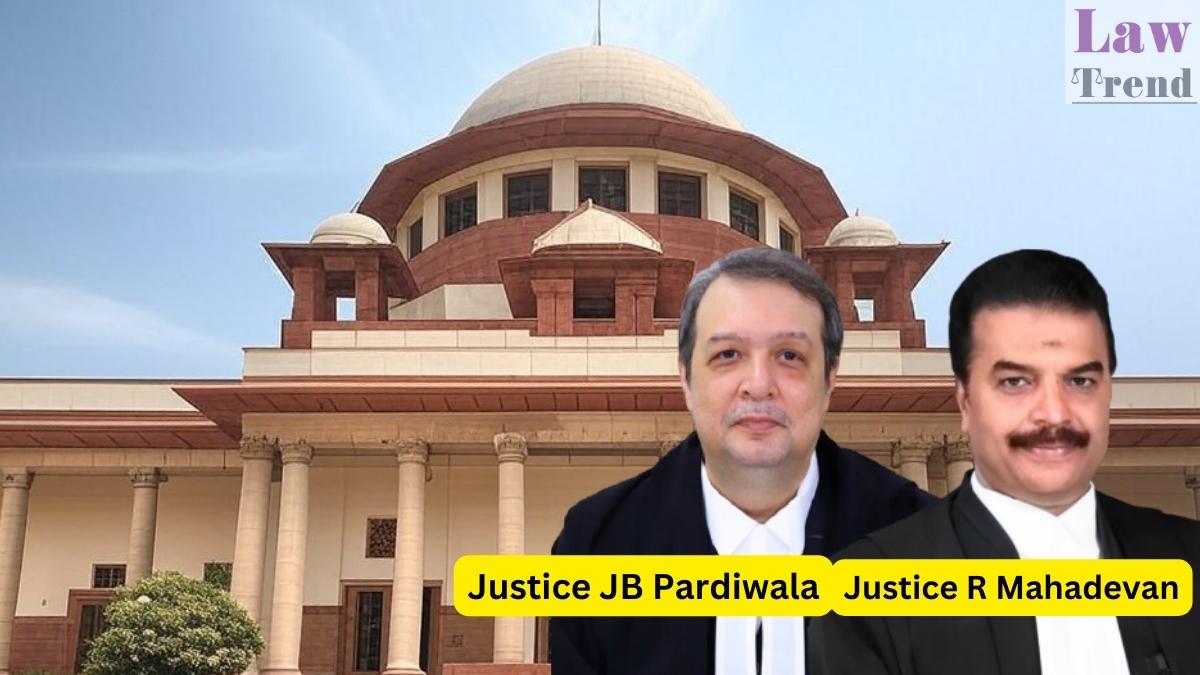
The Supreme Court of India has set aside a judgment of the Punjab and Haryana High Court, ruling that a separate suit instituted by pendente lite transferees (purchasers during the pendency of litigation) to challenge an auction sale conducted by an Executing Court is not maintainable. The Bench, comprising Justice J.B. Pardiwala and Justice R. Mahadevan, held that such a suit is barred under Section 47 of the Code of Civil Procedure (CPC), which mandates that all questions arising between parties or their representatives relating to the execution of a decree must be determined by the Executing Court, not by a separate suit.
In the case of Danesh Singh & Ors. v. Har Pyari (Dead) Thr. LRs. & Ors., the Court also applied the Doctrine of Lis Pendens under Section 52 of the Transfer of Property Act, 1882, holding that the purchasers were bound by the decree passed against their vendor. While allowing the appeal, the Court exercised its powers to do “substantial justice” given the peculiar facts and the 40-year-long litigation, directing the appellants (auction purchasers) to pay Rs. 75,00,000 to the respondents.
The central legal issue was whether transferees who purchased a mortgaged property during the pendency of a bank’s recovery suit could file a separate civil suit to challenge the subsequent auction sale of that property. The Supreme Court held that such purchasers are “representatives” of the judgment-debtor within the meaning of Section 47 CPC. Consequently, they are barred from instituting a separate suit to challenge the sale. The Court clarified that their remedy lay in the execution proceedings itself, subject to the limitations applicable to pendente lite transferees.
Factual Matrix
In 1970, one Duli Chand mortgaged his land (116 Kanals 13 Marlas) to the New Bank of India for a loan. The Bank filed a recovery suit in 1982, which was decreed ex-parte in 1984.
- Pendente Lite Purchase: On 13.05.1985 and 24.06.1985—after the decree was passed but before the execution was finalized—Respondent Nos. 1 and 2 purchased a portion of the mortgaged property (24 Kanals 11 Marlas) from Respondent No. 3 (son of the original borrower).
- Auction Sale: The Executing Court attached the property in October 1985. In 1988, the property was auctioned, and the appellants (nephews of the judgment-debtor) were declared the highest bidders. The sale was confirmed, and possession was delivered in 1989.
- The Separate Suit: Respondent Nos. 1 and 2 filed a separate civil suit seeking a declaration that the auction sale was void. The Trial Court decreed the suit, and the High Court affirmed this decision, holding the suit maintainable on grounds of fraud in the auction.
Arguments
The Appellants argued that the respondents, having purchased the property during the litigation, were representatives of the judgment-debtor. They contended that under Section 47 CPC, any dispute regarding the execution or satisfaction of the decree had to be decided by the Executing Court, barring a separate suit.
The Respondents argued they were “third parties” under Order XXI Rule 92(4) CPC, which allows a third party to challenge a judgment-debtor’s title by filing a separate suit. They claimed the auction was fraudulent and conducted without notice to them.
Court’s Analysis
I. Doctrine of Lis Pendens (Section 52, Transfer of Property Act)
The Court rejected the respondents’ contention that lis pendens did not apply because the bank’s suit was for money recovery. The Court noted that the decree specifically recorded the mortgage.
“When the respondent nos. 1 and 2 respectively purchased the suit property, it was a property which was ‘directly and specifically in question’ in the pending proceedings and hence, stood squarely covered by Section 52 of the 1882 Act… By purchasing a mortgaged property during the pendency of the suit instituted by the respondent no.6-bank, the respondent nos. 1 and 2 respectively could be said to have agreed to be bound by the outcome of such proceedings.”
II. Bar to Separate Suit under Section 47 CPC
The Court held that the respondents were not independent third parties but “representatives” of the judgment-debtor because they stepped into his shoes by purchasing the property during the suit.
“The respondent nos. 1 and 2 respectively, have been identified as being ‘representatives’ of the judgment-debtors by the impugned decision owing to them being pendente lite transferees of the judgment-debtor… In view of the above finding of the High Court, it is difficult to reject the contention… that the separate suit would be hit by the bar envisaged under Section 47 as well.”
III. Inapplicability of “Third Party” Status (Order XXI Rule 92(4))
The Court clarified that the provision in Order XXI Rule 92(4) allowing a “third party” to file a suit applies only to persons extraneous to the original suit who fall outside the scope of Section 47 CPC. Since the respondents were representatives under Section 47, they could not claim the benefit of Rule 92(4).
“From the above exposition of law, it is limpid that the respondent nos. 1 and 2 respectively were not ‘third parties’ under Rule 92(4). This is because they were representatives of the judgment-debtor as envisaged under Section 47 CPC having purchased the suit property during the pendency of the proceedings.”
IV. Remedies under Order XXI (Rules 89, 90, 99)
- Rule 89/90: The respondents failed to file applications to set aside the sale under Rules 89 (deposit) or 90 (irregularity/fraud) within the limitation period. The Court held that a separate suit cannot be filed to circumvent this limitation.
- Rule 99 (Dispossession): The remedy for dispossession during execution is an application under Rule 99. However, the Court noted that Rule 102 bars pendente lite transferees from seeking relief under Rules 98 or 100.
- Conclusion on Maintainability: The Court concluded that whether through Section 47, Rule 92(3), or Rule 99, the separate suit was not maintainable.
“The separate suit instituted by the respondent nos. 1 and 2 respectively would be non-maintainable because they are representatives of the judgment-debtor and the bar envisaged under Section 47 CPC would squarely apply to their case.”
Decision
“The Supreme Court allowed the appeal and set aside the High Court’s judgment. It ruled that the separate suit was not maintainable. However, recognizing that the auction purchasers were close relatives of the vendor and that 40 years had passed, the Court exercised its powers to do justice.”
“In the peculiar facts and circumstances of the present case and with a view to do substantial justice, we direct that the appellants pay a sum of Rs. 75,00,000/- to the respondent nos. 1 and 2 respectively, within a period of 6 months from the date of this judgment.”
Case Details
- Case Title: Danesh Singh & Ors. v. Har Pyari (Dead) Thr. LRs. & Ors.
- Case Number: Civil Appeal No. 14761 of 2025 (Arising out of SLP(C) No. 14461 of 2019)
- Citation: 2025 INSC 1434
- Coram: Justice J.B. Pardiwala and Justice R. Mahadevan