Section 5 of Limitation Act Not Applicable to Election Petitions Under U.P. Municipalities Act; Allahabad HC Sets Aside Order Condoning Delay
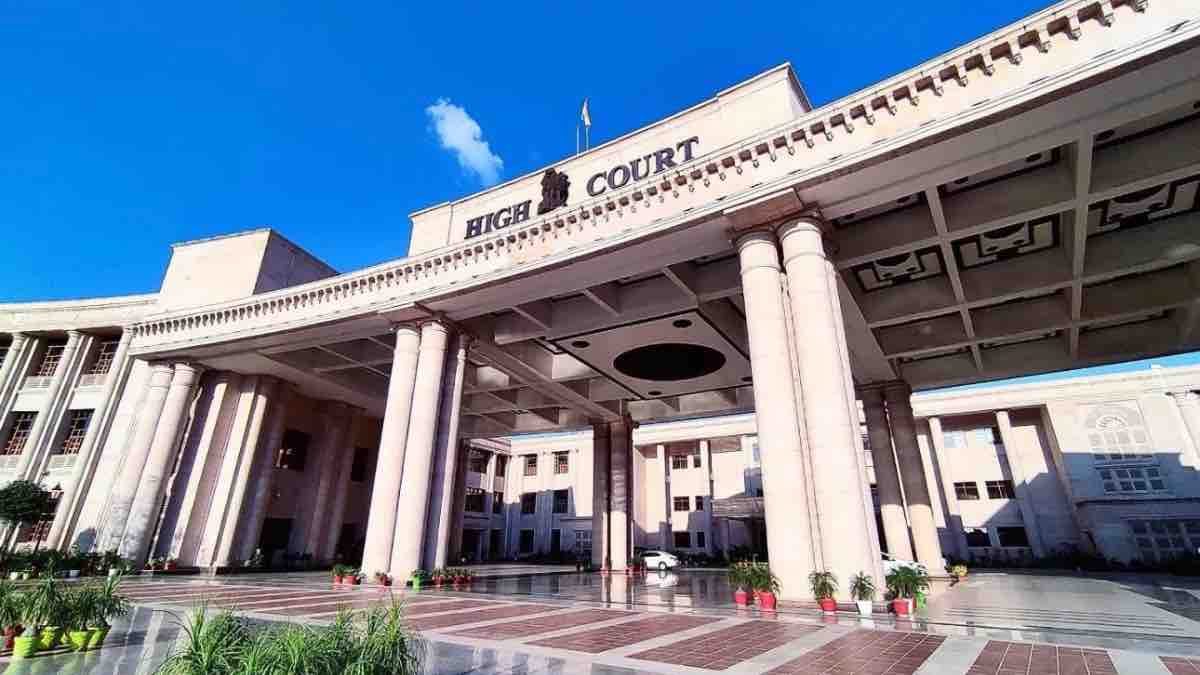

The Allahabad High Court (Lucknow Bench) has held that the provisions of Section 5 of the Limitation Act, 1963, do not apply to an election petition filed under Section 20 of the U.P. Municipalities Act, 1916. The Court ruled that the Municipalities Act is a special law that specifically provides for the application of Section 12(2) of the Limitation Act, thereby excluding the applicability of Section 5 for the condonation of delay.

Justice Subhash Vidyarthi, presiding over Court No. 17, allowed the writ petition filed by Omkar Gupta, the elected Chairman of Nagar Panchayat Ashrafpur Kichhauncha, and set aside the order of the Additional District Judge which had condoned the delay in filing the election petition against the petitioner. Consequently, the High Court also set aside the final judgment removing the petitioner from office, holding the election petition itself as barred by limitation.

Background of the Case

The petitioner, Omkar Gupta, was declared the returned candidate for the office of Chairman, Nagar Panchayat Ashrafpur Kichhauncha, in the election results declared on May 13, 2023. The opposite party no. 4, who stood fourth in the election, filed an election petition on July 18, 2023, challenging the petitioner’s election.

Under Section 20 of the U.P. Municipalities Act, 1916, an election petition must be presented within 30 days after the announcement of the result. The election petition was filed with a delay. On September 22, 2025, the election petitioner filed an application under Section 5 of the Limitation Act, requesting condonation of a 17-day delay, citing court vacations and the receipt of information on a later date as reasons.

The Additional District Judge (F.T.C.-I), Ambedkar Nagar, by an order dated November 4, 2025, allowed the Section 5 application, condoning the delay. The trial court held that the delay was not deliberate and, relying on Supreme Court precedents regarding liberal construction of limitation in other contexts, decided the preliminary issue of limitation in the negative. Subsequently, on November 15, 2025, the trial court allowed the election petition. The petitioner challenged both the order condoning the delay and the final judgment before the High Court.

READ ALSO  Compensation Can Never Restore What Is Lost: Supreme Court Enhances Award for Accident Victim

Arguments of the Parties

The Petitioner’s Submissions: Senior Advocate J.N. Mathur assisted by Adv Mudit Agarwal, appearing for the petitioner, argued that the provisions of Section 5 of the Limitation Act do not apply to an election petition filed under Section 20 of the Municipalities Act, 1916. The counsel relied on several judgments, including K.V. Rao Vs. B.N. Reddi, Hukumdev Narain Yadav Vs. Lalit Narain Mishra, and Lachhman Das Arora Vs. Ganeshi Lal, to contend that election statutes are self-contained codes.

The Respondents’ Submissions: Dr. L.P. Mishra, appearing for the opposite party no. 4, submitted that the District Judge, while deciding an election petition, acts as a “Court” and not a “Tribunal.” Citing the Supreme Court judgment in Consolidated Engineering Enterprises Vs. Principal Secretary Irrigation Department, he argued that Section 5 of the Limitation Act applies to courts.

He further contended that since the U.P. Municipalities Act is a special law providing a period of limitation different from the schedule, Sections 4 to 24 of the Limitation Act should apply under Section 29(2) of the Limitation Act, as they are not expressly excluded. Reference was also made to Article 243-ZG(b) of the Constitution to argue that the authority deciding the petition is a court.

Court’s Analysis

The High Court adjudicated on two primary legal questions:

  1. Whether the District Judge deciding an election petition is a Court or a persona designata.
  2. Whether Section 5 of the Limitation Act applies to election petitions under the U.P. Municipalities Act.

District Judge Acts as a Court The Court first examined whether the District Judge acts as a court. Referring to the amendment in the Municipalities Act by U.P. Act No. 17 of 1982, which substituted the word ‘Court’ with ‘District Judge’, and Section 23 of the Act, the Court observed that the District Judge exercises the powers of a Civil Court.

READ ALSO  Whether Accused Has Any Vested Right to Joint Trial? Kerala HC Says NO

Relying on the ratio in Mukri Gopalan v. Cheppilat Puthanpurayil Aboobacker and LIC v. Nandini J. Shah, Justice Vidyarthi held:

“In view of the foregoing discussion, I am of the considered view that while deciding an election petition, the District Judge acts as a ‘Court’.”

Inapplicability of Section 5 of the Limitation Act Despite holding that the District Judge acts as a Court, the High Court rejected the applicability of Section 5. The Court observed that Section 23 of the Municipalities Act mandates following the procedure of the Civil Procedure Code but contains a specific proviso.

“The Proviso appended to Section 23 of the Municipalities Act specifically provides that the provisions of sub-section (2) of Section 12 of the Limitation Act shall apply in computing the period of limitation.”

The Court reasoned that when the legislature specifically includes one provision of the Limitation Act (Section 12(2)), it implies the exclusion of others.

The Court referred to Hukumdev Narain Yadav v. Lalit Narain Mishra ((1974) 2 SCC 133), where the Supreme Court held regarding the Representation of the People Act:

“The provisions of Section 5 of the Limitation Act do not govern the filing of election petitions or their trial and in this view, it is unnecessary to consider whether there are any merits in the application for condonation of delay.”

The High Court noted that the relevant provisions of the Representation of the People Act are similar to those of the Municipalities Act. The Court held:

“Therefore, the principle of law that the provisions contained in Section 5 of the Limitation Act would not apply to the election petitions filed under the Representation of the People Act, will also apply to the election petitions filed under the Municipalities Act, 1916.”

READ ALSO  Merely Because Wife Has Filed Complaint of Cruelty, She Can’t be Blamed for Husband’s Suicide: P&H HC

Furthermore, the Court observed:

“Although an election petition filed under Section 20 of the Municipalities Act is not a suit, it is an original proceeding which has to be decided in the manner provided for decision of suits. Section 5 of the Limitation Act does not apply to suits. For this reason also, Section 5 of the Limitation Act would not apply to filing of election petitions under the Municipalities Act, 1916.”

Decision

The High Court allowed the writ petition and set aside the impugned order dated November 4, 2025, which had condoned the delay.

Justice Vidyarthi concluded:

“The judgment and order dated 15.11.2025 allowing the election petition is also unsustainable in law as being barred by the limitation period; the election petition was liable to be dismissed.”

Consequently, the election petition was dismissed. The Court further directed:

“It goes without saying that the office order dated 19.11.2025 issued by the District Magistrate, Ambedkar Nagar, appointing an administrator as the office of the Chairman, Nagar Panchayat, had fallen vacant consequent to the election petition being allowed, would ipso facto stand nullified consequent to the dismissal of the election petition and consequently the petitioner shall be entitled to continue as Chairperson of Nagar Panchayat concerned.”

Case Details:

  • Case Title: Omkar Gupta Versus State of U.P. Thru. Prin. Secy. Deptt. of Urban Deve. Lko and 3 others
  • Case Number: Writ-C No. 11631 of 2025
  • Coram: Justice Subhash Vidyarthi
  • Counsel for Petitioner: Sri J. N. Mathur (Senior Advocate), Sri Mudit Agarwal
  • Counsel for Respondents: C.S.C., Sri Rahul Shukla (Addl. CSC), Dr. L. P. Mishra, Sri Syed Aftab Ahmad, Sri Ayush Chaudhary

Law Trend
Law Trendhttps://lawtrend.in/
Legal News Website Providing Latest Judgments of Supreme Court and High Court

Related Articles

Latest Articles