

Section 313 CrPC | Recording Statement on Old Proforma Does Not Vitiate Trial Absent Prejudice: Allahabad HC
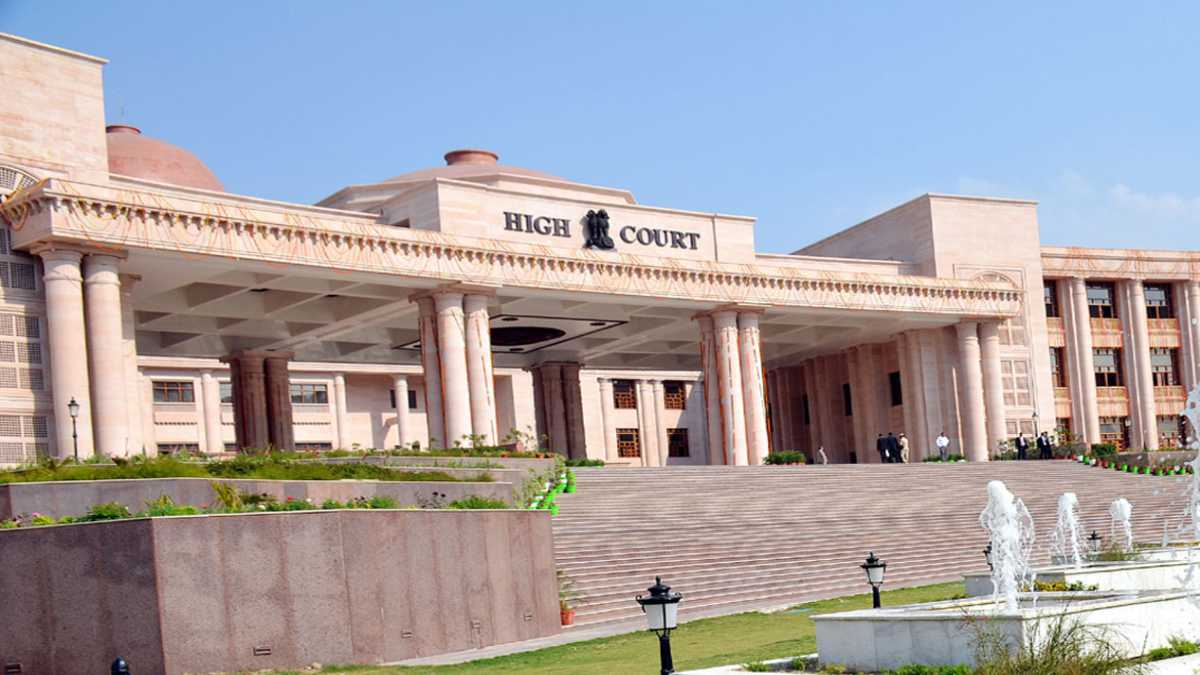

The Allahabad High Court (Lucknow Bench) has dismissed a criminal appeal pending since 1982, upholding the life imprisonment sentence of two men convicted for a murder committed in 1979. The Division Bench comprising Justice Rajnish Kumar and Justice Zafeer Ahmad ruled that recording the statement of an accused under Section 313 of the Code of Criminal Procedure (CrPC), 1973, on a proforma prescribed under the repealed Code of Criminal Procedure, 1898, is a procedural irregularity and does not vitiate the trial unless prejudice is caused to the accused.

The primary legal question before the Court was whether the use of an obsolete form (intended for Section 364 of the old CrPC, 1898) to record the accused’s statement under Section 313 of the new CrPC, 1973, rendered the trial illegal. The Court held that this was a curable irregularity saved by Section 484(2)(b) of the CrPC, 1973, and dismissed the appeal, confirming the conviction under Section 302/34 IPC.

Background of the Case

The appeal challenged the judgment and order dated June 18, 1982, passed by the II-Additional Sessions Judge, Gonda, in Sessions Trial No. 209 of 1979. The trial court had convicted Ram Narain, Gyanendri, Ram Pher, and Ram Uggar for the murder of Ram Shanker.

According to the prosecution, the incident occurred on March 8, 1979. The complainant, Rajendra Prasad, and his uncle, the deceased Ram Shanker, were returning from Village Khamariha when they were intercepted near Village Patkhauli by the accused persons armed with lathi, ballam, and farsa. The prosecution alleged that the attack was motivated by prior enmity, as the complainant and the deceased had been accused in the murder of Samai Deen, the father of the accused Ram Narain, and had been released on bail merely 22 days before the incident.

The accused allegedly dragged Ram Shanker into a field and assaulted him, resulting in his death. The FIR was lodged promptly on the same day at Police Station Kotwali Dehat. During the pendency of the appeal, appellants Gyanendri and Ram Pher passed away, and the appeal on their behalf was abated. The case survived regarding Ram Narain and Ram Uggar.

READ ALSO  Can Liberty of Accused Be Curtailed, If Trial Court Is Unable To Start The Trial? All HC

Arguments of the Parties

The counsel for the appellants raised technical and substantive grounds:

  1. Vitiation of Trial: It was submitted that the statements of the accused were recorded on the proforma prescribed for Section 364 of the repealed Code of Criminal Procedure, 1898, demonstrating non-application of mind and vitiating the trial.
  2. Jurisdiction: The defense contended that the presiding officer who delivered the judgment did not have the jurisdiction to decide the case following a transfer application.
  3. Evidence: On merits, the appellants argued that the prosecution witnesses were interested parties (relatives of the deceased), there were material contradictions in their testimony, and the medical evidence did not corroborate the ocular account.

Learned A.G.A. for the State argued:

  1. Procedural Irregularity: The use of the old proforma was a mere irregularity and not an illegality that would impact the merit of the case.
  2. Corroboration: The FIR was lodged promptly, the motive was established, and the ocular evidence was consistent with the medical findings in the post-mortem report.

Court’s Analysis and Observations

1. Procedural Irregularity Regarding Section 313 CrPC: The Court addressed the technical objection regarding the recording of statements on the form prescribed under the repealed 1898 Code. The Bench referred to Section 484(2)(b) of the CrPC, 1973, which provides that forms prescribed under the old Code and in force immediately before the commencement of the new Code shall be deemed to have been prescribed under the corresponding provisions of the new Code.

The Court observed:

READ ALSO  सीआरपीसी की धारा 311 के तहत गवाहों को आरोपी और अभियोजन पक्ष दोनों के लाभ के लिए वापस बुलाया जा सकता है: इलाहाबाद हाईकोर्ट

“This Court is of the view that it may be an irregularity and cannot be said to be an illegality affecting the trial or merit of case in itself, on account of which the whole trial may be said to have vitiated… It is also settled in law that merely by mentioning of wrong provision, the order or any proceeding etc. cannot be said to be vitiated and set aside.”

The Bench held that the appellants failed to show any prejudice caused to them by this procedural lapse. Citing Supreme Court judgments in Indrakunwar Vs. The State of Chhattisgarh, Kalicharan & Ors. Vs. State of Uttar Pradesh, and Reena Hazarika Vs. State of Assam, the Court reiterated that while Section 313 CrPC confers a valuable right, a procedural infraction does not per se invalidate the proceedings without proof of prejudice.

2. Jurisdiction of the Trial Judge: Regarding the jurisdiction of the judge who delivered the 1982 judgment, the High Court examined the trial court records. It noted that the case was transferred to the Court of the Second Additional Sessions Judge by a specific order of the High Court dated September 28, 1981. The trial judge had recorded in an order dated June 7, 1982, that the case was transferred to his court by name. Consequently, the High Court found no illegality in the disposal of the case by the presiding officer.

3. Appreciation of Evidence and Motive: The Court found that there was a “proximate and perpetuated motive” for the crime, stemming from the murder of the accused Ram Narain’s father.

On the reliability of witnesses, the Bench rejected the argument that the witnesses should be disbelieved merely because they were related to the deceased. Relying on the Supreme Court’s decision in Anil Phukan Vs. State of Assam, the Court held that the testimony of the eye-witnesses (PW-2, PW-3, and PW-4) was consistent and trustworthy.

The Court observed:

READ ALSO  AYUSH vs. Allopathy Doctors: Supreme Court Refers Question of Parity in Service Conditions to Larger Bench

“This is a case of direct evidence and eye witness account. In the case of direct evidence, motive is insignificant if the ocular evidence is strong enough to record the finding of guilt…”

4. Medical Evidence and Common Intention The Court analyzed the post-mortem report, which revealed 25 ante-mortem injuries, including fractures and incised wounds. The judges noted that the injuries were consistent with the weapons (lathi, farsa, ballam) allegedly used by the accused.

Addressing the liability under Section 34 IPC, the Court cited Ramesh Singh @ Photti Vs. State of A.P., holding that the manner in which the accused arrived at the scene and mounted the attack demonstrated a common intention to kill.

Decision

The High Court dismissed the appeal, confirming the conviction and life sentence of Ram Narain and Ram Uggar under Section 302/34 IPC.

The Court directed:

“The appellant No.1; Ram Narain and the appellant No.4; Ram Uggar alias Ram Ugra are directed to surrender within two weeks from today before the Chief Judicial Magistrate concerned, who shall send them to jail to serve out the remaining sentence.”

Case Details:

  • Case Title: Ram Narain And Others Versus State of U.P.
  • Case Number: Criminal Appeal No. 492 of 1982
  • Court: High Court of Judicature at Allahabad, Lucknow Bench
  • Coram: Justice Rajnish Kumar and Justice Zafeer Ahmad
  • Counsel for Appellants: R.S. Shukla, Brij Mohan Sahai, Raj Priya Srivastava, Rajendra Prasad Mishra
  • Counsel for Respondent: Govt. Advocate

Law Trend
Law Trendhttps://lawtrend.in/
Legal News Website Providing Latest Judgments of Supreme Court and High Court

Related Articles

Latest Articles

