

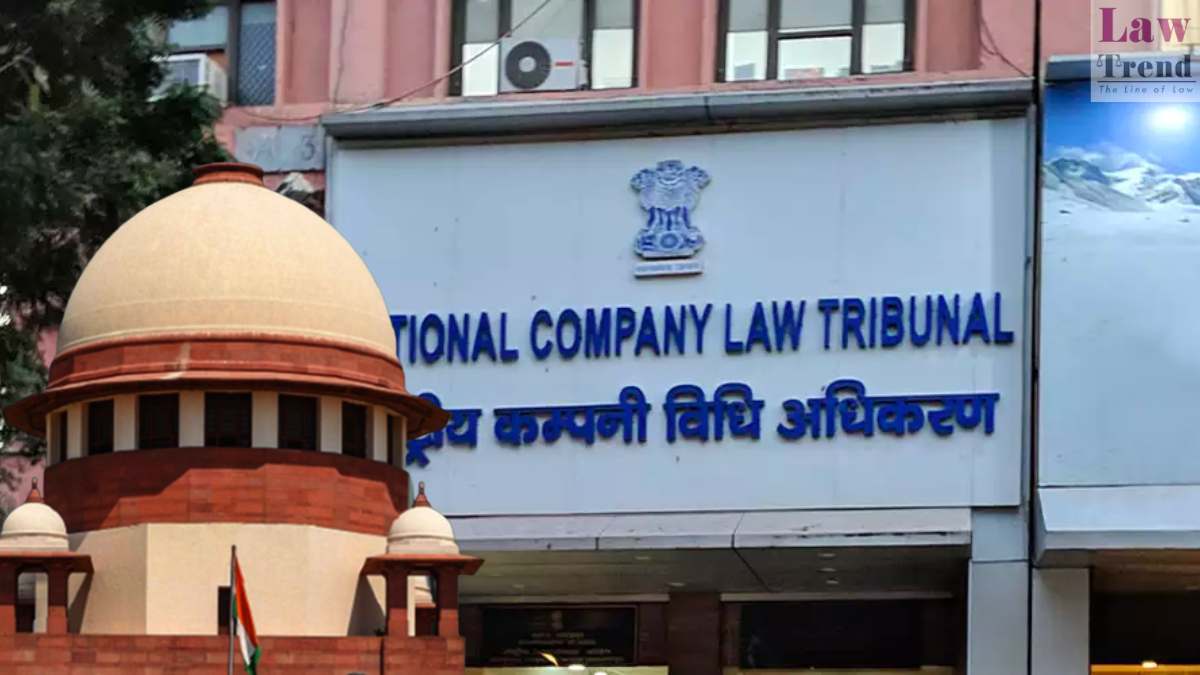
The Supreme Court on Monday stayed parts of a ruling by the National Company Law Appellate Tribunal (NCLAT) and agreed to examine whether the Competition Commission of India (CCI) has jurisdiction to investigate allegations of anti-competitive conduct arising from the exercise of patent rights.
A bench of Justices J B Pardiwala and Vijay Bishnoi clarified that the Court’s intervention would be limited to the question of jurisdiction, and not delve into the merits of the competition complaint itself.
The case stems from a 2022 order of the CCI dismissing a complaint against Swiss pharmaceutical company Vifor International AG, concerning its patented drug Ferric Carboxymaltose (FCM). While the CCI closed the matter on merits, the NCLAT, in its subsequent ruling, went further and held that the CCI lacked jurisdiction altogether.
The appellate tribunal held that where claims of abuse of dominance arise out of the use of patent rights, the Competition Act, 2002 has no application, and such disputes must be adjudicated solely under the Patents Act, 1970. It based this reasoning on Section 3(5) of the Competition Act, which protects reasonable restrictions imposed for safeguarding intellectual property rights.
At the heart of the case lies the conflict between the Competition Act and the Patents Act — specifically, whether the enforcement of patent rights (such as licensing terms or royalty structures) can be reviewed by the CCI under the lens of abuse of dominance.
The NCLAT relied heavily on the 2023 judgment of the Delhi High Court Division Bench in the Ericsson and Monsanto cases, where it was held that the Patents Act is a comprehensive code for addressing issues related to licensing and patent misuse. In both those matters, the High Court had barred CCI from proceeding with investigations initiated on complaints of excessive royalty demands and licensing restrictions.
Although the Supreme Court had earlier declined to interfere with the Delhi High Court’s verdict, it had kept the broader legal question open.
By staying the NCLAT’s categorical finding that the Competition Act has no role in such matters, the Supreme Court has signaled its intent to re-examine the jurisdictional divide between the two statutory frameworks.
The bench emphasised that its current focus would solely be on the legal issue of whether the CCI can exercise jurisdiction in cases involving alleged anti-competitive conduct linked to patent enforcement.
The decision could have significant implications for how India regulates conduct at the intersection of intellectual property and competition law — particularly in sectors like pharmaceuticals, telecom, and biotechnology, where licensing practices are often hotly contested.
- Ericsson Case: Mobile manufacturers like Micromax and Intex had alleged that Ericsson was demanding excessive royalties for standard essential patents. CCI initiated a probe, which Ericsson challenged.
- Monsanto Case: Seed companies alleged that Monsanto’s royalty practices for genetically modified cotton seeds were anti-competitive. The Delhi HC barred the CCI from proceeding.
In both instances, the Delhi High Court held that the Patents Act provided sufficient remedies, thereby ousting CCI’s jurisdiction.
The Supreme Court’s upcoming decision in the Vifor case could provide long-awaited clarity on this contentious legal overlap.




