

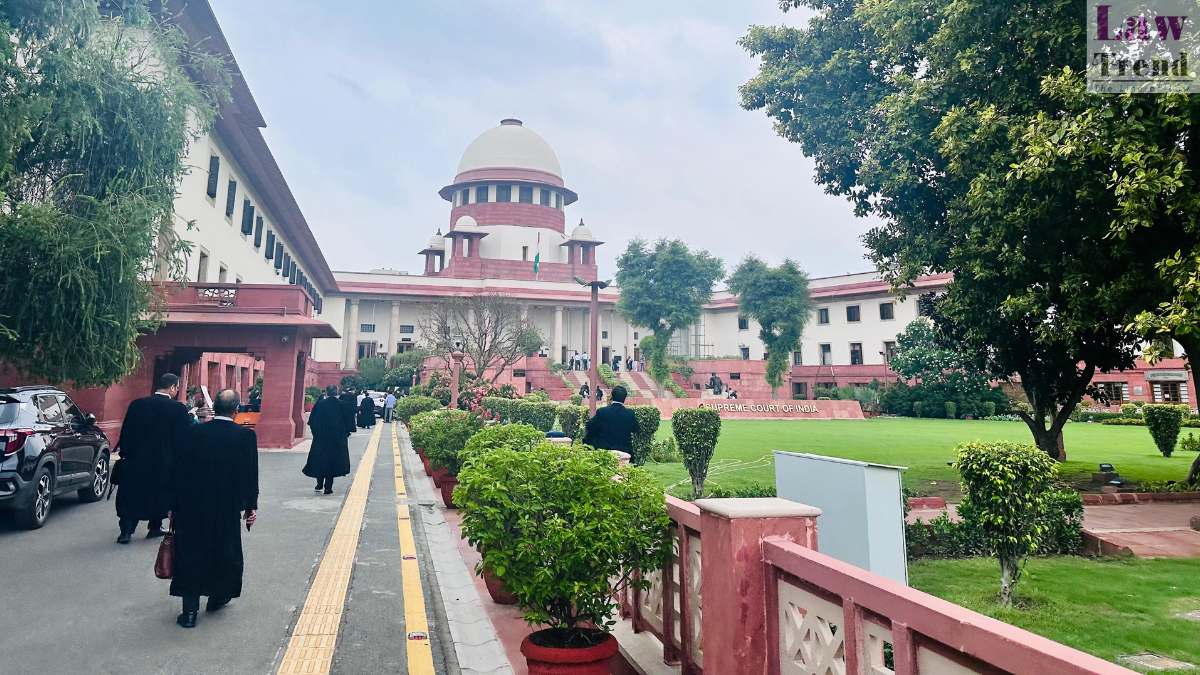
The Supreme Court of India on Monday directed the Union Home Secretary to personally appear before it on Tuesday to provide “appropriate assistance” in the implementation of a nationwide scheme for installing CCTV cameras in police stations. The order comes as the court expressed sharp dissatisfaction with the level of representation from the Centre in previous deliberations.
A bench comprising Justices Vikram Nath and Sandeep Mehta was hearing a suo motu case initiated after reports highlighted the lack of functional CCTV infrastructure in police stations—a measure originally mandated by the top court in 2018 to curb human rights abuses.
During the proceedings, the bench raised significant security concerns regarding the hardware being used for these installations. Referring to recent media reports, Justice Mehta noted that the Centre had reportedly issued instructions to remove CCTV cameras manufactured by a Chinese firm from various locations due to data security risks.
“The Centre itself has given instructions to take down the cameras taken from a neighbouring country because they are capturing data and sending it there,” Justice Mehta observed. “Now, the government has issued instructions to remove particular cameras.”
Responding to the court’s query, Additional Solicitor General (ASG) Raja Thakare, representing the Centre, clarified that while the matter is under consideration, “no formal order has yet been passed in this regard.”
The court’s decision to summon the Home Secretary was triggered by news that a previous high-level meeting—intended to discuss the feasibility, modalities, and standardisation of the CCTV infrastructure—was attended only by an Under Secretary-level officer.
“We are passing orders and you are sending an under secretary level officer to attend the meeting?” the bench asked the ASG. Although the law officer assured the court that a higher-ranking official would attend future meetings, the bench insisted on the Home Secretary’s presence for the next hearing.
“Let this matter come up tomorrow again. The home secretary, Union of India, to remain present before this court so that appropriate assistance can be drawn from him in implementation of the scheme that is being monitored by this court,” the bench ordered.
Senior advocate Siddhartha Dave, acting as amicus curiae, informed the court that while most states have begun installations, they are still in the process of setting up centralized dashboards to monitor the footage.
When Dave highlighted that Kerala currently possesses the most robust setup, Justice Nath questioned why other states could not replicate that success. “If you say that Kerala has the best set up, why can’t it be followed up by other states?” he asked, suggesting that authorities should discuss this standardization during their meetings. The Centre currently provides 60% of the funding for these installations.
The Supreme Court has been monitoring this issue since 2018, when it first ordered CCTVs in police stations to ensure transparency and prevent custodial torture. In December 2020, the court expanded this mandate to include the offices of central investigating agencies such as the CBI, Enforcement Directorate (ED), and National Investigation Agency (NIA).
Under these directives, CCTVs must be installed at all entry and exit points, main gates, lock-ups, corridors, lobbies, and reception areas. The systems must feature night vision, audio-video recording capabilities, and a mandatory data storage capacity of at least one year.




