

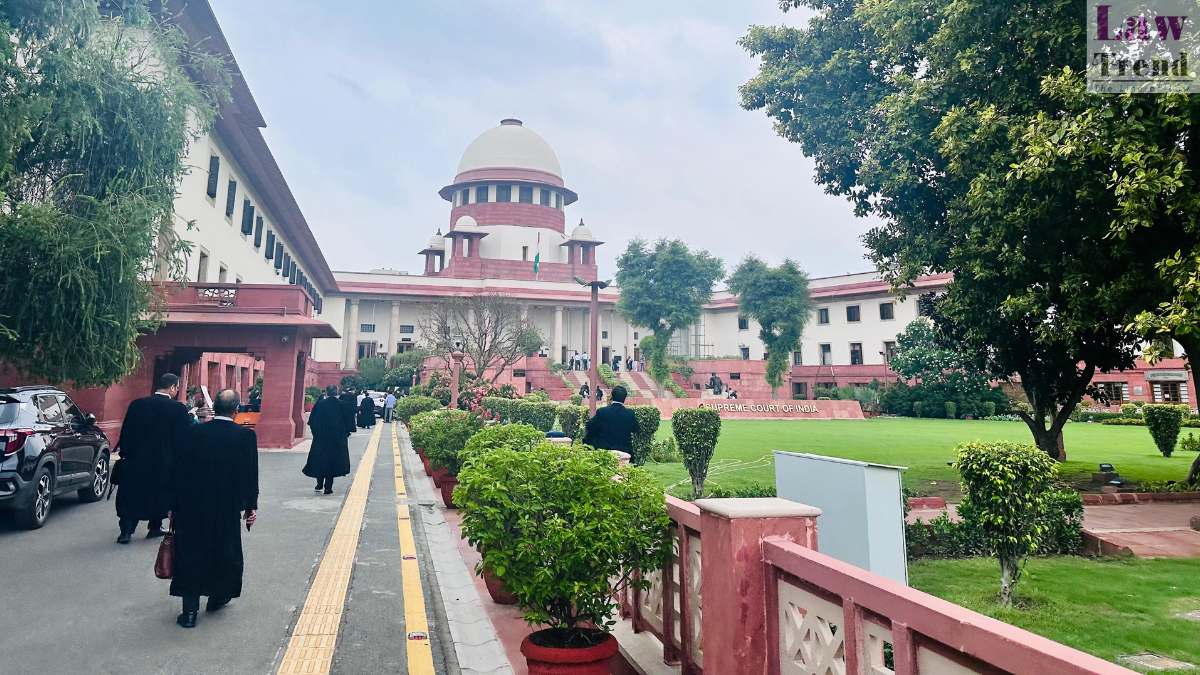
The Supreme Court on Wednesday refused to grant interim relief to global pharmaceutical giant Bristol Myers Squibb (BMS) in its attempt to stop Zydus Lifesciences from marketing a generic biosimilar of its cancer drug Nivolumab, in a case involving the balance between patent protection and public health.
A bench of Chief Justice of India Surya Kant and Justice Joymalya Bagchi declined to restrain Zydus from selling the biosimilar, instead directing BMS to carry out a “direct mapping” exercise comparing the Zydus product with its patented version. The court asked that a sample be provided by Zydus within 24 hours for this purpose. Based on the outcome, BMS was given liberty to approach the High Court for interim relief.
“You can be adequately compensated at any stage. See, the ones who need this medicine will not be able to get yours,” the bench told BMS.
The dispute stems from a Delhi High Court decision on January 12, which vacated an earlier injunction that had barred Zydus from selling its biosimilar. The High Court allowed Zydus to market the drug until BMS’s patent expires in May 2026, citing public interest and the critical need for affordable cancer treatments.
Zydus’s counsel argued that its biosimilar is being sold at ₹30,000 per vial, as opposed to BMS’s patented version priced at ₹1,08,000 per vial — a steep difference for patients who typically require at least 12 doses. “If the order remained in place for one-and-a-half years, why cannot it be in place for the last four months, until the expiry of the patent on May 2?” Zydus’s lawyer asked.
The Supreme Court’s refusal to stay the High Court’s order effectively upholds the reasoning that access to life-saving medicines at affordable prices must be prioritised, especially when only a short period of patent protection remains.
The High Court had previously observed that restricting the biosimilar’s availability at this stage would cause “irreparable prejudice” to patients and that maintaining access for the remaining four months before patent expiry balances both proprietary rights and public interest.




