

SC Imposes Rs. 5 Lakh Cost on Centre for “Targeted Departmental Vendetta” Against Former IRS Officer; Sets Aside ITAT Selection Proceedings Tainted by Bias
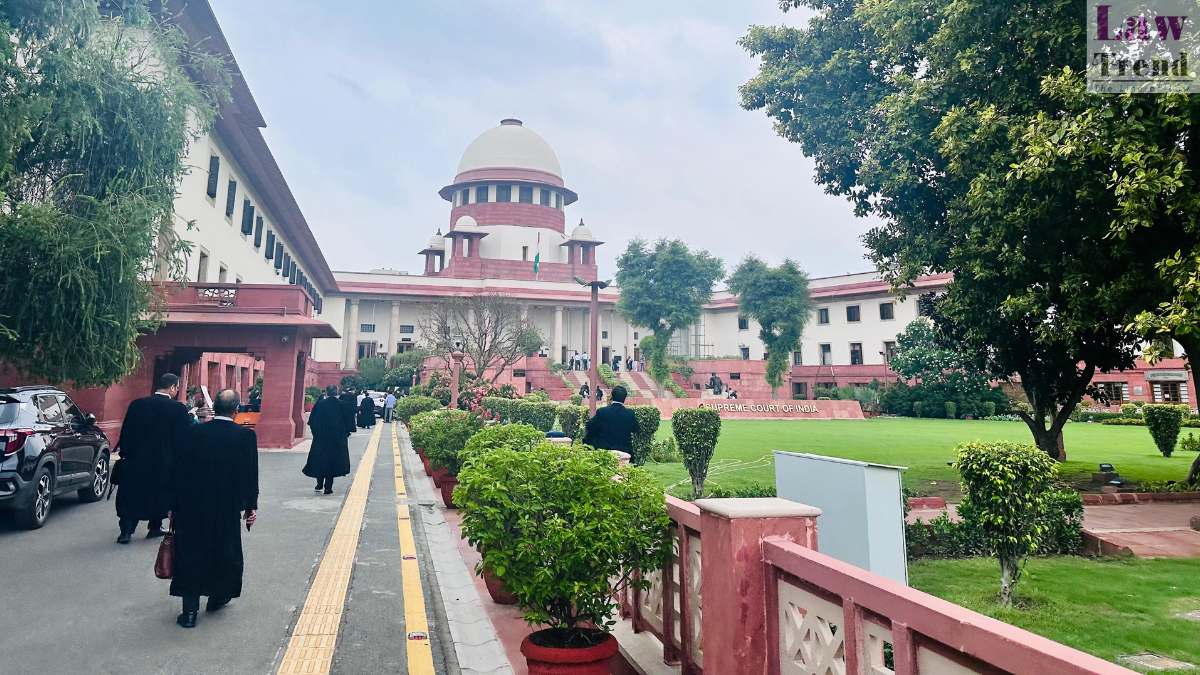

The Supreme Court of India has set aside the proceedings of a Search-Cum-Selection Committee (SCSC) that rejected the candidature of Captain Pramod Kumar Bajaj for the post of Member (Accountant), Income Tax Appellate Tribunal (ITAT), holding that the inclusion of an officer who had previously faced contempt proceedings initiated by the petitioner created a “reasonable apprehension of bias.”

In a judgment delivered on January 30, 2026, a Bench comprising Justice Vikram Nath and Justice Sandeep Mehta termed the case a “sordid tale of targeted departmental vendetta,” characterized by “mala fide actions and protracted persecution.” The Court imposed a cost of Rs. 5 Lakhs on the respondents for their “rank procrastination” and for creating deliberate obstacles in the petitioner’s path.

Case Background

The petitioner, Captain Pramod Kumar Bajaj, is a former Permanent Commissioned Officer of the Indian Army who was released from service due to disability attributable to military operations. He subsequently joined the Indian Revenue Service (IRS) in 1990 and was promoted to Commissioner of Income Tax in 2012.

In 2014, Captain Bajaj applied for the post of Member (Accountant), ITAT. A Search-cum-Selection Committee (SCSC), headed by Justice T.S. Thakur (as he then was), ranked him first on the all-India merit list. However, his appointment was withheld by the Department citing adverse Intelligence Bureau inputs related to a matrimonial dispute, which had already been settled.

Following litigation before the Central Administrative Tribunal (CAT) and the Allahabad High Court, the SCSC reconsidered his case in 2018 and reiterated his merit position. Despite this, the respondents initiated disciplinary proceedings, placed him on the “Agreed List” of officers with suspected integrity, and eventually compulsorily retired him in September 2019 under Fundamental Rule 56(j), just months before his superannuation.

The order of compulsory retirement was quashed by the Supreme Court in an earlier judgment dated March 3, 2023 (Civil Appeal No. 6161 of 2022), where the Court observed that the action was punitive and passed to “short-circuit” pending disciplinary proceedings.

READ ALSO  No Provision Under CRPC Can Curtail or Overshadow the Inherent Powers of the High Court Provided Under Section 482: Allahabad HC

Despite the 2023 judgment and a subsequent contempt petition where the then Revenue Secretary (“the Officer”) tendered an unconditional apology, no appointment order was issued. Instead, the petitioner was asked to appear before a fourth re-constituted SCSC on September 1, 2024.

Arguments and Contentions

The petitioner, appearing in person, submitted that upon appearing before the fourth SCSC, he discovered that “the Officer”—who had been actively involved in the prior litigation and had faced contempt proceedings in Contempt Petition (Civil) No. 210 of 2024—was a member of the Committee.

Captain Bajaj argued that the presence of “the Officer” in the SCSC gave rise to a genuine apprehension regarding the fairness of the process. He contended that the officer harboured animus and a biased attitude due to the prior contempt proceedings. He alleged that the rejection of his candidature in November 2025 was a result of this “institutional bias” and “personal vendetta.”

The respondents, Union of India, did not file a counter-affidavit despite the Court’s specific direction on December 2, 2025, and no counsel appeared on their behalf during the final hearing on January 15, 2026.

Court’s Observations and Analysis

READ ALSO  State Cannot Take Shelter of New Pension Scheme When Delay in Regularisation is Due to Insenstive Approach of Authorities: Allahabad HC

Writing for the Bench, Justice Sandeep Mehta observed that the facts disclosed a “sordid tale” of persecution. The Court noted that at every stage, the respondents had “deliberately created hurdles” by fabricating charges or failing to comply with judicial orders.

Addressing the composition of the fourth SCSC, the Court held that the inclusion of “the Officer” violated the principles of natural justice.

“We feel that the inclusion of ‘the Officer’ as a member of the SCSC, which rejected the petitioner’s candidature, has undoubtedly created a genuine perception of bias in the mind of the petitioner and was in gross violation of the principles of natural justice. ‘The Officer’ had earlier faced contempt proceedings at the instance of the petitioner in relation to the very same ongoing tussle, and in such circumstances, a reasonable apprehension as to his impartiality and independence… is fortified.”

The Court emphasized that while “the Officer” was only one member of the Committee, his participation vitiated the decision-making process. The Bench cited the Supreme Court’s decision in State of Gujarat v. R.A. Mehta (2013) regarding the doctrine of bias, reiterating that justice must manifestly be seen to be done.

“In the interest of fairness and to dispel any reasonable apprehension of bias, it would have been appropriate for ‘the Officer’ to have recused from the evaluation process on his own. His failure to do so fortifies the aspersion of bias.”

The Court also took strong exception to the respondents’ failure to file a counter-affidavit, stating that the averments of bias and mala fides in the writ petition remained uncontroverted. The Bench remarked that the officers likely intended to “waste precious time” and deprive the petitioner of the “slender window” of tenure remaining as he approaches the age of 70.

READ ALSO  दिल्ली में जल संकट के बीच सुप्रीम कोर्ट का आदेश: हिमाचल 137 क्यूसेक पानी छोड़ेगा

Decision and Directions

The Supreme Court allowed the writ petition with the following directions:

  1. Set Aside SCSC Decision: The minutes of the SCSC meeting dated September 1, 2024, insofar as they related to the non-recommendation of the petitioner, were set aside.
  2. Fresh Consideration: The Department of Personnel and Training (DoPT) was directed to convene a fresh meeting of the SCSC within four weeks to consider the petitioner’s candidature.
  3. Exclusion of Officer: The Court explicitly directed that “the Officer” must be excluded from the fresh proceedings.
  4. Timeline: The outcome must be communicated to the petitioner within two weeks of the decision.
  5. Costs: The Court imposed a cost of Rs. 5 Lakhs on the respondents for their “rank procrastination” and “deliberate obstacles.” The amount is to be deposited in the Court Registry within four weeks and paid to the petitioner.

Case Details:

  • Case Title: Captain Pramod Kumar Bajaj v. Union of India and Anr.
  • Case Number: Writ Petition (Civil) No. 1180 of 2025
  • Bench: Justice Vikram Nath and Justice Sandeep Mehta

Law Trend
Law Trendhttps://lawtrend.in/
Legal News Website Providing Latest Judgments of Supreme Court and High Court

Related Articles

Latest Articles

