

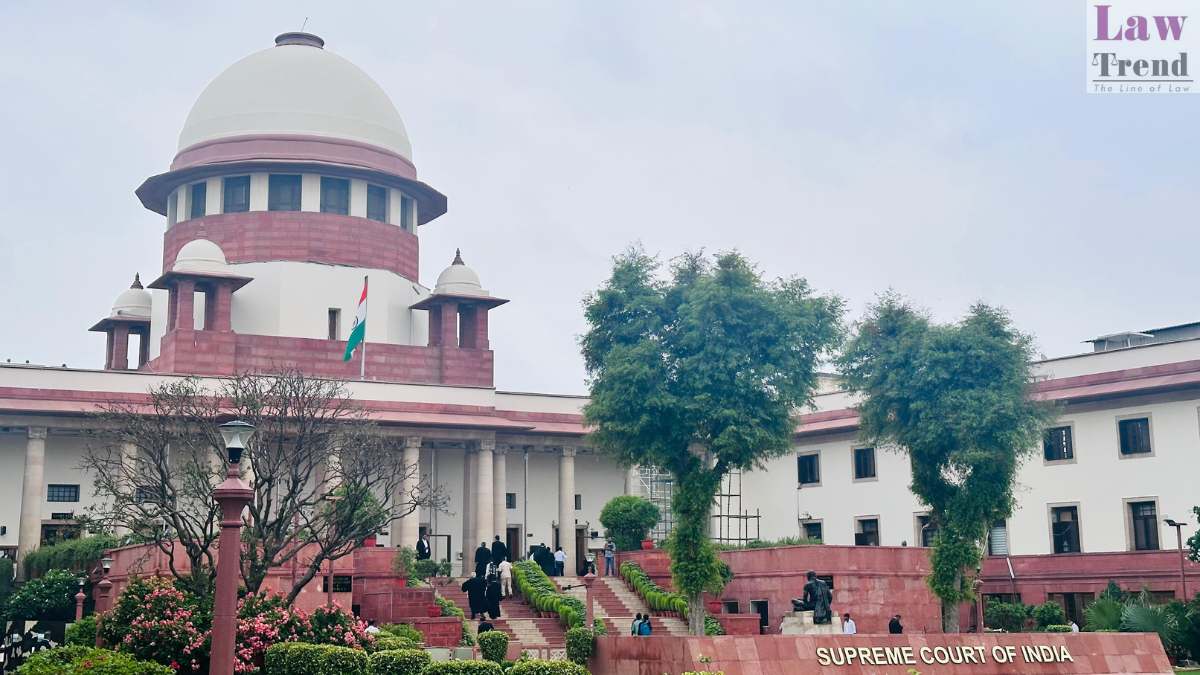
The Supreme Court on Tuesday granted interim bail to Kailash Ramchandani, an alleged sympathiser of the Naxal movement, in the high-profile 2019 Gadchiroli IED blast case in which 15 police personnel were killed. The relief was extended despite the National Investigation Agency’s strong opposition and accusations that Ramchandani’s “hands are coloured with the blood” of the slain officers.
A bench comprising Chief Justice Surya Kant and Justice Joymalya Bagchi passed the order in light of the fact that Ramchandani has been incarcerated since his arrest on June 29, 2019. The bench observed that charges were yet to be framed and noted delays in trial proceedings, particularly owing to infrastructural lapses in setting up designated special courts under the NIA Act.
The court imposed multiple restrictions on Ramchandani’s movement and conduct. He has been directed to reside in his native village in Gadchiroli and is prohibited from leaving the district without prior permission from the special NIA court. He is permitted to travel only for attending trial proceedings in Mumbai.
Other conditions include:
- Weekly reporting at the local police station.
- Sharing of his mobile number with the police.
- No adjournment requests to be made by him during the trial.
The apex court also made it clear that any attempt by Ramchandani to establish contact with Naxal elements or breach of bail conditions would invite immediate revocation of his interim relief on application by the NIA.
Ramchandani was arrested in connection with a deadly IED blast that occurred in May 2019 in Gadchiroli, Maharashtra, killing 15 personnel from the state police’s Quick Response Team. The NIA alleges that Ramchandani, a local businessman, provided information that facilitated the ambush by Naxal insurgents.
He had approached the Supreme Court challenging the Bombay High Court’s March 5, 2024 order rejecting his bail plea. He argued that while he had remained in jail for over four years without trial, several co-accused in the same case had already been granted bail.
During the hearing, Additional Solicitor General Aishwarya Bhati opposed the bail plea, asserting that Ramchandani played a vital role in alerting Naxals about the movement of the police team. She submitted that the investigation was ongoing and several crucial witnesses were yet to be examined.
However, the bench considered the prolonged pre-trial detention and noted systemic delays. It also highlighted the earlier directions issued by the Court to the Centre and the Maharashtra government regarding the setting up of special courts under the NIA Act.
In a prior hearing, the Court had cautioned that failure to establish special courts with adequate infrastructure would compel the judiciary to grant bail due to the inability to ensure timely trials.
“If the authority fails to establish courts with requisite infrastructure for conducting speedy trial under the NIA Act and other special statutes, the court would invariably be forced to release the accused on bail,” CJI Surya Kant had observed.
In March 2025, the Court had rejected Ramchandani’s earlier bail plea but left the door open for reconsideration if adequate trial mechanisms were not instituted. Tuesday’s order follows the Court’s warning that it would treat continued infrastructural deficiencies as a valid ground to entertain bail applications.
The matter will continue before the special NIA court in Mumbai, where Ramchandani is now expected to participate in the trial without delay.




