

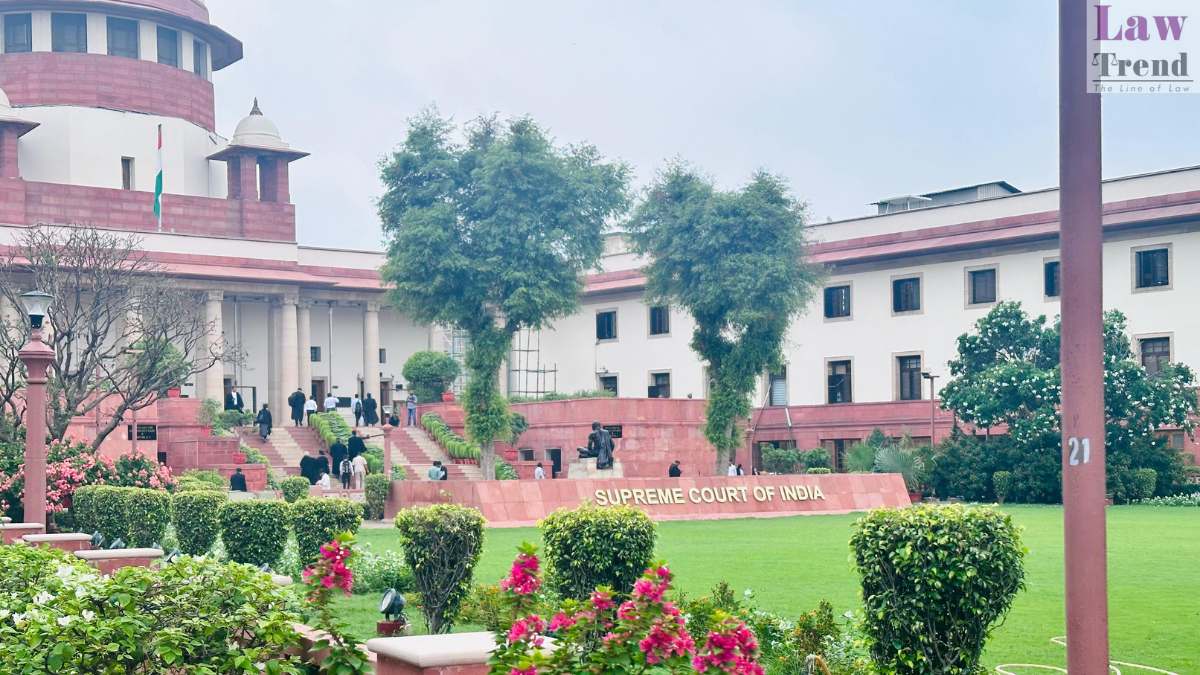
In a significant relief for residents of 18 remote villages in Uttarakhand, the Supreme Court on Thursday modified its January 11, 2023 order and permitted the state government to proceed with the metalling of the 11.5-kilometre Laldhang-Chillarkhal road, while strictly prohibiting the movement of commercial vehicles through the ecologically sensitive stretch.
A bench led by Chief Justice of India Surya Kant, along with Justices Joymalya Bagchi and Vipul M Pancholi, noted that the road was critical for over 40,000 villagers living in the area, particularly as the current unmetalled track becomes inaccessible during monsoons. However, the court made it clear that environmental safeguards must be upheld.
“The people of remote villages are entitled to the benefit of developments happening in the country,” the bench observed, while emphasizing the need to preserve the unique forest habitat through which the road passes.
The court reiterated its concern over the 4.5-km stretch of the road between Chamaria Bend and Siggadi Sot, which serves as the only functional wildlife corridor between Jim Corbett Tiger Reserve and Rajaji Tiger Reserve.
While allowing the metalling of the road, the bench categorically prohibited the movement of commercial vehicles, especially heavy trucks and dumpers. It directed the state government to enforce the restriction and not permit even limited commercial traffic, as was previously proposed.
CJI Surya Kant underscored the ecological importance of the corridor, stating that “it is necessary for preserving the flora and fauna of the forest.”
The bench refrained from allowing bus services through the corridor, observing that granting one exception would open the door to further demands.
Advocate Gaurav Kumar Bansal, the original petitioner, clarified that he was not opposed to the metalling of the road for villagers’ use and only sought to protect the wildlife from commercial traffic.
Senior advocate K Parameshwar, appearing as amicus curiae, pointed out that the Central Empowered Committee (CEC) had flagged flaws in the road design, including concerns over obstruction of river flow.
Bansuri Swaraj, appearing for BJP MP Anil Baluni who had intervened in the matter, submitted that the unmetalled road severely impacted the daily life of villagers. She highlighted that a 400-metre elevated stretch was planned to facilitate wildlife movement across the corridor.
The state government, through its counsel, assured the court that no commercial vehicles would be allowed and that such traffic would be diverted through alternate routes via Uttar Pradesh. It also committed to complying with any additional conditions imposed by the court.
The January 2023 stay had been issued after the court found that the road project violated provisions of the Wildlife (Protection) Act, 1972, and the Forest Conservation Act, 1980. The top court had directed the state to secure all mandatory approvals before proceeding.
Wildlife activists had raised alarms about the potential fragmentation of the only remaining functional wildlife corridor in the region, home to several vulnerable and endangered species including tigers, elephants, and leopards.
With the latest modification, the court has sought to strike a balance between development for remote populations and the preservation of critical wildlife habitats.




