Reserved Category Candidates Topping Merit List Must Be Adjusted Against Unreserved Vacancies: Supreme Court Sets Aside Kerala HC Order
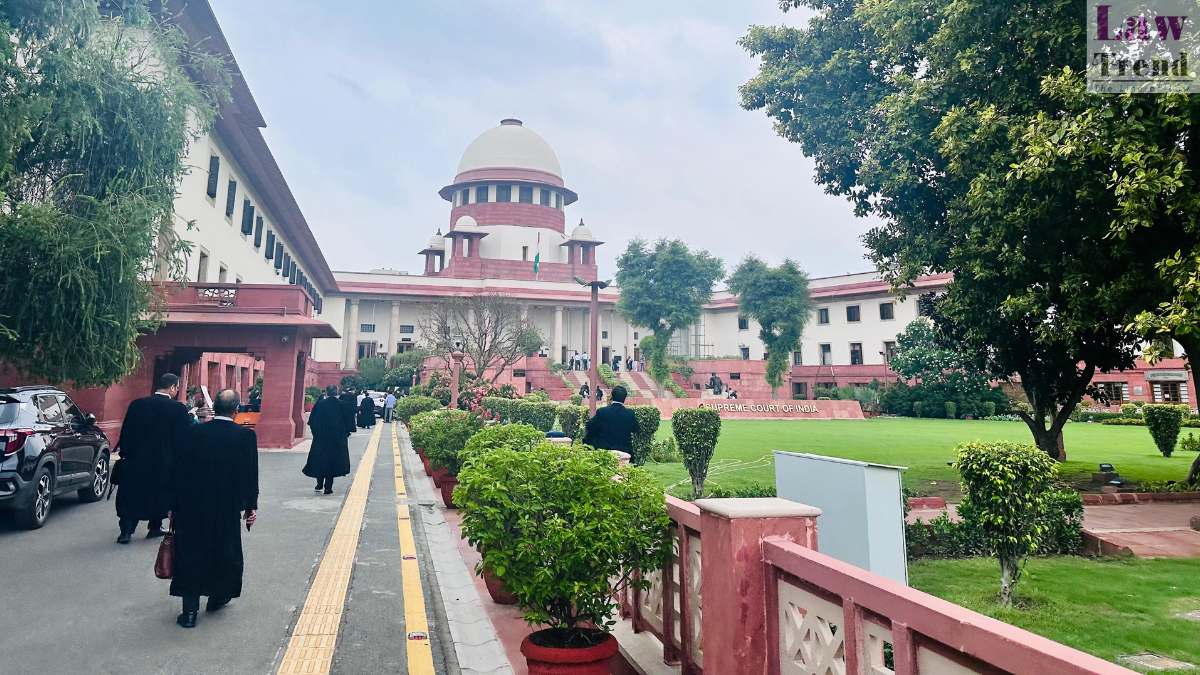

The Supreme Court has reiterated the principle that candidates belonging to reserved categories (SC/ST/OBC) who secure higher marks than the cut-off for the unreserved (general) category must be treated as general category candidates and adjusted against unreserved posts. The Bench held that the “open category is open to all,” and merit is the sole criterion for inclusion in the unreserved list, regardless of the candidate’s social category.

The Division Bench of Justice M.M. Sundresh and Justice Satish Chandra Sharma set aside the judgment of the Kerala High Court which had directed the Airport Authority of India (AAI) to appoint a general category candidate who had missed the selection cut-off, reasoning that the inclusion of reserved category candidates in the unreserved list was erroneous.

Background of the Case

The dispute arose from a 2013 recruitment drive by the Airport Authority of India (Appellant) for the post of Junior Assistant (Fire Service). A total of 245 posts were notified, distributed as follows:

  • Unreserved (UR): 122
  • Other Backward Classes (OBC): 78
  • Scheduled Castes (SC): 22
  • Scheduled Tribes (ST): 23 (including 1 carried forward)

The selection process involved a written examination, physical measurement test, driving test, physical endurance test, and an interview. Upon completion, 158 candidates were appointed.

The first Respondent, Sham Krishna B., a general category candidate, participated in the process and secured an aggregate of 128.08 marks. However, he was not included in the final select list. Information obtained through the Right to Information Act, 2005, revealed that while 122 candidates were selected under the unreserved category, the Respondent was placed at serial number 10 in the list of non-selected unreserved candidates.

The Respondent challenged the selection before the Kerala High Court, arguing that the appointments were vitiated because reserved category candidates were incorrectly included in the unreserved list, thereby denying him an opportunity.

The Single Judge of the High Court allowed the petition, directing the AAI to rearrange the rank list in conformity with the reservation roster and appoint the Respondent. This decision was upheld by the Division Bench of the High Court in the impugned judgment dated February 19, 2020. The High Court held that the roster had not been properly applied and directed the appointment of the Respondent to a vacancy kept vacant by the court’s order.

READ ALSO  HC Imposes Rs 5000 Fine on Advocate for Repeatedly Failing to Represent His Client Despite Specific Court Orders

Arguments Before the Supreme Court

Additional Solicitor General Aishwarya Bhati, appearing for the Airport Authority of India, contended that the High Court erred in its construction of the law. She argued:

  • It is a settled proposition that if a reserved category candidate secures a place in the merit list for general category candidates based on their own merit, they must be treated as a general category candidate and adjusted against unreserved posts.
  • The reservation roster is a post-based administrative instrument used to record cadre composition and identify points for future recruitment, not a parallel selection mechanism to displace meritorious candidates.
  • The recruitment was conducted strictly in accordance with the recruitment rules and the reservation roster.

Counsel for the Respondent argued that:

  • The unreserved posts should have been filled exclusively by unreserved category candidates.
  • The AAI failed to follow the model roster prescribed by the Department of Personnel and Training (DoPT) Office Memorandum dated July 2, 1997.
  • Reserved category candidates should not have been shifted to vacancies meant for general category candidates, especially when reserved posts remained vacant.

Court’s Analysis and Observations

The Supreme Court examined the 1997 DoPT Office Memorandum and the method of preparation of the merit list. The Court observed that the Kerala High Court failed to appreciate that the “reservation roster comes into picture only after selection process is over.”

Justice Satish Chandra Sharma, writing for the Bench, clarified the purpose of the reservation register:

READ ALSO  Kapil Sibal Highlights Dire Conditions in District Courts at National Judiciary Conference

“The reservation roster is not used to make selections during the recruitment process, but only to define number of vacant posts for advertising for recruitment. However, since reservation register or roster defines the quota available for recruitment, it can be used to decide who deserves selection and who does not deserve selection on account of a concerned category quota being filled by more meritorious candidates in the category available for the concerned candidate.”

The Court heavily relied on its recent decision in Rajasthan High Court & Anr. v. Rajat Yadav & Ors. (Civil Appeal No. 14112 of 2024), which extensively discussed the concept of “migration” or “Merit Induced Shift.”

Quoting from Rajat Yadav, the Court reiterated that the “open category” is not a quota but is available to all. The judgment stated:

“The ‘open category is open to all, and the only condition for a candidate to be shown in it is merit, regardless of whether reservation benefit of either type is available to her or him’.”

The Court rejected the notion that treating a meritorious reserved candidate as an unreserved candidate constitutes “migration” in the strict sense. Instead, it is a recognition of merit:

“We, however, sound a note of caution that our observations above are relatable to the selection process of the kind under consideration… At the time of screening/short-listing of candidates based on their performance in the qualifying examination and even thereafter, initially all the aspiring candidates including the reserved candidates should be seen as General/Open candidates.”

The Court further observed:

“If such a candidate, notwithstanding that he/she belongs to a reserved category maintains excellence in standard even in the second tier of examination… he/she would cease to be treated as a candidate belonging to any category and entitled to treatment as a candidate seeking appointment on a vacant post which is categorised as General/Open.”

Applying these principles to the present case, the Court found that the AAI was justified in “migrating” candidates belonging to the reserved category to the unreserved list because they had scored higher marks than the general category candidates without availing any concession or relaxation.

“It is now a settled proposition of law that a candidate belonging to reserve category who has scored marks higher than the cut off marks for the General Category is to be treated as having qualified against an open or unreserved vacant post.”

Decision

The Supreme Court held that all 122 vacancies notified for the unreserved category were filled strictly based on merit. Consequently, the claim of the Respondent, who had secured lower marks than the last selected unreserved candidate, was unsustainable.

The Court held:

READ ALSO  आरोपी और पीड़िता की बहन की शादी का संज्ञान लेते हुए सुप्रीम कोर्ट ने हत्या के प्रयास के मामले में शमन की अनुमति दी

“The judgment delivered by the learned Single Judge as well as the Division Bench of the Kerala High Court deserves to be set aside and are accordingly set aside and the question of directing appointment of Respondent No. 1 i.e. Sham Krishna B. or any other person belonging to unreserved category does not arise as all vacancies notified under the unreserved category have been filled strictly in accordance with the merit list prepared by the Appellant Authority.”

The appeal filed by the Airport Authority of India was allowed. A connected appeal filed by another candidate (arising out of SLP (C) No. 12937 of 2021) was dismissed as the candidate had not challenged the selection in a timely manner.

Case Details:

  • Case Title: Airport Authority of India & Ors. v. Sham Krishna B & Ors.
  • Case No.: Civil Appeal arising out of SLP (Civil) No. 10686 of 2020
  • Coram: Justice M.M. Sundresh and Justice Satish Chandra Sharma

Law Trend
Law Trendhttps://lawtrend.in/
Legal News Website Providing Latest Judgments of Supreme Court and High Court

Related Articles

Latest Articles