

Rent Escalation Clause in Unregistered Lease Enforceable if Tenancy Continues: Delhi High Court Upholds Recovery Decree
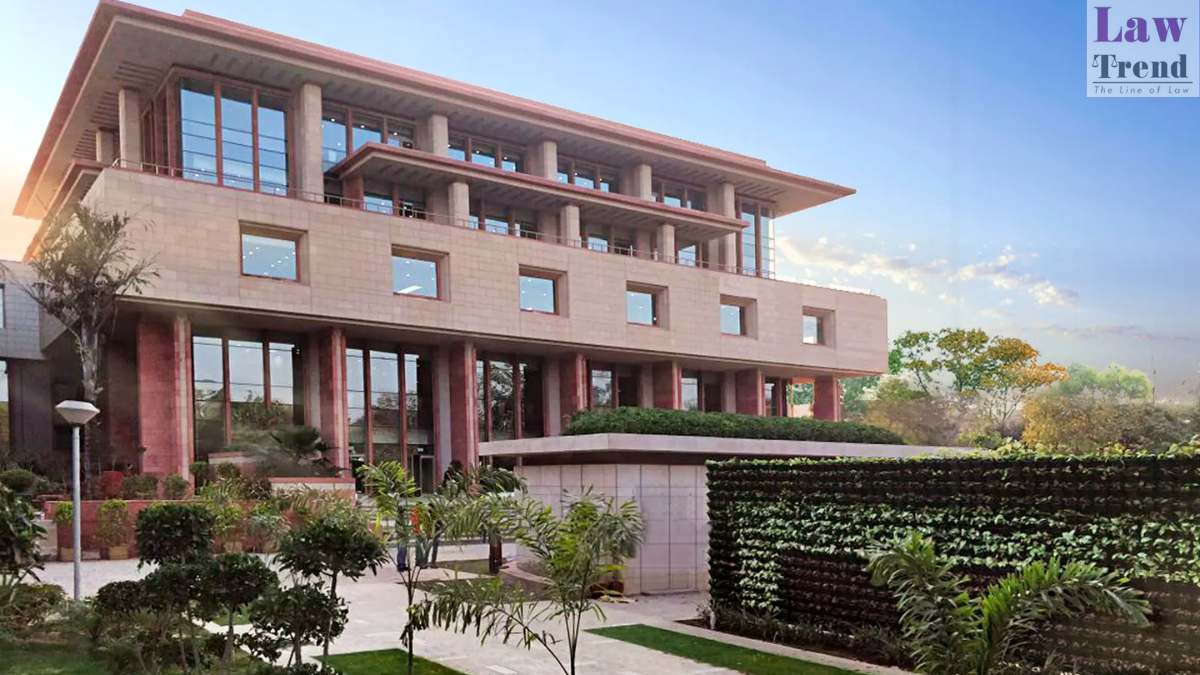

The Delhi High Court has dismissed an appeal filed by former tenants against a Commercial Court’s decree for recovery of dues, upholding the lower court’s decision to award arrears of electricity and water charges, and damages for repairs. In a significant legal observation, the Division Bench comprising Justice Anil Kshetarpal and Justice Amit Mahajan held that a rent escalation clause in an unregistered lease deed is enforceable if the tenant continues to occupy the premises beyond the initial one-year period.

The appeal, M/S Ritas Heritage & Ors. v. Sangita Gupta & Anr., challenged the judgment and decree dated January 11, 2023, passed by the Commercial Court. The lower court had partly decreed the suit filed by the landlords (Respondents), awarding them a sum of Rs. 3,90,163 along with interest at 6% per annum. The dispute arose from a landlord-tenant relationship concerning the second and third floors of a property in Karol Bagh, New Delhi.

Background of the Case

The Respondents, joint owners of the property, had let out the premises to the Appellants under an unregistered lease deed dated July 12, 2017. The agreed monthly rent was Rs. 2,14,935, with a stipulation for a 20% increase to Rs. 2,57,922 with effect from August 1, 2018.

The landlords instituted a commercial suit seeking recovery of Rs. 10,25,030, claiming unpaid rent, utility dues, and expenses for repairs incurred after the tenants vacated the property. The Appellants failed to file a written statement within the prescribed period and were proceeded ex-parte. Consequently, the Respondents’ evidence remained unrebutted.

The Commercial Court partly allowed the suit, granting claims for utility charges and reduced damages for repairs but rejecting the claim for enhanced rent.

READ ALSO  Delhi High Court Reconstitutes Administrative Committees Amidst Controversy Involving Justice Yashwant Varma

Arguments Raised

The Appellants contended that the Commercial Court erred in fastening liability for electricity and water charges, arguing that the bills relied upon did not pertain exclusively to the tenanted floors. They further argued that the invoices for repairs were inflated and unrelated to damages caused by them. Regarding the enhanced rent, it was submitted that since the lower court rejected the enhancement, the award for loss of user based on admission was unjustified.

The Respondents supported the impugned judgment, emphasizing that their evidence was unrebutted as the Appellants failed to cross-examine witnesses. They asserted that the Commercial Court had already adopted a balanced approach by disallowing several claims and reducing the amount for repairs.

The Court’s Analysis and Observations

The Division Bench examined the findings of the Commercial Court on several issues:

1. Enforceability of Rent Escalation in Unregistered Lease: Although the Respondents did not file a cross-appeal seeking enhancement, the High Court scrutinized the Commercial Court’s reasoning for rejecting the enhanced rent for the period of August to October 2018. The lower court had held that the unregistered nature of the lease deed precluded reliance on the escalation clause.

READ ALSO  Conviction Validated on Rape Victim's Reliable Testimony Alone, Medical Corroboration Not Necessary: Meghalaya HC

Disagreeing with this view, the High Court observed, “The mere fact that the Respondents had called upon the Appellants to vacate the premises in July 2018… does not, by itself, lead to the conclusion that the tenancy stood terminated with effect from 01.08.2018.”

Relying on the Supreme Court’s decision in Siri Chand (Dead) through Legal Representatives v. Surinder Singh, the Bench held that an escalation clause is contingent upon the continuance of tenancy and does not render the document compulsorily registrable. The Court stated:

“The escalation clause operates automatically upon completion of one year, and is enforceable so long as the tenancy subsists. The continued occupation of the premises by the Appellants beyond 01.08.2018 attracted the contractual obligation to pay rent at the enhanced rate applicable during such period of occupation.”

However, since the landlords did not appeal the lower court’s refusal to grant this amount, the High Court did not alter the decree on this count.

2. Damages for Repairs and Renovation: The Court upheld the Commercial Court’s assessment of damages. The lower court had reduced the landlord’s claim of Rs. 7,00,000 to Rs. 2,50,000 for the suit property, after deducting amounts for normal wear and tear. The Bench noted that the photographic evidence indicated “removal of electrical fittings and damage of such nature that could not be attributed to normal wear and tear.” The assessment was termed a “balanced and judicious appreciation of the evidence.”

3. Utility Charges and Loss of User: The Court affirmed the award of electricity and water charges, noting that the Commercial Court had carefully excluded periods beyond the Appellants’ occupation. Regarding the “loss of user” charges awarded for November 2018, the Court noted inconsistencies in the vacation date but upheld the grant of one month’s rent as compensation, as the premises required repairs before re-letting.

READ ALSO  हाई कोर्ट ने बस मार्शलों की तैनाती न करने पर अवमानना याचिका पर दिल्ली के मुख्य सचिव से जवाब मांगा

Decision

The High Court concluded that there was no perversity or patent error in the Commercial Court’s judgment. The Bench emphasized that in the absence of a cross-appeal by the landlords, the scope of interference was limited to the Appellants’ grievances, which were found to be without merit.

“Finding no perversity, illegality, or patent error in the conclusions reached by the Commercial Court, this Court declines to interfere,” the Bench ruled.

The appeal was dismissed, and the decree of Rs. 3,90,163 with 6% interest was affirmed.

Case Details:

  • Case Title: M/S Ritas Heritage & Ors. v. Sangita Gupta & Anr.
  • Case Number: RFA(COMM) 150/2023
  • Coram: Justice Anil Kshetarpal and Justice Amit Mahajan
  • Counsel for Appellants: Mr. Arihant Jain
  • Counsel for Respondents: Mr. Rajiv Ranjan Mishra, Mr. Saurabh, Mr. Jitender Kumar, Ms. Suruchi Yadav

Law Trend
Law Trendhttps://lawtrend.in/
Legal News Website Providing Latest Judgments of Supreme Court and High Court

Related Articles

Latest Articles

