

Question of Limitation in Partition Suit Involving Joint Family Funds is a Mixed Question of Law and Fact; Delhi HC Upholds Rejection of Order VII Rule 11 Plea

The Delhi High Court has dismissed an appeal challenging the rejection of an application under Order VII Rule 11 of the Code of Civil Procedure (CPC), holding that the issue of limitation in a suit for partition, where the plaintiff pleads knowledge of adverse title documents only at a later stage, is a mixed question of law and fact that cannot be adjudicated at the threshold.

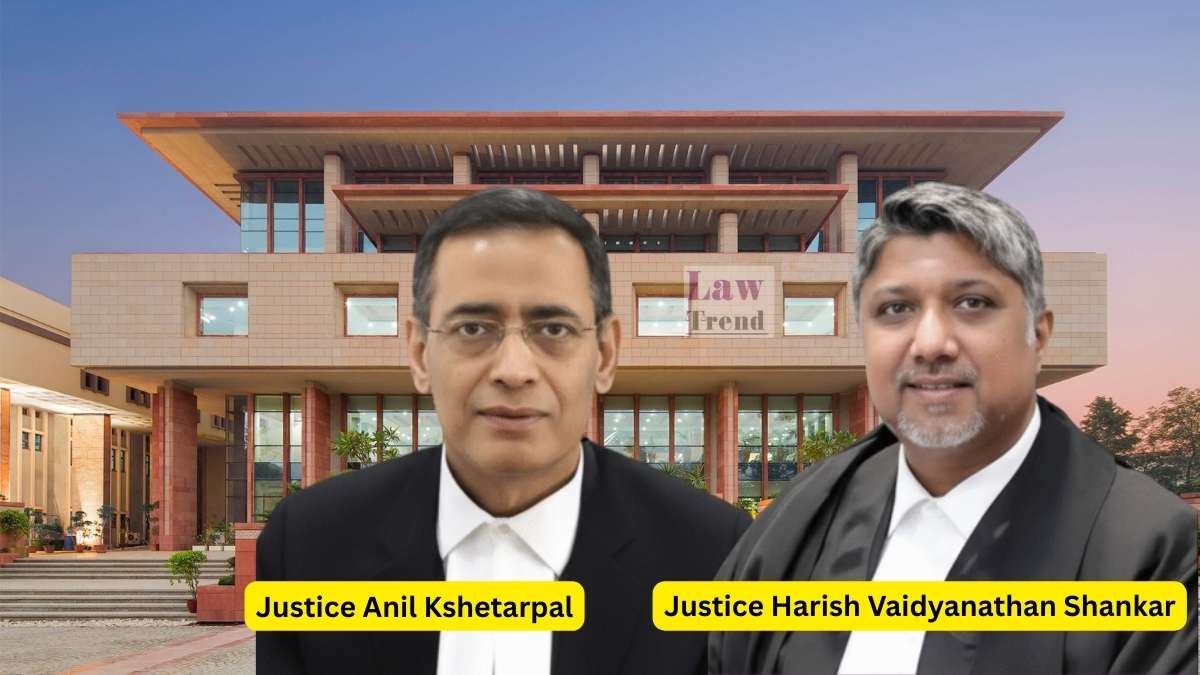
A Division Bench comprising Justice Anil Kshetarpal and Justice Harish Vaidyanathan Shankar upheld the Single Judge’s decision, observing that the plaint, when read meaningfully, disclosed a clear cause of action based on the assertion that the suit properties were acquired from joint family funds.

Background of the Case

The appeal arose from a partition suit filed by Anita Munjal (Plaintiff/Respondent No. 1) against Vibhuti Jauhari and Trisha Jauhari (Appellants/Defendant Nos. 1 and 2) and others. The dispute concerned two specific properties:

  1. Bathla Property: Flat No. 115-D, Bathlas Co-operative Group Housing Society Ltd., I.P. Extension, Patparganj, Delhi.
  2. Gurugram Property: Plot No. 91, Maulsari Road, DLF Qutab Complex, Phase-III, Gurugram, Haryana.

The Plaintiff claimed that these properties were acquired using joint family funds, including proceeds from the sale of properties left by her late father, Sh. D.D. Jauhari, and were intended for the benefit of the family as a whole. She averred that while the Gurugram Property was purchased in the joint names of her late mother, Smt. Kaushalya, and her late brother, Vinay Jauhari, the Bathla Property stood exclusively in Vinay’s name. However, the Plaintiff asserted that at the time of booking the Bathla Property, Vinay was merely 21 years old, pursuing education, and had no independent source of income.

The Plaintiff further alleged that upon the death of Vinay on February 21, 2018, partition discussions ensued. She claimed she only became aware of a Gift Deed dated August 16, 2005 (purportedly executed by her mother in favor of Vinay regarding the Gurugram Property) and the exclusive claims of the Appellants during separate civil proceedings instituted by them in 2018.

READ ALSO  Vague Allegations Cannot Invalidate Elections: Allahabad High Court Upholds Gurudwara Election

Arguments of the Parties

The Appellants sought rejection of the plaint under Order VII Rule 11 CPC on the grounds that it failed to disclose a cause of action and was barred by limitation. Represented by Senior Advocate Mr. Krishnan Venugopal, the Appellants argued:

  • The suit was based on a “wholly misconceived premise” contrary to admitted and contemporaneous documentary records spanning over four decades.
  • The late father had executed a valid Will dated April 6, 1976, bequeathing his estate to Vinay, which was acknowledged by the Plaintiff via a No Objection Certificate dated July 18, 1978.
  • The late mother had executed a registered Will dated August 29, 1985, in favor of Vinay.
  • Title documents, including a Sale Deed dated January 8, 1998, and the Gift Deed dated August 16, 2005, conclusively vested ownership in Vinay.
  • Relying on Dahiben v. Arvindbhai Kalyanji Bhanusali (2020), they contended that the plaint, even when read with the documents, did not disclose a cause of action.
  • The suit was barred by limitation as it challenged registered documents executed decades ago.
  • Citing Sagar Gambhir v. Sukhdev Singh Gambhir, they argued the plaint lacked necessary particulars regarding how the property was claimed to be part of the “common hotchpotch.”

Senior Advocate Mr. Samrat Nigam, appearing for the Respondents, supported the Impugned Judgment. He contended:

  • On a meaningful reading, the plaint disclosed a sufficient cause of action warranting adjudication.
  • The plea of limitation involved disputed questions of fact regarding the date of knowledge, which could not be decided at the stage of Order VII Rule 11 CPC.
READ ALSO  Delhi High Court Orders MCD to Pay Rs 10 Lakh for Negligence Leading to Youth's Death

Court’s Analysis

The Court referred to the scope of Order VII Rule 11 CPC, citing Supreme Court precedents including Dahiben, Vinod Infra Developers Ltd. v. Mahaveer Lunia & Ors., and Karam Singh v. Amarjit Singh & Ors..

On Cause of Action

The Bench observed that at the stage of Order VII Rule 11, the Court must assume the averments in the plaint are true without inquiring into their veracity.

“A careful and meaningful reading of the plaint reveals that the Plaintiff has clearly articulated the foundational facts constituting the cause of action. The plaint contains specific and unambiguous assertions that the suit properties were acquired out of joint family funds as well as from the proceeds generated through the sale of properties belonging to the deceased father.”

The Court further noted:

“If these pleadings are accepted at face value and are ultimately substantiated in evidence, they would vest the Plaintiff with a clear, subsisting and legally enforceable right in the suit properties in the capacity of a co-sharer.”

The Court distinguished the present case from Sagar Gambhir, noting that the Plaintiff had specifically pleaded the source of acquisition. The Appellants’ defense that one property was purchased prior to the sale of the father’s assets was held to be a “defence set up by Defendant Nos. 1 and 2” involving “disputed questions of fact,” which cannot be adjudicated at the threshold.

On Limitation

READ ALSO  Roving and Fishing Enquiry to Fish out Discrepancies in Selection Process is Impermissible: Allahabad HC

Regarding the limitation argument, the Court noted that the suit was for partition, not specifically to set aside title deeds.

“The limitation for a suit seeking partition is not specifically provided under any Article in the Schedule to the Limitation Act, 1963. Consequently, the claim is governed by the residuary provision, namely Article 113… It is settled law that the cause of action in a suit for partition is of a recurring nature and continues so long as the joint status subsists, crystallising only upon refusal of a demand for partition.”

The Court accepted the Plaintiff’s plea that knowledge of the 2005 Gift Deed was acquired only during proceedings in 2018.

“Hence, the question of limitation becomes mixed question of law and facts, which can be adjudicated after the parties have led their evidence.”

Decision

The Division Bench concluded that the plaint disclosed a clear cause of action and the relief could not be held to be barred by limitation at this stage. The appeal was dismissed, and the Single Judge’s order was upheld.

Case Details:

  • Case Title: Vibhuti Jauhari & Anr. v. Anita Munjal and Ors.
  • Case Number: FAO(OS) 145/2025
  • Coram: Justice Anil Kshetarpal and Justice Harish Vaidyanathan Shankar
  • Counsel for Appellants: Mr. Krishnan Venugopal, Sr. Adv. with Ms. Prity Sharma, Mr. Shikhar Shant, Mr. Ashwani Kaushik, and Ms. Umang Motiyani.
  • Counsel for Respondents: Mr. Samrat Nigam, Sr. Adv. with Mr. Ajay Dabas, Mr. Anand Dabas, Ms. Priyanka Dagar, Ms. Arpita Rawat, Mr. Ravi Dagar, and Mr. Rishikesh.

Law Trend
Law Trendhttps://lawtrend.in/
Legal News Website Providing Latest Judgments of Supreme Court and High Court

Related Articles

Latest Articles

