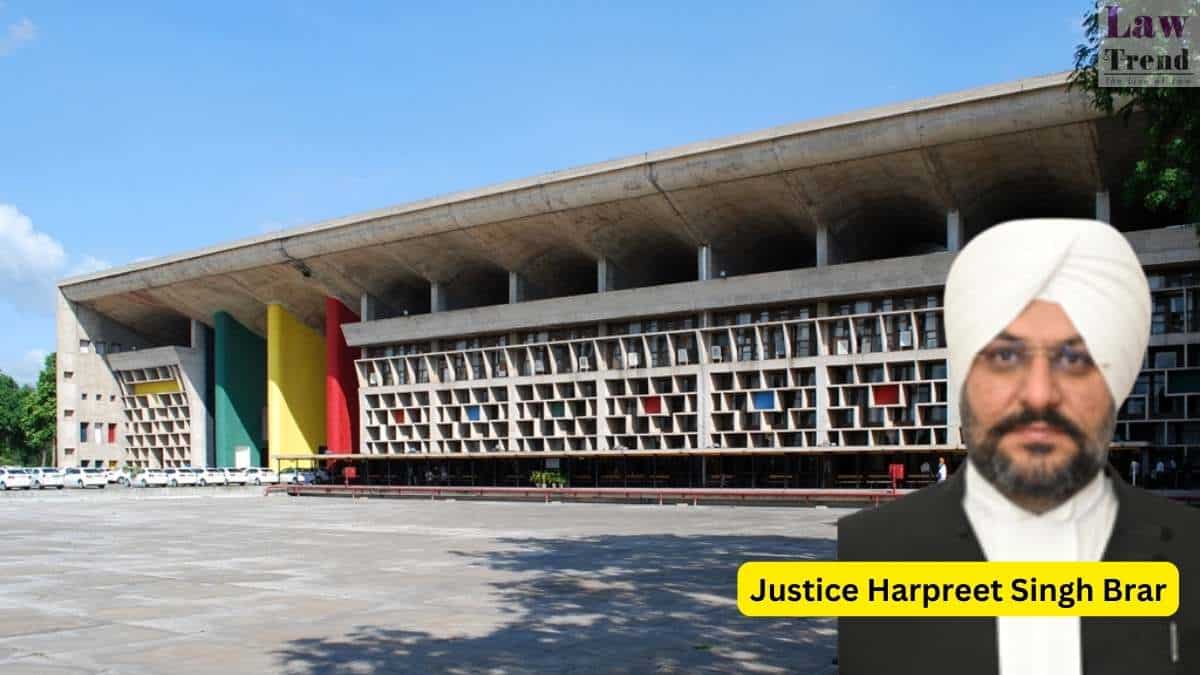
The Punjab and Haryana High Court has set aside an order seeking the recovery of over Rs. 3.3 lakh from a retired Senior Account Officer, ruling that arbitrary recoveries from retired employees contradict the spirit of welfare administration.
Case Background
The petitioner, Dharamvir Singh, superannuated from service as a Senior Account Officer on December 31, 2024, after serving for more than three decades. Following his retirement, Respondent No. 3 issued a letter dated August 25, 2025, directing the petitioner to deposit an amount of Rs. 3,33,132/- in lieu of an alleged excess payment of gratuity. A subsequent reminder was issued on October 29, 2025.
Aggrieved by these orders, the petitioner approached the High Court seeking a writ of certiorari to quash the recovery notices, contending that there was no misrepresentation or fault on his part regarding the excess payment.
Arguments of the Parties
Counsel for the petitioner, Mr. Sparsh Chhibber, argued that the recovery was initiated months after the petitioner’s retirement. He submitted that there was no allegation of fraud or misrepresentation attributed to the petitioner for the excess payment. Reliance was placed on the Supreme Court judgments in State of Punjab v. Rafiq Masih (2015), Jagdish Prasad Singh v. State of Bihar (2024), and Thomas Daniel v. State of Kerala (2022).
Per contra, Mr. R.S. Panghal, counsel for the respondents, did not controvert the fact that there was no fraud or misrepresentation on the part of the petitioner. It was acknowledged that the case was covered by the judgments relied upon by the petitioner.
Court’s Analysis
Justice Harpreet Singh Brar, hearing the matter, observed that the issue of recovering excess payments is well-settled by the Supreme Court. The Court referred to the guidelines laid down in State of Punjab v. Rafiq Masih, which categorizes situations where recovery by employers is impermissible in law, including recoveries from retired employees or those due to retire within one year, and recoveries from Class-III and Class-IV employees.
The Court also cited Thomas Daniel v. State of Kerala (2022), wherein the Supreme Court held that relief against recovery is granted not because of any right of the employees but in equity, to protect them from hardship.
Justice Brar made strong observations regarding the manner in which the recovery was initiated, stating:
“In that vein, this Court is of the considered opinion that arbitrary or un-communicated recoveries contradict the spirit of a welfare administration and demonstrate a lack of humane consideration. Overall, the effect of such abrupt recovery extends beyond administrative error; it reflects on the sensitivity, fairness, and accountability of governance itself.”
The Court further noted:
“Therefore, even where legal remedies exist, administrative prudence demands that any recovery from pension be preceded by due notice, consultation, and empathetic handling consistent with the dignity of the retired employee.”
Decision
In view of the settled legal position and the absence of any misrepresentation by the petitioner, the High Court allowed the petition. The Court quashed and set aside the recovery order dated August 25, 2025, and the reminder dated October 29, 2025, in terms of the Rafiq Masih judgment.
Case Details
- Case Title: Dharamvir Singh v. The Registrar Cooperative Societies Panchkula and others
- Case Number: CWP-37255-2025
- Citation: 2025:PHHC:174178
- Bench: Justice Harpreet Singh Brar