The Delhi High Court has set aside the conviction of a former Section Officer of the Directorate of Audit, Central Revenues, acquitting him of charges under the Prevention of Corruption Act, 1988 (PC Act). The Court held that the prosecution failed to prove the demand of illegal gratification beyond reasonable doubt, emphasizing that mere recovery of money without proof of demand is insufficient for conviction.
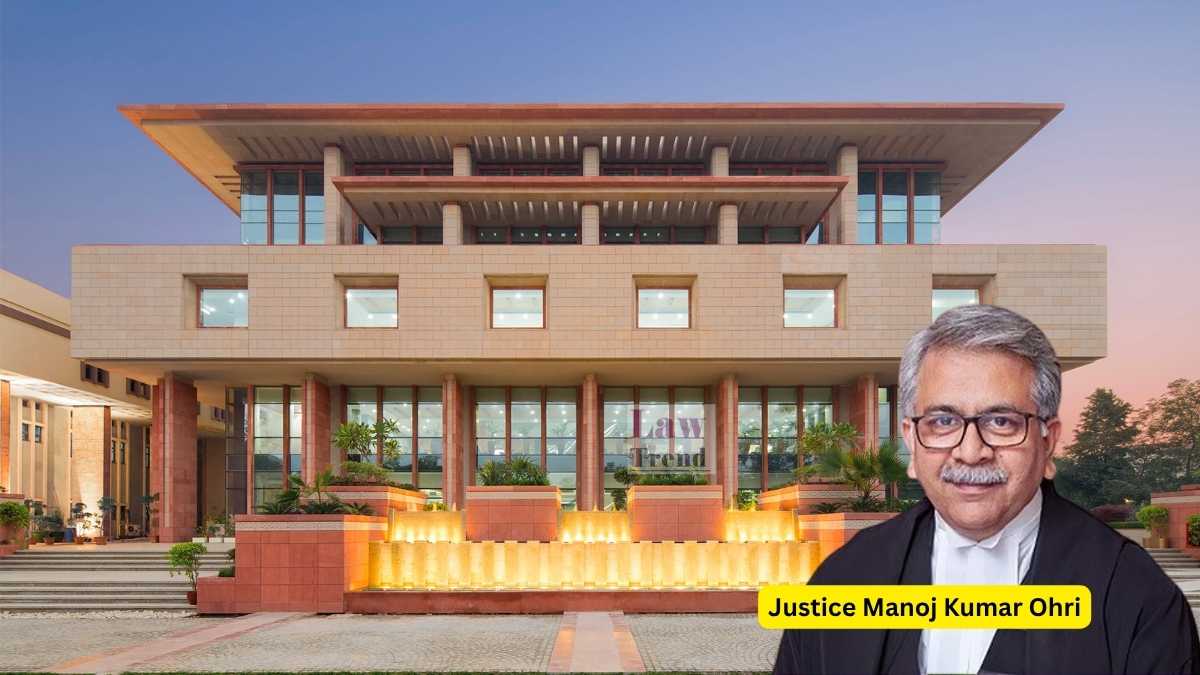
Justice Manoj Kumar Ohri allowed the appeal filed by Tej Narain Sharma, challenging the judgment of the Special Judge dated November 27, 2002, which had convicted him under Sections 7 and 13(1)(d) read with Section 13(2) of the PC Act.
Background of the Case
The case originated from a complaint lodged on July 31, 1992, by one Amar Nath Oberoi (PW-8), an accountant at M/s. Elpar Cables Corporation. The complainant alleged that an audit team, including Audit Officer R.N. Arora and the appellant, Tej Narain Sharma, had inspected the firm’s records.
According to the prosecution, on July 30, 1992, R.N. Arora allegedly demanded a bribe of Rs. 3,000 per year for nine years (totaling Rs. 27,000) to give a correct audit report. This amount was negotiated down to Rs. 20,000. It was alleged that R.N. Arora instructed the complainant to pay the amount to the appellant, Tej Narain Sharma, the next day.
A trap was laid by the Anti-Corruption Branch (ACB) on July 31, 1992. The appellant was apprehended, and treated currency notes amounting to Rs. 20,000 were recovered from him. The Special Judge convicted the appellant in 2002, sentencing him to two years of Rigorous Imprisonment and imposing a fine of Rs. 15,000.
Arguments of the Parties
Senior Advocate Ms. Rebecca M. John, appearing for the appellant, argued that the prosecution failed to prove the demand. She highlighted that while the initial demand was allegedly made by R.N. Arora, he was never made an accused. Instead, R.N. Arora appeared as a Defence Witness (DW-2) and denied the prosecution’s version.
The defence pointed out factual inconsistencies, noting that the complainant claimed a demand for 9 years of audit, whereas the firm had only existed for 6 years (since 1986). Further, the credibility of the panch witness (PW-9) was questioned as he admitted to being a “stock witness” in five other cases. Procedural lapses regarding the chain of custody of the wash samples and the validity of the sanction order were also raised.
Mr. Pradeep Gahalot, APP for the State, contended that the demand and acceptance were proved through the testimony of the complainant and the recovery of treated notes from the appellant.
Court’s Observations and Analysis
The High Court scrutinized the evidence and found significant gaps in the prosecution’s narrative.
1. Proof of Demand is Sine Qua Non Citing the Supreme Court judgments in B. Jayaraj v. State of Andhra Pradesh and the Constitution Bench decision in Neeraj Dutta Vs. State (Govt. of NCT of Delhi), the Court reiterated that “proof of demand… is a sine qua non for securing a conviction under Sections 7 and 13 (1)(d) (i) and (ii) of the PC Act.”
The Court observed:
“Mere possession and recovery of the currency notes from the accused without proof of demand will not bring home the offence under Section 7.”
2. Non-Prosecution of the Main Alleged Demander The Court expressed surprise that while the prosecution consistently maintained that the initial demand was made by R.N. Arora, no criminal proceedings were initiated against him.
“The first big question which arises in the mind of this Court is that if the initial demand was made by R.N. Arora, why were no criminal proceedings ever initiated against him. Curiously, R. N. Arora, instead of being an accused, appeared as defence witness DW-2.”
3. Mechanical Sanction The Court noted that the sanction order (Ex. PW-1/A) appeared to be a “mere copy of the draft sanction order,” with the witness admitting that the word “draft” was written on it and later removed. The order erroneously stated the appellant made the demand on 30.07.1992, contradicting the prosecution’s own case that R.N. Arora made the demand.
4. Factual Inconsistencies and Procedural Lapses The Court highlighted the logical flaw in the alleged demand:
“The complainant has deposed that the initial demand of Rs.27,000/- was made on the basis of Rs.3,000/- per year since the last 9 years… However, in cross examination, he admitted that the firm only came into being in 1986, i.e. only 6 years ago.”
The Court also flagged the “break in the chain of custody” regarding the hand wash samples, which were kept in the ACP’s personal almirah rather than the Malkhana, and the fact that the panch witness appeared to be a stock witness for the ACB.
Decision
Justice Ohri concluded that the cumulative effect of these discrepancies cast serious doubt on the prosecution’s case.
“The prosecution case, in the present instance, has suffered death by a thousand cuts. The blatantly apparent attempt at saving R. N. Arora, the mechanical sanction order, the logic of demand for 9 years of audit not making sense when the firm was in existence only for 6 years… have cumulatively acted to shroud the prosecution case in doubt.”
The Court extended the benefit of the doubt to the appellant, setting aside the judgment of conviction and the order on sentence. The appellant was acquitted of all charges.
Case Details:
Case Title: Tej Narain Sharma v. State of Delhi
Case No.: CRL.A. 993/2002 Coram: Justice Manoj Kumar Ohri
Counsel for Appellant: Ms. Rebecca M. John, Sr. Adv. with Mr. Harsh Bora and Mr. Niranjan Dey, Advs.
Counsel for Respondent: Mr. Pradeep Gahalot, APP for State