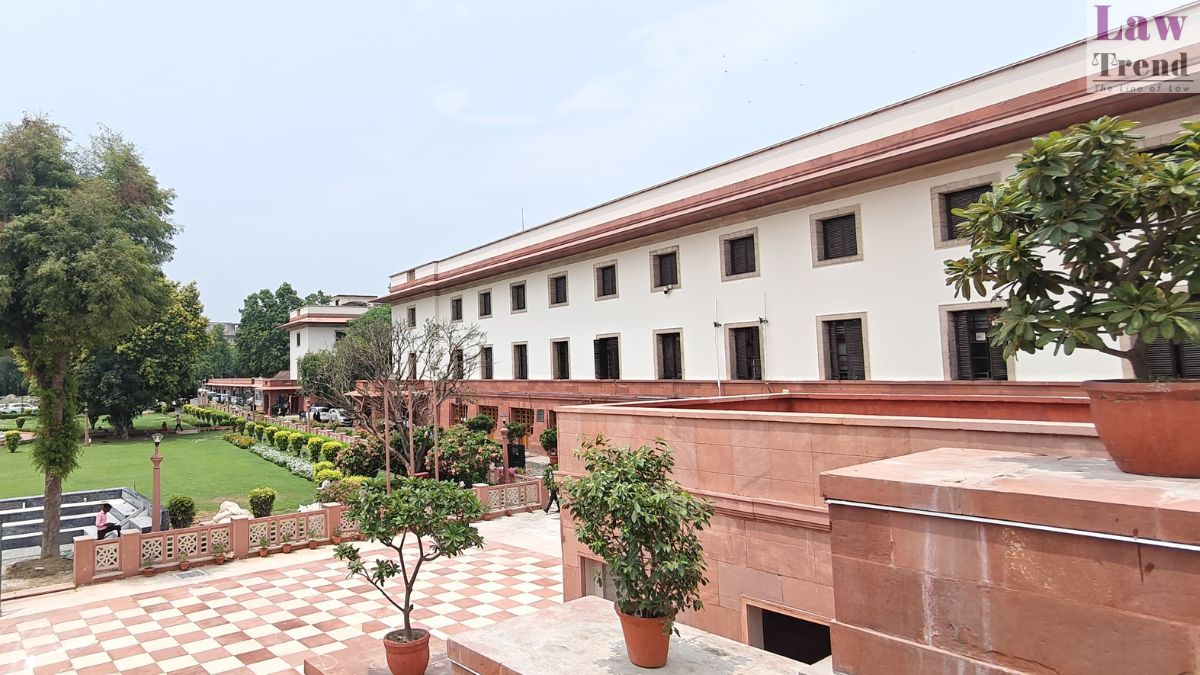
The Supreme Court has quashed a preventive detention order passed by the Telangana authorities against an alleged drug offender, ruling that mere apprehension that the accused would be released on bail and commit similar offences is not a sufficient ground for detention. The Court emphasized that the law of preventive detention cannot be resorted to when ordinary criminal law provides sufficient means to address the apprehensions, specifically noting that the State had failed to move for cancellation of bail in previous cases.
In the case of Roshini Devi v. The State of Telangana and Others, the Supreme Court set aside the detention order dated March 10, 2025, passed against the appellant’s mother, Aruna Bai (the detenu). A Bench comprising Justice J.K. Maheshwari and Justice Atul S. Chandurkar observed that the detaining authority’s decision was influenced by an intention to detain the accused “at any cost” rather than a genuine threat to public order. The Court reiterated the distinction between “law and order” and “public order,” holding that mere registration of criminal cases does not automatically amount to a breach of public order.
Background of the Case
The appellant, Roshini Devi, challenged the detention of her mother, who was detained under Section 3(2) of the Telangana Prevention of Dangerous Activities of Boot-Leggers, Dacoits, Drug-Offenders, Goondas, Immoral Traffic Offenders, [Land-Grabbers, Spurious Seed Offenders, Insecticide Offenders, Fertiliser Offenders, Food Adulteration Offenders, Fake Document Offenders, Scheduled Commodities Offenders, Forest Offenders, Gaming Offenders, Sexual Offenders, Explosive Substances Offenders, Arms Offenders, Cyber Crime Offenders and White Collar or Financial Offenders] Act, 1986 (the Act of 1986).
The detention order, passed by the Collector and District Magistrate, Hyderabad, cited the detenu’s involvement in three criminal cases registered under the Narcotic Drugs and Psychotropic Substances (NDPS) Act, 1985, involving the seizure of Ganja. The detenu was categorized as a “drug offender” under Section 2(f) of the Act of 1986. The authorities apprehended that although she was in judicial custody, she had applied for bail and, if released, would continue to engage in illegal activities prejudicial to public health and the interest of the public at large.
The appellant approached the High Court of Telangana, challenging the detention. However, on October 28, 2025, the Division Bench of the High Court dismissed the petition, refusing to interfere with the subjective satisfaction of the detaining authority.
Arguments of the Parties
The Appellant’s Arguments: Senior Advocate Ravi Shankar Jandhyala, appearing for the appellant, argued that there was no material to record satisfaction that the detenu’s acts were prejudicial to the “maintenance of public order” as required by Section 2(a) of the Act of 1986. He contended that the detention order was passed merely as an “alternative to cancellation of bail.” It was submitted that even if the detenu was involved in the alleged offences, they pertained to “law and order” and not “public order.” Reliance was placed on the decision in Rekha Vs. State of Tamil Nadu.
The Respondent’s Arguments: Advocate Kumar Vaibhaw, representing the State, supported the detention order. He argued that the detenu was a “drug offender” dealing in Ganja, and ordinary laws were insufficient to deter her. The State relied on the decision in Pesala Nookaraju Vs. Government of Andhra Pradesh & Ors., contending that the subjective satisfaction regarding the likelihood of breach of public order should not be interfered with.
Court’s Analysis and Observations
The Supreme Court examined the detention order and noted that the detaining authority primarily relied on the apprehension that the detenu might secure bail. The Court observed that the State had not moved any application for the cancellation of bail in the earlier offences.
Referring to the detaining authority’s reasoning, the Court noted:
“From the aforesaid observations, it is clear that the Detaining Authority intended to detain the mother of the appellant at any cost… If the Detaining Authority was of the view that the detenu had violated any conditions of bail, steps for cancellation of her liberty could have been taken. That has not been done here.”
On Extraneous Factors and Bail: The Court relied heavily on its previous decision in Ameena Begum Vs. the State of Telangana and Others (2023), stating that detaining authorities must not act with a mindset to “avoid or oust judicial scrutiny” or out of frustration when bail is granted. The Court quoted:
“The law of preventive detention should not be used merely to clip the wings of an accused who is involved in a criminal prosecution… When a person is enlarged on bail by a competent criminal court, great caution should be exercised in scrutinising the validity of an order of preventive detention which is based on the very same charge which is to be tried by the criminal court.”
On Public Order vs. Law and Order: The Bench clarified that Section 3(1) of the Act of 1986 requires satisfaction that the offender is acting in a manner prejudicial to the “maintenance of public order.”
“The order of detention does not indicate in what manner the maintenance of public order was either adversely affected or was likely to be adversely affected so as to detain the detenu. Mere reproduction of the expressions mentioned in Section 2(a) of the Act of 1986 in the order of detention would not be sufficient.”
The Court concluded that mere registration of three offences does not impact public order “unless there is material to show that the narcotic drug dealt with by the detenu was in fact dangerous to public health under the Act of 1986.” This material was found missing in the order.
Decision
The Supreme Court allowed the appeal and set aside the detention order dated March 10, 2025. Consequently, the High Court’s judgment dated October 28, 2025, was also quashed. The Court directed:
“The detenu be released forthwith if not required in any other proceedings.”
Case Details:
- Case Title: Roshini Devi v. The State of Telangana and Others
- Case No: Criminal Appeal No. of 2026 (@SLP (Crl.) No. 18223 of 2025)
- Coram: Justice J.K. Maheshwari and Justice Atul S. Chandurkar