

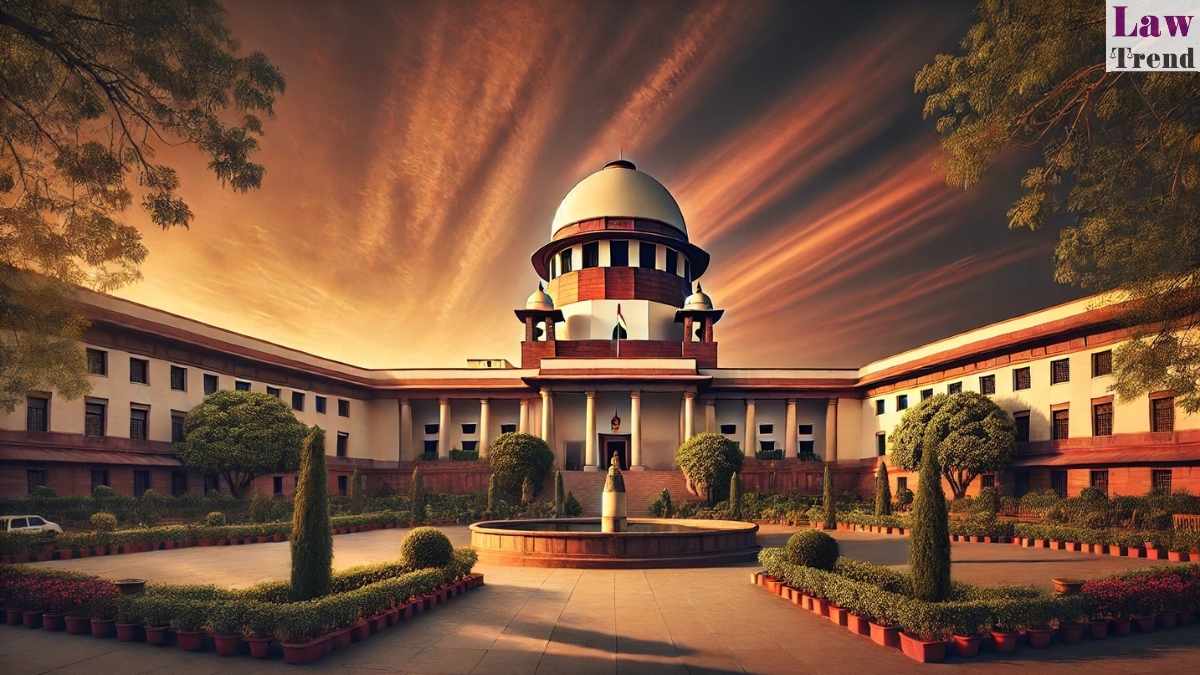
The Supreme Court on Monday orally indicated that land acquisition cases under the National Highways Act that had attained finality before 2018 cannot be reopened to grant compensation with interest to landowners, even as it began hearing the National Highways Authority of India’s (NHAI) review plea against the retrospective application of its 2019 judgment in Tarsem Singh.
A special bench of Chief Justice Surya Kant and Justice Ujjal Bhuyan made the observation while hearing the matter in open court. The NHAI, represented by Solicitor General Tushar Mehta, argued that the 2019 ruling — which extended solatium and interest to landowners whose land was acquired under the NHAI Act — has created a financial liability of nearly ₹32,000 crore and should operate only prospectively.
During the hearing, the CJI observed that claims which were alive around 2008 could continue, but matters that had attained finality before 2018 could not be reopened. The Court also indicated that in later applications seeking parity, solatium may be considered but not interest, drawing a distinction similar to that applied in land acquisition jurisprudence.
The bench permitted the parties to file written submissions and posted the review plea for further hearing after two weeks.
In its September 2019 ruling, the Supreme Court held that Section 3J of the National Highways Act — which excluded the applicability of the Land Acquisition Act, 1894 and thereby denied solatium and interest — was unconstitutional for violating Article 14. The Court found that the provision created unequal treatment between similarly placed landowners.
The judgment granted solatium and interest to landowners whose land had been acquired by the NHAI between 1997 and 2015, bringing them on par with those covered by the Land Acquisition Act framework.
The NHAI has consistently sought prospective application of the 2019 ruling, arguing that reopening concluded cases would impose a massive fiscal burden. The Solicitor General submitted that earlier the financial implication was understood to be about ₹100 crore, but later calculations placed it at approximately ₹32,000 crore.
In February 2025, the Supreme Court rejected the NHAI’s plea and reaffirmed the Tarsem Singh principles, holding that limiting the ruling prospectively would “restore the state of affairs” that the judgment had sought to remedy and would create unjust classifications.
The Court had emphasised that once a provision is declared unconstitutional, continuing disparities among similarly situated landowners would violate Article 14.
At the same time, the Court had clarified that the 2019 decision did not direct reopening of cases that had already attained finality. It was confined to granting solatium and interest to affected landowners without disturbing concluded proceedings.
On November 4 last year, the CJI-led bench agreed to hear the NHAI’s review petition in open court, issuing notice and scheduling the matter for detailed hearing. The present proceedings mark the commencement of that review hearing.
The Court’s latest oral observations suggest a possible limiting framework on reopening concluded matters, while leaving the question of retrospective benefits in pending or live claims to be decided after written submissions are filed.




