Power of Attorney ‘Coupled With Interest’ Does Not Lapse on Death of One Principal: Madras High Court
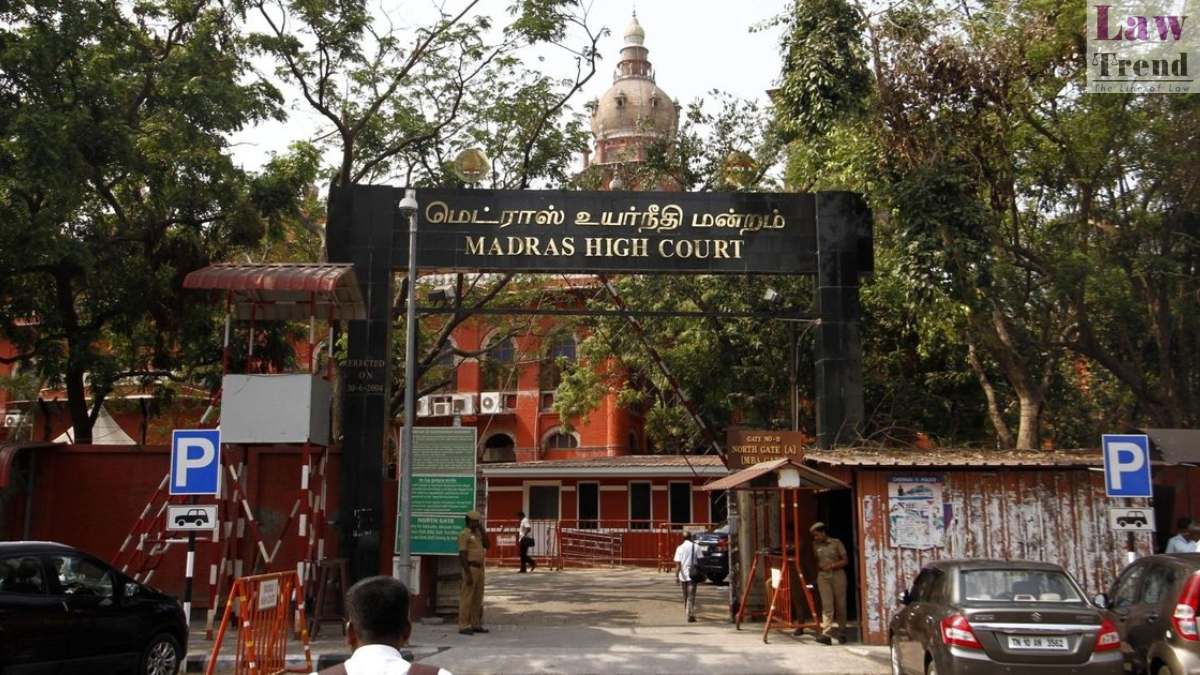

The Madras High Court has ruled that a General Power of Attorney (GPA) executed by multiple principals, which is coupled with interest, does not automatically terminate upon the death of one of the principals. Justice K. Govindarajan Thilakavadi dismissed the second appeals filed by the legal heirs of the original owner, affirming the validity of the sale deed executed by the power agent after the death of one of the executants.

The High Court was hearing Second Appeal Nos. 238 and 239 of 2023, filed by Gopamma and Muniamma against Murugesan and Chinnappa. The appellants challenged the concurrent judgments of the Subordinate Court, Denkanikottai, and the Additional District Munsif Court, Denkanikottai, which had dismissed their suits for declaration of title and permanent injunction.

The core legal issue was whether a registered Power of Attorney executed by a father and his daughters stood terminated upon the father’s death, and whether the subsequent sale executed by the agent was valid. The Court held that since the agency was coupled with interest under Section 202 of the Indian Contract Act, it was irrevocable and did not terminate upon the death of one principal.

Background of the Case

The suit property originally belonged to Sembugan @ Sombaiah, the father of the appellants (plaintiffs), who had purchased it in 1952. On 28 April 2005, Sembugan, along with his two daughters (the appellants), executed a registered General Power of Attorney (Exhibit B3) in favour of one Chinnappa.

READ ALSO  Its Time For Regional Benches of the Supreme Court: Madras High Court

Sembugan died on 8 January 2007. Subsequently, on 21 February 2008, the appellants executed a deed of cancellation (Exhibit A5) revoking the Power of Attorney. However, the power agent, Chinnappa, entered into a sale agreement with his son Nanjappa and later, on 17 March 2008, jointly executed a sale deed (Exhibit B4) in favour of the defendant, Murugesan.

The appellants filed O.S. No. 65 of 2010 seeking a declaration of title and permanent injunction against the purchaser, Murugesan, and O.S. No. 172 of 2008 for permanent injunction against the agent, Chinnappa. They contended that the GPA became infructuous upon Sembugan’s death and was validly cancelled before the sale.

Arguments of the Parties

The counsel for the appellants argued that the GPA was not coupled with interest as there was no proof of consideration passed at the time of execution. They contended that under Section 202 of the Indian Contract Act, the agency was not irrevocable. They submitted that “immediately upon the death of Sembugan, General Power of Attorney gets terminated and it would not survive,” rendering the subsequent sale deed invalid. They further argued that the lack of notice under Section 206 of the Contract Act for revocation was not fatal to the cancellation.

Conversely, the respondents argued that the GPA was coupled with interest. They submitted that Chinnappa had purchased the property from Sembugan for a consideration of Rs. 2,40,000, which was paid, making the agency one for valid consideration coupled with interest. Consequently, the power was irrevocable. They further argued that the appellants failed to implead necessary parties, specifically the power agent and the agreement holder, in the respective suits, making the suits liable for dismissal for non-joinder.

READ ALSO  BREAKING | Allahabad HC Declares 'UP Board of Madarsa Education Act 2004' as Unconstitutional being violative of the Principle of Secularism

Court’s Analysis and Observations

Justice K. Govindarajan Thilakavadi analysed the nature of the Power of Attorney and the application of Sections 201, 202, and 206 of the Indian Contract Act.

  • Validity of GPA after Death of a Principal: Referring to the precedent set in K.A. Meeran Mohideen vs. Sheik Amjed (2024), the Court observed that “a power of attorney deed executed by several persons, which cannot be said to be coupled with interest, is not automatically terminated on the death of one of the principals.” The Court noted that termination depends on the specific facts and the intent of the document.
  • Power Coupled with Interest: The Court found that the Power of Attorney explicitly mentioned the payment of Rs. 2,40,000 by the agent to Sembugan. The Court observed:
    “The above facts would establish that the general power of attorney is the one coupled with interest. Moreover, it is well settled that a power of attorney cannot be revoked after the agent has exercised the authority given to him in respect of the acts exercised.”
    The Court held that since the agency was coupled with interest, it fell under the exception where the death of a principal does not automatically terminate the agency, as the power is linked to a vested interest of the agent.
  • Requirement of Notice for Revocation: The Court addressed the appellants’ failure to issue notice prior to the cancellation of the GPA. Citing Section 206 of the Indian Contract Act, the Court stated:
    “The non issuance of notice prior to execution of deed of cancellation of power of attorney dated 21.02.2008 is fatal under Section 206 of Indian Contract Act.”
  • Non-Joinder of Necessary Parties: The Court upheld the lower courts’ findings that the suits were bad for non-joinder of necessary parties. In O.S. No. 65 of 2010, the vendors (agent Chinnappa and Nanjappa) were not impleaded, and in O.S. No. 172 of 2008, the purchaser (Murugesan) was not impleaded. The Court noted that “no effective decree could be passed in the absence of such party.”
READ ALSO  Senior Citizens Act Not Meant to Settle Property Disputes: Delhi HC

Decision

The High Court concluded that the plaintiffs failed to prove that the GPA was validly cancelled after due notice or that they were in possession of the property. The Court upheld the title of the defendant, Murugesan, based on the sale deed dated 17 March 2008.

Justice K. Govindarajan Thilakavadi dismissed both Second Appeals, confirming the judgments and decrees of the courts below. No costs were awarded.

Law Trend
Law Trendhttps://lawtrend.in/
Legal News Website Providing Latest Judgments of Supreme Court and High Court

Related Articles

Latest Articles